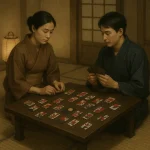
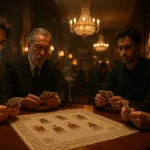
In the dim light of an Italian café, the sound of cards snapping on wooden tables has echoed for centuries. Among the chatter and espresso cups sits Scopa—a traditional Italian card game whose name literally means “broom.” Much like its name, the goal is to sweep the table clean. But Scopa is more than just a pastime—it’s a slice of Italian identity, combining quick arithmetic, intuition, and a touch of flair.
The Origins of Scopa


Scopa emerged in Italy during the 18th century, particularly flourishing in Naples, though its roots reach back to earlier Mediterranean ports. Historians believe it evolved from older Spanish games like Primero and Scarabucion, which were once played among sailors and traders in Naples’ bustling harbor.
As Italian migrants crossed oceans to South America, Scopa traveled with them. Today, its variant Escoba remains popular in Argentina and Brazil—proof that the game’s simplicity and charm transcend language and geography.
The Cards: Art and Tradition in Every Suit
Traditional Scopa is played with a 40-card Italian deck divided into four suits:
- Coins (Denari)
- Cups (Coppe)
- Swords (Spade)
- Clubs (Bastoni)
Each suit has ten cards—Ace through Seven, then three face cards: the Fante (Knave, value 8), Cavallo (Knight, value 9), and Re (King, value 10).
Regional decks differ in artwork, from the bold Neapolitan figures to the elegant Bergamasche patterns. Many players even adapt the game to a French deck, translating suits (Diamonds for Coins, Hearts for Cups, and so on). Yet for purists, only the worn texture of an Italian deck truly captures the spirit of the game.
How to Play Scopa

Each round begins with three cards dealt to each player and four cards placed face-up on the table. Play moves counterclockwise, starting from the dealer’s right.
On their turn, a player can:
- Capture cards by matching the same value—for example, playing a 6 to take another 6 from the table.
- Capture combinations that sum to the same value—for instance, playing a 7 to take a 4 and 3.
- Lay down a card if no capture is possible.
A move that clears all cards from the table is called a Scopa, a “sweep,” earning an extra point and instant satisfaction. When no cards remain in the deck, the player who last made a capture collects any remaining table cards.
The rhythm of play feels both mathematical and theatrical—part calculation, part instinct, and part bravado.
Scoring the Game
At the end of each round, players total their points:
- 1 point for each Scopa (sweep).
- 1 point for capturing the most total cards.
- 1 point for capturing the most Coins (Denari).
- 1 point for capturing the Seven of Coins (Settebello).
- 1 point for holding the highest Prime (Primiera) score.
Understanding the “Prime”
The Primiera is a unique scoring tradition where certain cards have “prime values,” unrelated to their face values:
| Card | Prime Value |
|---|---|
| Seven | 21 |
| Six | 18 |
| Ace | 16 |
| Five | 15 |
| Four | 14 |
| Three | 13 |
| Two | 12 |
| Face Cards | 10 |
Each player selects the best card from each suit and adds its prime value. The highest total wins the Primiera.
Games usually continue until a player (or team) reaches 11 points, though some play to 21 for longer sessions. In café tournaments, the air thickens with laughter, debate, and the occasional cry of victory as someone scores a Settebello.
Popular Variants Across Italy
No single version of Scopa reigns supreme—every Italian region adds its flavor.
- Scopone – A team-based version (two vs. two) where all cards are dealt at once, demanding sharper memory and partnership strategy.
- Scopone Scientifico – A more tactical variant popularized in Naples, where hidden knowledge and logic rule over luck.
- Scopa d’Assi (Asso Piglia Tutto) – “Ace takes all,” a thrilling twist where playing an Ace captures every card on the table.
- Scopa di Quindici – A modern version where captures are based on combinations summing to 15 instead of matching numbers.
- Cirulla – A Ligurian hybrid mixing several versions, offering wild bonuses and even “hand points” before the first card hits the table.
Each variation keeps Scopa fresh, flexible, and endlessly replayable—an evolving legacy reflecting Italy’s regional diversity.
The Cultural Soul of Scopa
In Italy, Scopa is as much about community as it is about cards. Grandparents teach it to children; friends play it after meals; strangers become companions over quick games in seaside cafés. The lively arguments, witty teasing, and pride in clever sweeps define the experience more than winning itself.
The game has also made its way into pop culture—from old Italian films to digital versions on smartphones and even the Nancy Drew: The Phantom of Venice game. Whether on a wooden café table or a glowing touchscreen, Scopa continues to connect generations.
Strategy and Skill
Though simple to learn, mastering Scopa takes observation and timing. Expert players track which cards have been played, remember suits, and anticipate opponents’ options.
Key tactics include:
- Capturing low cards early to reduce future options for others.
- Securing the Settebello and Coins suit early—it’s worth multiple points.
- Avoiding unnecessary sweeps too early, which might benefit the next dealer.
Each decision blends probability, intuition, and showmanship—the hallmarks of Italian play.
A Game That Sweeps Beyond Borders
From the cobbled streets of Naples to digital gaming apps worldwide, Scopa remains one of the most enduring “fishing” card games ever made. Its combination of arithmetic, artistry, and cultural warmth makes it a living artifact of Italy’s playful spirit.
Much like the motion of sweeping itself, Scopa clears not just the table—but the distance between people, across time and across continents.