Some objects in modern storytelling become unforgettable the moment they appear on-screen. The Squid Game card—a simple kraft-colored rectangle marked with a circle, triangle, and square—entered that rare category almost instantly. It was not ornate, glowing, or technologically advanced. Instead, it conveyed its meaning through minimalism, mystery, and cultural symbolism.
Yet the card is only half the story. Before it ever reached a player, another card was used to test their resolve: the bright folded tiles used in the game of ddakji.
Together, these two “cards”—one symbolic, one playful with hidden violence—shaped the entire narrative architecture of Squid Game. They also became one of the most searched objects online. Queries like “Is the Squid Game card number real?”, “What are the symbols on the card?”, or “How do you flip ddakji?” reflect global curiosity surrounding these deceptively simple items.
Understanding the Squid Game card means exploring its purpose, symbolism, origin, and role within both the show and Korean culture.
And that’s what this article sets out to do.
- The First Encounter: Why the Squid Game Card Matters
- A Closer Look at the Symbols: Circle, Triangle, Square
- The Card’s History Inside the Story
- What Is the Card Game Called in Squid Game?
- Ddakji: The Real Squid Game Card Game
- How Ddakji Works
- The Physical Science Behind Winning Ddakji
- Why Ddakji Appears in Squid Game
- Why People Ask About Orientation: “Which way is ddakji supposed to face?”
- Why the Squid Game Card Feels So Memorable
- The Invitation: What the Card Represents in the World of Squid Game
- Is the Squid Game Card Number Real?
- Why the Card Is Not a Traditional Playing Card
- Ddakji as a Cultural Artifact: A Deeper Look
- How to Flip a Ddakji: Technique Explained Naturally
- Ddakji and the Illusion of Effortlessness
- Symbolism Beyond Shapes: Circle, Triangle, Square as Hierarchy
- Fan Questions and Their Deeper Meanings
- Why the Card Shows Up in Merch, Fan Art, and Cosplay
- The Narrative Genius Behind Using a Card as the Entry Point
- The Card as a Bridge Between Worlds
- A Reflective Conclusion: What the Squid Game Card Truly Represents
The First Encounter: Why the Squid Game Card Matters

In Squid Game, the card arrives quietly—a soft introduction to a brutal universe. It’s delivered by a man in a suit, courteous yet unsettling, offering struggling individuals a chance to change their lives. The card doesn’t shout; it whispers.
This whisper, however, carries weight.
Fans searching “What is the significance of the Squid Game card?” unknowingly point toward the narrative function of the card:
It is a symbol of choice. A threshold. A contract without words.
Its minimalist design forces the viewer to focus on meaning rather than decoration. It invites interpretation, mystery, and unease—exactly what the show intended.
A Closer Look at the Symbols: Circle, Triangle, Square
When people ask “What are the symbols on the Squid Game card?” or “What do they mean?”, they are engaging with one of the show’s most deliberate design choices.

Circle
Represents the lowest worker rank in the show’s hierarchy.
It also signifies “start” or “origin” in many symbolic systems.
Triangle
Associated with soldiers—those who carry weapons and enforce rules.
It also symbolizes direction, conflict, and action.
Square
Represents managers or supervisors—the ones who control information.
Symbolically, it also reflects structure, boundaries, and power.
As a combined trio
The three shapes form a visual language. They echo:
– Korean alphabet elements
– Game controller symbols
– Hierarchical systems
– Children’s games where shapes determine actions
The production team confirmed that the symbols were chosen to feel:
“Simple, universal, and instantly readable across cultures.”
Their combined arrangement on the card forms a kind of silent invitation—an address, a brand, a code.
The Card’s History Inside the Story
Search queries often include “What is the history of the Squid Game card?”—a question not about real-world history but internal narrative lore.
The card functions as the bridge between ordinary life and the clandestine game world. But its simplicity is intentional: the lack of detail or explanation reflects the anonymity of both recruiters and participants.
In the show’s universe, the card:
- Creates plausible deniability
- Avoids digital tracking
- Reinforces the show’s anti-technological aesthetic
- Prevents the recruiter from revealing too much
- Builds psychological tension
The fact that it carries no “real number” explains why so many people search:
“Is the Squid Game card number real?”
No.
The number is not real, not functional, and not meant to be.
Its purpose is symbolic, not practical.
What Is the Card Game Called in Squid Game?
Under the Things to Know section, Google lists a frequently asked query:
“What is the card game in Squid Game called?”
There are two answers—one symbolic, one literal.
1. The symbolic card (the recruiter card)
→ This is NOT a “game card.”
→ It is a calling card, not used in play.
2. The actual game played with cards
→ The folding-paper tile game called ddakji (딱지).
When people search “Squid Game card game,” they’re often thinking about ddakji—the bright, folded paper tiles used in episode 1.
So let’s break that down.
Ddakji: The Real Squid Game Card Game
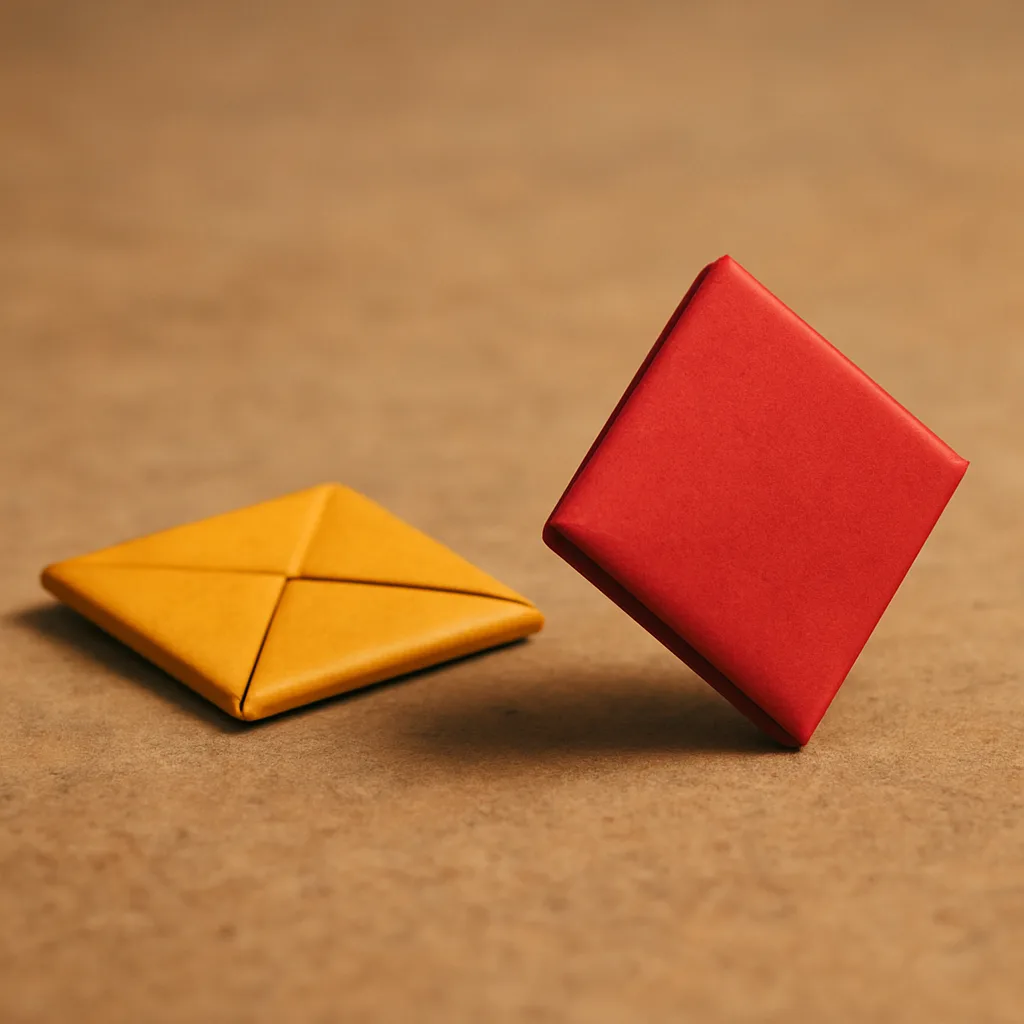
Ddakji is deeply rooted in Korean childhood culture. The goal is simple:
Use your tile to flip your opponent’s tile on the ground.
And suddenly the PAA questions make more sense:
- “How do you flip a Squid Game card?”
- “Which way is ddakji supposed to face?”
- “What’s the trick to winning ddakji?”
These are not random searches—they come from genuine global curiosity about a traditional game that exploded in popularity after the series aired.
How Ddakji Works
The rules are simple on the surface:
- Two square, folded paper tiles are placed on the ground.
- One belongs to Player A, the other to Player B.
- The goal: slam your tile onto your opponent’s tile to flip it.
Ddakji is usually played with bright, bold colors—often red and blue—mirroring the tiles used in the show.
But simple rules do not guarantee easy success.
This leads to the famous search question:
“How do I flip my ddakji?”
The real key lies in:
- force
- angle
- snap
- weight distribution
- air pressure
- tile folding symmetry
Interestingly, these details connect the humble childhood game to the larger theme of Squid Game:
simple rules hiding complex consequences.
The Physical Science Behind Winning Ddakji
Many viewers, after watching the Salesman flip tiles effortlessly, searched:
“What is the trick to winning ddakji?”
The “secret” is a combination of:
1. The Downward Snap
Striking downward instead of sideways creates a burst of air beneath the opponent’s tile.
2. Tile Weight
A slightly thicker fold generates more impact.
3. Edge Contact
Hitting near the edge of the opponent’s tile, not the center, increases flip probability.
4. Wrist Torque
A quick turning motion adds force without brute strength.
5. Angle of Attack
A flatter tile surface during impact compresses air effectively.
Professional ddakji players (yes, they exist) often demonstrate that technique matters more than strength.
In Squid Game, this serves a narrative purpose:
Players who appear weak or desperate still have a chance to win—with knowledge.
And this is where the Salesman scene acquires its iconic status.
Why Ddakji Appears in Squid Game
Beyond aesthetics, ddakji plays a thematic role:
- It reflects Korean childhood nostalgia
- It introduces stakes in a familiar game
- It tests emotional stability, not physical power
- It foreshadows the game’s moral framing:
“Life-changing choices often begin with simple acts.”
Ddakji’s presence also reinforces a subtle message:
Before entering a system, you must first agree to its rules—whether you fully understand them or not.
This idea echoes through the series, and the ddakji match serves as a microcosm of everything that follows.
Why People Ask About Orientation: “Which way is ddakji supposed to face?”
This question often confuses newcomers.
Ddakji tiles have two sides—sometimes one patterned, one plain.
But the truth is:
Orientation doesn’t matter for legality. It matters for tactics.
Players often choose the lighter or smoother side to face downward because elasticity affects air compression during impact.
This explains why some fans obsess over the detail—not because the show requires it, but because the game itself rewards subtle optimization.
Why the Squid Game Card Feels So Memorable
Both cards—the recruiter card and the ddakji tile—share three traits:
1. Minimalism
Simple symbols. Simple shapes. Simple rules.
2. Cultural grounding
They are rooted in Korean identity:
– geometric symbolism
– schoolyard games
– minimalist design principles
3. Psychological power
The recruiter card symbolizes invitation.
The ddakji card symbolizes initiation.
One opens a door.
The other tests whether you’re ready to walk through it.
This duality explains why search engines explode every time someone types “Squid Game card”.
It’s never merely a card.
It’s a symbol with layers
The Invitation: What the Card Represents in the World of Squid Game
When viewers search “What is the significance of the Squid Game card?”, they are tapping into perhaps the most psychologically rich element of the entire series.
The card does not explain anything.
It does not force anything.
It merely invites.
This invitation is layered:
1. A Lifeline for the Desperate
To someone drowning in debt or despair, the card becomes a symbol of possibility. Its blankness feels like a blank slate—a reset button.
2. A Test of Curiosity
The card doesn’t beg for attention; it waits for the viewer or character to make the first move. This passivity is intentional, reflecting how coercion often hides behind voluntary choices.
3. A Psychological Transaction
By calling the number on the card, a person chooses to surrender agency—an early metaphor for the show’s deeper exploration of power, inequality, and consent.
In narrative design, this is what makes the card so effective.
It isn’t dramatic.
It is quiet.
And quiet things often haunt us more deeply.
Is the Squid Game Card Number Real?
One of the funniest and most chaotic real-world side effects of the show was the flood of people searching:
“Is the Squid Game card number real?”
The answer is yes—too real.
In the early release version, the phone number printed on the card belonged to a real person in South Korea. After receiving thousands of calls, the number was eventually edited or blurred in streaming versions.
The incident illustrates the card’s powerful appeal: viewers wanted to test the boundary between fiction and reality.
This desire—to reach out, to see if the card could also invite them—reflects something essential about the object’s design and narrative function.
Why the Card Is Not a Traditional Playing Card
People often ask:
“What is the card game in Squid Game called?”
This comes from a misunderstanding.
The recruiter’s card is not part of a card game.
It’s a symbolic device.
Its kraft-paper texture, minimal lines, and hand-sized form feel more like a business card than a game component. Its job is not to be played with, but to move the story forward.
The real “game card,” as noted before, is ddakji.
This creates an interesting duality:
- The recruiter card → Symbol, invitation, mythology
- The ddakji card → Action, technique, childhood nostalgia
Squid Game intentionally juxtaposed the two:
one pulls you in, the other tests if you’re ready.
Ddakji as a Cultural Artifact: A Deeper Look
Ddakji’s inclusion in the show did more than introduce global audiences to a Korean childhood pastime—it reminded Korean viewers of a simpler era.
Historically, ddakji was played:
- in schoolyards
- during festivals
- between siblings at home
- using handmade tiles folded from scrap paper
Its appeal came from its loud, satisfying smack and the joy of flipping an opponent’s tile—simple pleasures before digital entertainment dominated childhood.
When the Salesman challenges the protagonist to ddakji, the scene hits a cultural nerve:
it combines nostalgia with stakes, innocence with desperation.
This dual nature helped ddakji trend worldwide, with people searching terms like:
- “ddakji template”
- “how to flip ddakji”
- “ddakji trick”
- “which way ddakji faces”
It became a global phenomenon overnight—an example of how small cultural details can explode when embedded in powerful storytelling.
How to Flip a Ddakji: Technique Explained Naturally
Many want to know How do you flip a Squid Game card?
The answer lies in physics more than force.
A Good Flip Comes From:
1. A Whip-Like Motion
Your arm stays loose until the last moment, adding speed through a quick snap.
2. Impact Area
Aim for the outer edges of the opponent’s tile.
The edge transfers force more efficiently than hitting the center.
3. Tile Mass
A thicker tile creates stronger airflow underneath the opponent’s tile.
4. Downward Torque
Twisting your wrist at impact creates a pressure burst.
5. Tile Smoothness
One side is usually smoother—players often place that side down.
These principles remain true regardless of tile color or size, which explains why people worldwide suddenly tried making ddakji at home after the show aired.
Ddakji and the Illusion of Effortlessness
The Salesman’s casual mastery of ddakji is a deliberate piece of character design. He moves with calm confidence, not aggression. His technique appears effortless.
This contrast—between the protagonist’s struggle and the Salesman’s grace—creates dramatic tension. The game becomes less about flipping tiles and more about flipping social roles:
Who holds power? Who understands the rules? Who is being tested?
In this scene, ddakji is not a children’s pastime.
It becomes a social hierarchy demonstration—one echoed throughout the entire series.
Symbolism Beyond Shapes: Circle, Triangle, Square as Hierarchy
Search engines list this under “Things to know → Symbols.”
The shapes on the Squid Game card aren’t random.
They map directly to the world’s internal logic.
- Circle → workers
They follow orders, move quickly, and speak little. - Triangle → soldiers
They enforce rules, carry weapons, and maintain discipline. - Square → managers
They supervise, strategize, and control information.
The recruiter card’s three symbols combine these roles, creating a compact summary of the power structure the recipient is about to enter.
But the card also symbolizes:
- the simplicity and rigidity of children’s games
- the harshness of adult hierarchies
- the blending of innocence and violence
- the universal readability of geometric symbols
This is why the card became so iconic.
It communicates without language.
It invites without explanation.
It threatens without violence.
Fan Questions and Their Deeper Meanings
Search results show numerous PAA questions that seem odd at first glance:
- “Is Player 324 alive?”
- “Who was 232?”
- “Did Mai actually win the prize?”
- “Why is it called Squid Game?”
These reflect how deeply the card—just a small prop—pulled viewers into the world.
People weren’t only curious about the object.
They were curious about the narrative unfolding behind it.
The Squid Game card became a gateway object.
By understanding it, people hoped to understand the world it belonged to.
That’s the mark of excellent design.
Why the Card Shows Up in Merch, Fan Art, and Cosplay
Although we aren’t covering printable templates or invitations here (that’s your future post C), it’s important to note why the card became beloved by creators:
- It’s instantly recognizable
- It’s low-cost to recreate
- Its shapes resemble game controller symbols
- It carries narrative depth
- It’s minimalistic
- It bridges playfulness and danger
This is why “Squid game card printable / transparent / template” appears in People Also Search For.
Not because people want to play the game, but because they want to own a symbol of the story.
The Narrative Genius Behind Using a Card as the Entry Point
Choosing a simple card as the entry point into the entire series reflects brilliant narrative restraint. Many stories rely on dramatic reveals, complex puzzles, or digital interfaces. Squid Game does the opposite.
A plain card becomes the most important object in the protagonist’s life.
Why this works so well:
- It mirrors real-life recruitment tactics
Quiet, personal, disarming. - It taps into childhood nostalgia
Shapes and simple lines evoke childhood memories. - It allows cross-cultural resonance
A circle, triangle, and square need no translation. - It symbolizes a choice
The act of calling the number is a conscious step. - It sets up the show’s thematic core
Simple games → high stakes
Simple shapes → rigid hierarchy
Simple choices → devastating outcomes
The card is the thesis statement of the entire series—without saying a single word.
The Card as a Bridge Between Worlds
In literature and mythology, objects often serve as “threshold symbols”—items that transition characters from one reality to another:
- Alice had her white rabbit
- Dorothy had the cyclone
- Harry Potter had his Hogwarts letter
In Squid Game, the card serves this role.
It is the thin membrane between normal life and the dystopian game world.
The moment a character picks it up, life is no longer ordinary.
And for viewers, that moment became unforgettable.
A Reflective Conclusion: What the Squid Game Card Truly Represents
If Baccarat teaches us about chance and composure, then the Squid Game card teaches us about invitation, choice, and consequence.
Both the recruiter card and the ddakji tile share the same narrative DNA:
- simplicity
- symbolism
- childhood echoes
- power dynamics
- cultural specificity
The Squid Game card is not merely a prop; it is a miniature philosophy.
A reminder that life-changing decisions often come disguised in simple forms.
A signal that behind every innocent shape lies a system of power.
A reflection of how play, culture, and danger can intertwine in unforgettable ways.
And perhaps that is why the world can’t stop asking about it.
Behind those basic symbols—circle, triangle, square—lies a universe of meaning, choice, and consequence.