

Card games are one of humanity’s most enduring pastimes. Whether played in royal courts, crowded casinos, or on a smartphone during a morning commute, the appeal of card games crosses borders, languages, and generations. While today we instantly think of Poker, UNO, or Magic: The Gathering, the history of card games stretches back more than a thousand years. Understanding this history not only enriches the games we play today but also highlights how culture, technology, and creativity shaped their evolution.
- The Mamluk Deck (13th Century Egypt)
- The Origins of Card Games in Asia
- Arrival in Europe (14th Century)
- The Growth of Classic Games (16th–19th Century)
- The American Influence (19th Century)
- The Rise of Family & Party Games (20th Century)
- Collectible Card Games (1990s Revolution)
- The Digital Card Game Era
- Global Cultural Impact
- Why the History of Card Games Still Matters
- History Real Fun in Game of card
The Origins of Card Games in Asia
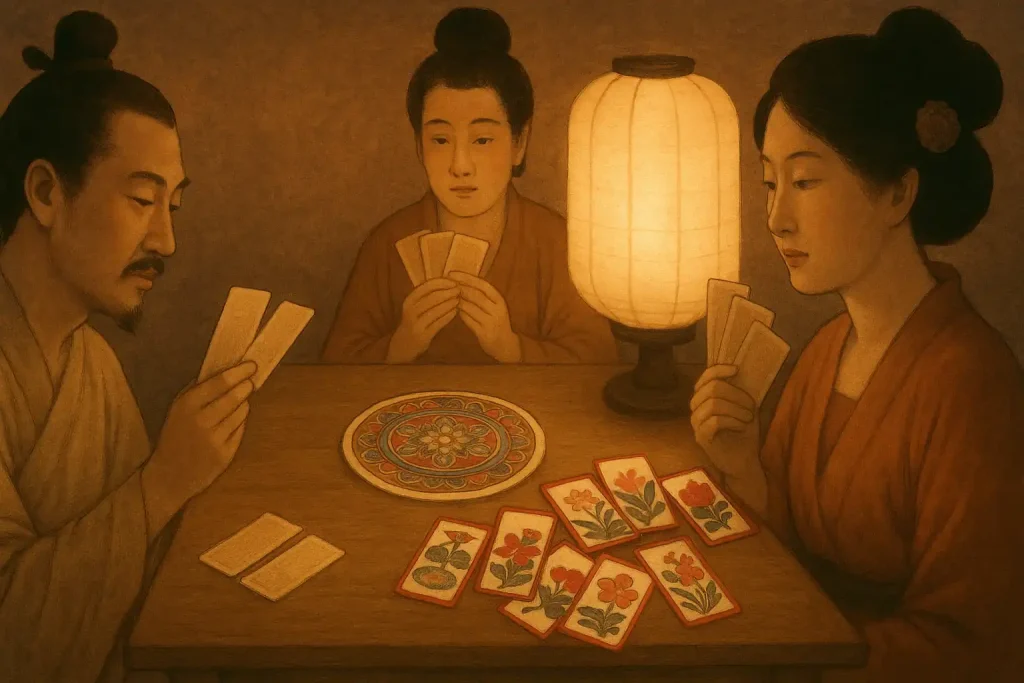
Tang Dynasty China (9th Century)
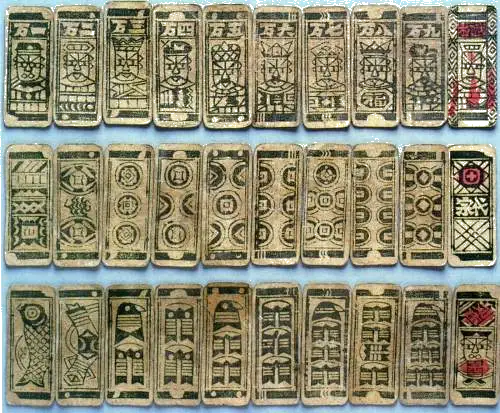
Most scholars trace the earliest card games to China during the Tang Dynasty (9th century). These early “playing cards” may have evolved from domino tiles or even paper money games, where the cards represented both the medium and the stakes. Unlike modern decks, these cards were often rectangular slips of paper with decorative symbols.
Ganjifa in India
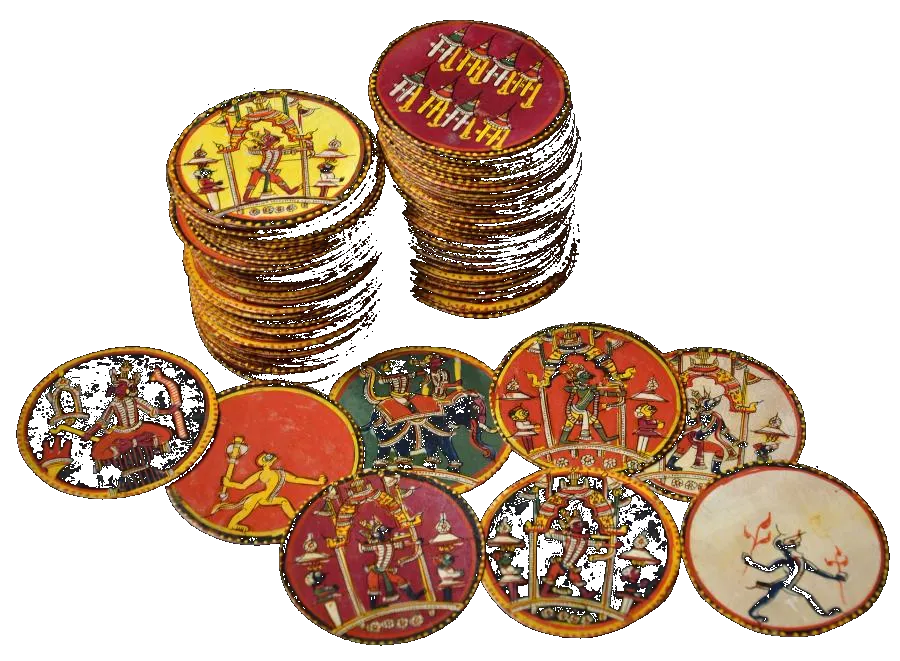
In medieval India, card games took a distinct form with Ganjifa cards. These were circular, hand-painted, and often made of ivory or stiff paper. Played in royal courts, Ganjifa featured multiple suits (sometimes up to 12) with intricate artwork. The Mughal Empire popularized the game further, making Ganjifa both a cultural artifact and a form of leisure.
Japanese Karuta and Hanafuda

Japan encountered cards in the 16th century via Portuguese traders. Initially, imported European decks were used, but when foreign gambling was banned, locals adapted by creating karuta. Later, the development of Hanafuda (“flower cards”) introduced unique suits based on seasonal flowers. Games like Koi-Koi remain widely played in Japan today, blending history with cultural tradition.
Card Games in the Middle East
The Mamluk Deck (13th Century Egypt)
By the 13th century, playing cards had spread westward into the Islamic world. The Mamluk deck from Egypt is among the earliest surviving examples. This 52-card set included four suits: Cups, Coins, Swords, and Polo Sticks. The designs were richly decorated, often avoiding human figures due to cultural traditions, but they strongly resemble the suits still seen in European decks today.
Transmission via Silk Road
Traders and travelers along the Silk Road carried these playing cards further west. By the late Middle Ages, cards reached Mediterranean Europe, setting the stage for their transformation into the decks we know today.
Arrival in Europe (14th Century)

Early European Decks
Playing cards first appeared in Italy and Spain around the late 14th century. These decks kept suits similar to the Mamluk design: Swords, Cups, Coins, and Batons. Initially hand-painted and expensive, cards were luxury items enjoyed by the nobility. With the advent of printing presses, card decks became cheaper, spreading quickly across Europe.
French Innovations
France played a pivotal role in standardizing cards. By the 15th century, the French introduced the four suits—Hearts, Diamonds, Clubs, and Spades—that remain dominant worldwide today. This innovation, combined with mass production, turned cards into a universal medium for countless games.
German Decks
Meanwhile, German cardmakers developed their own suits: Acorns, Leaves, Hearts, and Bells. These designs survive in central Europe, showing how regional preferences shaped card play across the continent.
The Growth of Classic Games (16th–19th Century)

Trick-Taking Games
As cards became common, structured trick-taking games flourished:
- Whist (England): A simple yet strategic game that directly inspired modern Bridge.
- Tarock (Austria/Eastern Europe): Using a 78-card tarot deck, it remains a popular regional pastime.
- Ombre (Spain): Popular in noble courts, especially in Spain and France.
Early Gambling Games
Cards also became associated with betting and chance:
- Faro (France, later USA): A fast-paced betting game once popular in American saloons.
- Brag (UK): Precursor to modern Poker, emphasizing bluffing.
- Primero (Italy/Spain): A 16th-century gambling game sometimes called the ancestor of Poker.
Social Games
In France, Piquet became a favored two-player game among aristocrats, while other countries saw unique blends of social and strategic play emerge.
The American Influence (19th Century)

Poker

Perhaps no game shaped the American image of cards more than Poker. Originating along Mississippi riverboats, Poker blended European comparing games with American betting culture. By the late 1800s, it spread nationwide, with variations like Five-Card Draw and eventually Texas Hold’em. Today, Poker is both a casual pastime and a global competitive sport.
Rummy Family
Rummy and its offshoots like Gin Rummy became staples of American households in the early 20th century. These games emphasized set-building and hand management, making them accessible yet deeply strategic.
Casino Classics
Casinos elevated games like Blackjack and Baccarat, making them synonymous with gambling culture in places like Las Vegas and Monte Carlo.
The Rise of Family & Party Games (20th Century)
UNO (1971)
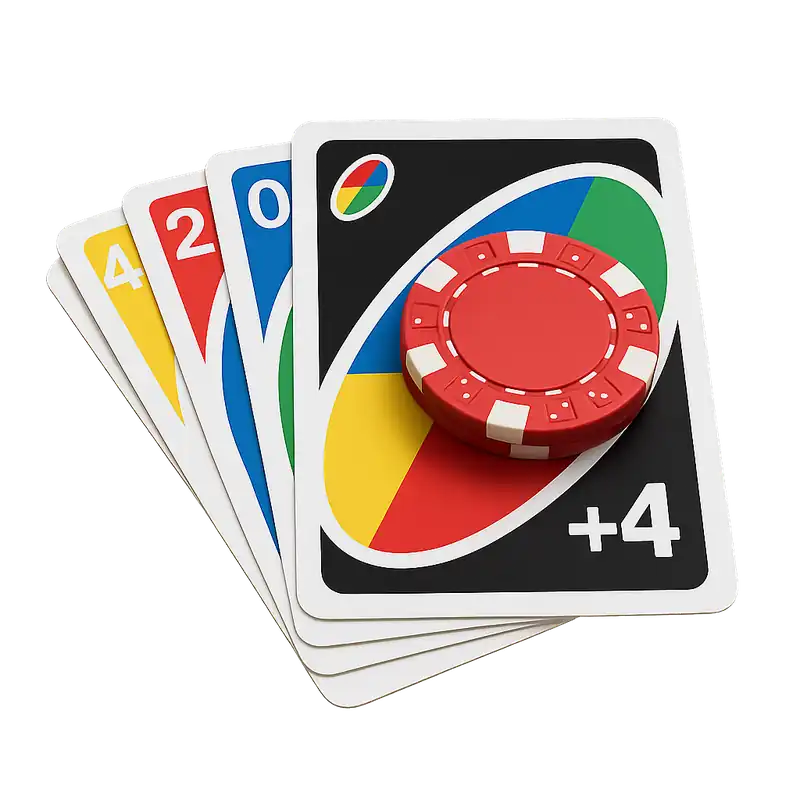
Invented in Ohio, UNO adapted rules from Crazy Eights into a colorful dedicated-deck format. Its simplicity and family-friendly design turned it into a global sensation, available in dozens of themed editions.
Canasta (1950s)
Originating in Uruguay, Canasta became a craze across South America and North America in the 1950s. It emphasized melding combinations and cooperative partnerships.
Phase 10 and Others
Games like Phase 10 and Skip-Bo emerged in the late 20th century, cementing the dedicated-deck family card game market alongside traditional Rummy-based systems.
Collectible Card Games (1990s Revolution)
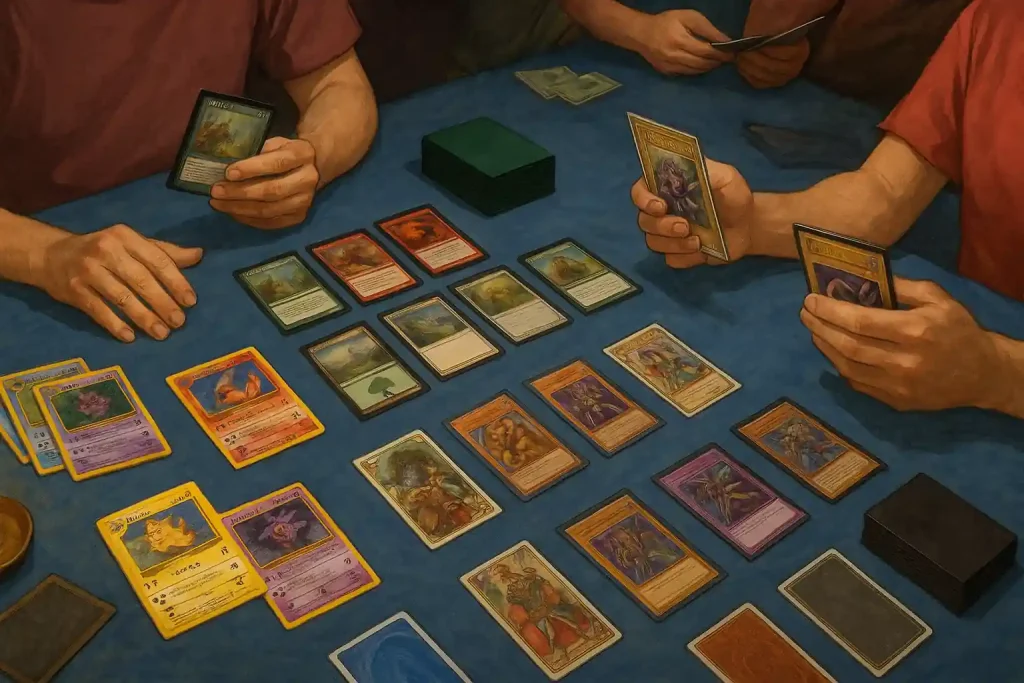
Magic: The Gathering (1993)
Created by mathematician Richard Garfield, Magic: The Gathering (MTG) was the first collectible card game. It introduced deck construction, mana systems, and competitive tournaments, inspiring countless imitators.
Pokémon TCG (1996)
Launched alongside the video game franchise, the Pokémon Trading Card Game became an immediate success with children and collectors. Rare cards like Charizard became cultural icons.
Yu-Gi-Oh! (1999)
Spun off from a manga and anime, Yu-Gi-Oh! combined flashy monsters with strategic play. It developed into one of the world’s largest organized play networks.
The Digital Card Game Era

Solitaire on Windows (1990)
Bundled with Microsoft Windows, Solitaire became the first digital card game for millions of people, showing how software could introduce games to new audiences.
Online Collectible Games
Digital platforms brought new waves of players:
- Hearthstone (2014): Blizzard’s online CCG that reached tens of millions globally.
- Gwent: Based on The Witcher series, it turned a fictional game into a competitive reality.
- Legends of Runeterra: Riot Games’ entry into the digital card scene.
- MTG Arena & Pokémon TCG Online: Digital versions of existing CCGs.
Mobile Card Games
Casual games like UNO mobile, Poker apps, and countless Solitaire variants ensure card games remain accessible anywhere, anytime.
Global Cultural Impact
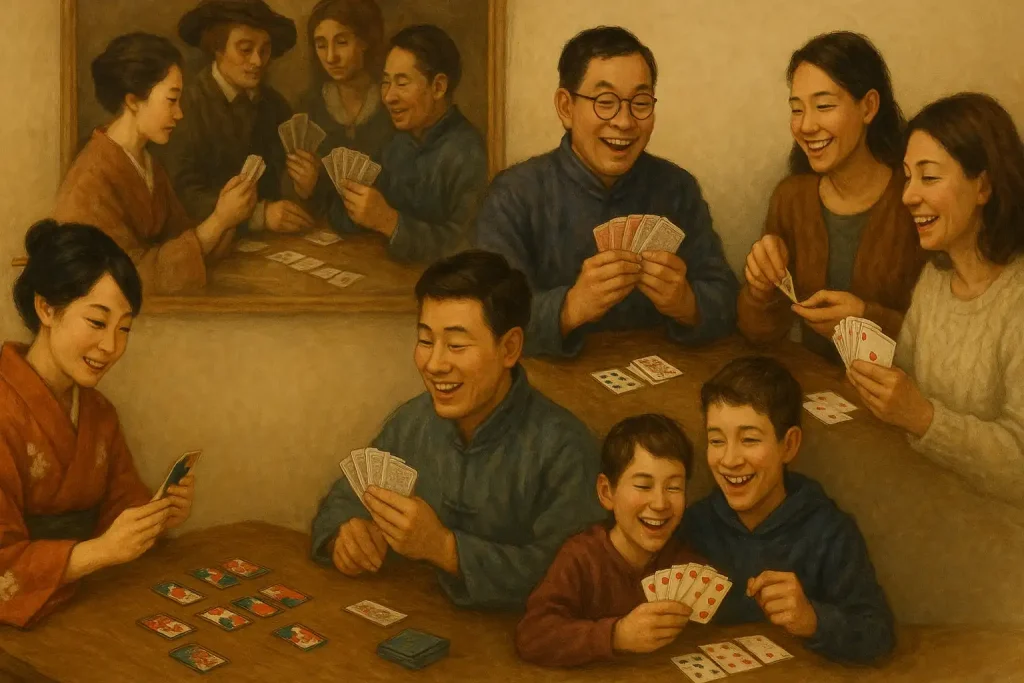
Card Games Around the World
Different regions continue to preserve their unique card traditions:
- Dou Dizhu (China): A national favorite shedding game.
- Koi-Koi (Japan): Hanafuda-based matching game.
- Tarabish (Canada): A Bridge-style trick-taking variant from Cape Breton.
- Truco (Latin America): A popular bluffing and trick-taking game.
Card Games in Art and Literature
Card games appear frequently in paintings, novels, and films—symbolizing chance, fate, and human interaction. From Caravaggio’s The Cardsharps to Casino Royale, cards are part of cultural storytelling.
Why the History of Card Games Still Matters
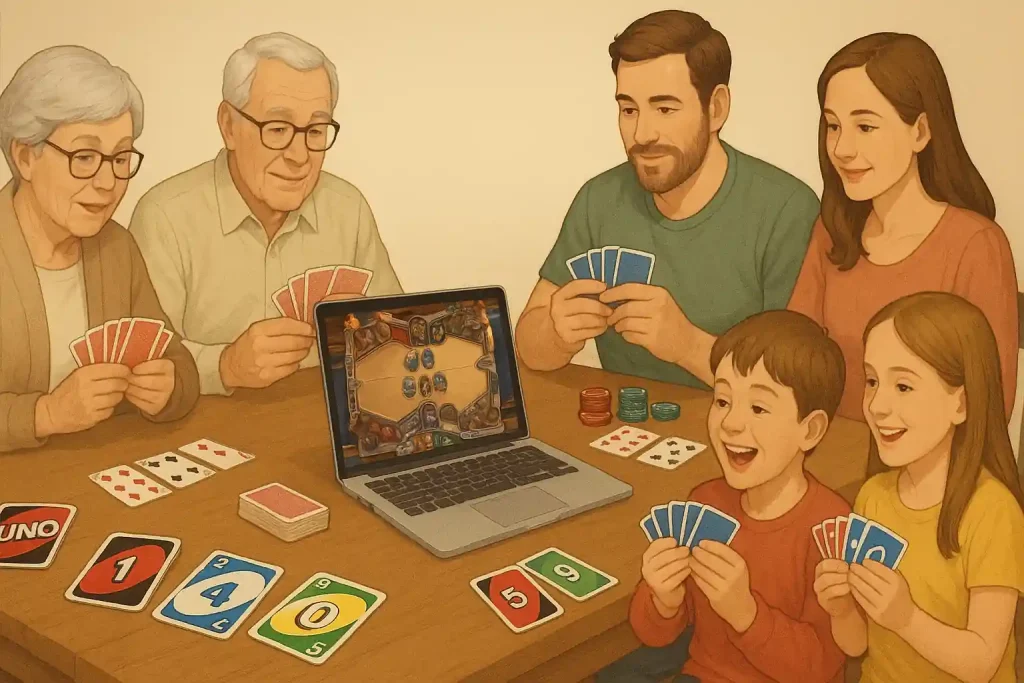
The history of card games is not just entertainment trivia—it connects us to centuries of cultural evolution. Knowing how games like Poker or Rummy developed gives depth to our play. More importantly, it highlights that no matter the time or place, humans have always sought ways to connect, compete, and have fun through simple decks of cards.
History Real Fun in Game of card
From the invention of paper slips in Tang Dynasty China to competitive digital tournaments, the history of card games is a story of innovation and continuity. Games evolve, but the core spirit of fun, skill, and chance remains unchanged.
To dive deeper into classifications, see our guide on Types of Card Games, or explore the unique traditions in Card Games Around the World.
Refferency: