A Game Where Flowers Bloom into Strategy
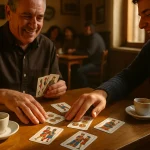
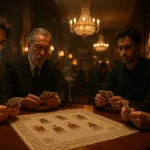
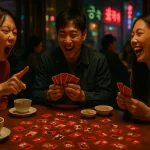
In Japan, a deck of cards can hold centuries of poetry. Among them, Koi-Koi stands out — a two-player battle of wit and rhythm played with the elegantly illustrated hanafuda cards.
The phrase koi-koi literally means “come on” or “let’s go again.” In the game, it’s the cry of a player daring to continue the round instead of cashing out their points — a single word that captures Japan’s quiet courage: risking everything for a chance at more.
Far from being forgotten, Koi-Koi lives on in modern Japan. It appears in Nintendo’s Clubhouse Games, the Yakuza series, the anime Summer Wars, and even casual mobile apps. What started as a parlor pastime has become a timeless symbol of patience, artistry, and calculated risk.
- From Portuguese Playing Cards to Japanese Art
- Setting the Stage: Oya and Ko
- The Goal: Forming Yaku – Scoring Combinations
- Classic Yaku Combinations
- Scoring, Rounds & Multipliers
- Variations & Modern Adaptations
- The Cultural Philosophy of Koi-Koi
- The Meaning Behind “Koi-Koi”
- Koi-Koi in Popular Culture
- Strategy Tips for Beginners
- Why Koi-Koi Endures
- 📚 References
From Portuguese Playing Cards to Japanese Art
Koi-Koi’s story begins in the 16th century, when Portuguese merchants introduced Western playing cards to Japan. After gambling was outlawed, Japanese artisans reinvented the concept — replacing numbers and suits with seasonal imagery. Thus, the hanafuda (“flower cards”) were born.
A hanafuda deck has 48 cards, divided into 12 months, each featuring plants or symbols of the season: pine for January, cherry blossoms for March, maple leaves for October, and so on. Each design carries cultural weight — representing beauty, impermanence, and the Japanese harmony with nature.
Setting the Stage: Oya and Ko
Koi-Koi is played by two players. Before the first hand, one becomes Oya (“the parent” or dealer) and the other Ko (“the child”). The dealer can be chosen at random, with rock-paper-scissors, or by drawing cards — the earliest month drawn becomes Oya.
The dealer deals eight cards to the opponent, eight to the table face-up, and eight to themselves. The rest form the draw pile.
Players take turns matching cards from their hand with those on the table that share the same month or flower.
Matched pairs are placed into a score pile. If a player cannot match, they must discard one card face-up. After every play, they draw the top card from the pile — if it matches something on the table, both cards are captured.
The Goal: Forming Yaku – Scoring Combinations

The objective of Koi-Koi is to collect special combinations of cards called yaku (役). Each yaku grants points, but forming one forces a crucial decision:
- Stop, end the hand, and claim your points, or
- Say “Koi-Koi!”, continue playing to build more yaku — but risk losing everything if the opponent scores first.
It’s a dance between greed and restraint. Call “Koi-Koi” too soon, and you may lose double. Wait too long, and your opponent might strike first.
Classic Yaku Combinations
Below are some of the most iconic yaku (following Nintendo and traditional rulesets):
| Yaku | Meaning | Card Combination | Points |
|---|---|---|---|
| Gokō (五光) | Five Lights | All five 20-point “light” cards | 10 |
| Shikō (四光) | Four Lights | Any four light cards (except Willow) | 8 |
| Ame-Shikō (雨四光) | Rainy Four Lights | Four lights including Willow | 7 |
| Sankō (三光) | Three Lights | Any three lights (no Willow) | 5 |
| Inoshikachō (猪鹿蝶) | Boar-Deer-Butterfly | Animal cards from Clover, Maple, Peony | 5 |
| Hanami-zake (花見酒) | Flower-Viewing Sake | Sakura Curtain + Sake Cup | 5 |
| Tsukimi-zake (月見酒) | Moon-Viewing Sake | Moon + Sake Cup | 5 |
| Akatan/Aotan (赤短/青短) | Red/Blue Poem Slips | Three red or blue tanzaku | 5 |
| Tane (タネ) | Animal Set | Five animal cards (+1 each extra) | 1 + |
| Tanzaku (短冊) | Poem Slips | Five tanzaku (+1 each extra) | 1 + |
| Kasu (カス) | Plain Cards | Ten “chaff” cards (+1 each extra) | 1 + |
Each name carries poetic imagery — Hanami-zake celebrates cherry-blossom drinking parties; Inoshikachō combines three animals revered in folklore.

Scoring, Rounds & Multipliers
A full Koi-Koi match usually lasts twelve hands, one for each month.
When a hand ends:
- The scoring player adds the total value of their yaku.
- If they called “Koi-Koi” and failed, they get zero, and the opponent gets double.
- Hitting seven points or more in one hand doubles your score again.
If neither player forms a yaku, the dealer gains one bonus point and remains Oya — a privilege called Oya-ken (“Dealer’s Right”).
Variations & Modern Adaptations
Over time, local and digital versions have added new twists:
- Some allow multiple “Koi-Koi” calls in a single round.
- Others use shortened matches or different scoring thresholds.
- Multiplayer variants occasionally pair players diagonally to encourage teamwork.
Today, Koi-Koi is accessible worldwide:
- Nintendo’s Clubhouse Games offers a crisp digital version.
- Yakuza and Sakura Wars include it as a playable mini-game.
- Online communities on Reddit share free tools, printable decks, and strategy guides.
The tradition has gracefully evolved without losing its roots.
The Cultural Philosophy of Koi-Koi

Beyond rules and scores, Koi-Koi is a mirror of Japanese values:
- Patience (忍耐 – nintai): Wait for the right bloom to strike.
- Courage (勇気 – yūki): Dare to shout “Koi-Koi!” and risk it all.
- Harmony (和 – wa): The seasonal motifs reflect unity with nature.
- Respect (礼儀 – reigi): Win with grace, lose with dignity.
It sits comfortably beside Go or Shogi as a mental duel wrapped in quiet artistry.
The Meaning Behind “Koi-Koi”
Calling “Koi-Koi!” is more than a game decision — it’s a statement of intent. You’re choosing to continue when it would be safer to stop.
That single act captures a philosophy deeply woven into Japanese culture: progress through calculated risk. Just as in life, there’s no victory without vulnerability.
Koi-Koi in Popular Culture
- Anime – Summer Wars (2009): The game becomes a metaphor for unity and intellect in the digital age.
- Manga – Kakegurui Twin: Used in a high-stakes psychological duel.
- Video Games – Yakuza & Nintendo Clubhouse Games: Bringing Koi-Koi to a new generation.
Nintendo’s historical connection runs even deeper: before it made video games, Nintendo began in 1889 as a hanafuda manufacturer. The company still sells commemorative decks today — including ones featuring Mario characters — honoring the tradition that started it all.
Strategy Tips for Beginners
From community experts and veteran players:
- Learn the months first. Recognizing flowers speeds up matching.
- Watch your opponent’s captures. Block easy Yaku like Aotan or Tane.
- Control the table. Avoid discarding cards that could complete a rival combo.
- Call “Koi-Koi” only with momentum. Continue only when odds favor new Yaku.
- Appreciate the flow. Winning isn’t everything — Koi-Koi is about rhythm and reading people.
Why Koi-Koi Endures
Few games balance beauty and intellect so effortlessly. Each hand is a miniature story about timing, restraint, and ambition.
Every card blooms with meaning; every decision mirrors the human choice between safety and risk. That’s why Koi-Koi continues to blossom across centuries — from tatami mats to touchscreens.
Koi-Koi is more than a traditional Japanese card game — it’s an art form that bridges design, emotion, and philosophy. Its hanafuda cards tell the story of seasons; its rules teach patience and courage.
In every shout of “Koi-Koi!” there’s a spark of human nature — the will to push forward, even when the outcome is uncertain.
And here at Cardanoir, we celebrate games like Koi-Koi not only for their strategy, but for the stories they whisper — stories where art, risk, and culture intertwine in perfect rhythm.
📚 References
- Nintendo Japan – Official Hanafuda Guide: How to Play Koi-Koi (Hanafuda & Kabufuda)
- Wikipedia (Dutch): Koi-Koi – Traditional Japanese Card Game
- Reddit Community: Best Free Ways to Play Koi-Koi (Hanafuda Discussion)
- Cardanoir Research Notes (2025): Cultural interpretation and historical structure of Koi-Koi gameplay based on public sources and verified community archives.