The world of Gundam has always been bigger than its anime frames. What began in 1979 as a war-driven tale about mobile suits and political tension soon grew into a cultural giant—spanning animation, novels, video games, model kits, and countless reinterpretations of what a mecha story could be.
Among these many expansions, one medium has always stood out for its ability to turn battles into tactile, personal experiences: the Gundam card game.
It survives through different generations and iterations—first as the long-running Gundam War of 1999, and now as the reborn, modern Gundam Card Game (GCG) ushered in by the Newtype Rising era.
To understand why Gundam fits so perfectly into a card game format, and why its community spans everything from competitive players to nostalgic collectors, we have to retrace the evolution of the game itself.
- The Birth of Gundam War (1999)
- The Color System: Strategy Written in Factions
- Five Card Types That Shaped the Battlefield
- A Game That Endured for Nearly Two Decades
- A Silence Between Generations
- The Return: A New Era Begins
- Why the Modern GCG Feels Like a Natural Evolution
- The Modern Rebirth, the Culture, and the Future of Gundam Card Games
- Newtype Rising and the Shape of the Modern GCG
- A System Built for Today’s TCG Generation
- Why People Are Drawn to the New GCG
- Starter Decks and Booster Boxes Of Gundam Card Game : A New Entry Point
- The Thrill of Collectibility
- Why Gundam Card Games Endure Beyond Competition
- Community Of Gundam Card Game
- The Heart of Competitive Play
- The Digital Future: Apps, Databases, and Online Deckbuilding
- A Legacy That Spans Generations
The Birth of Gundam War (1999)
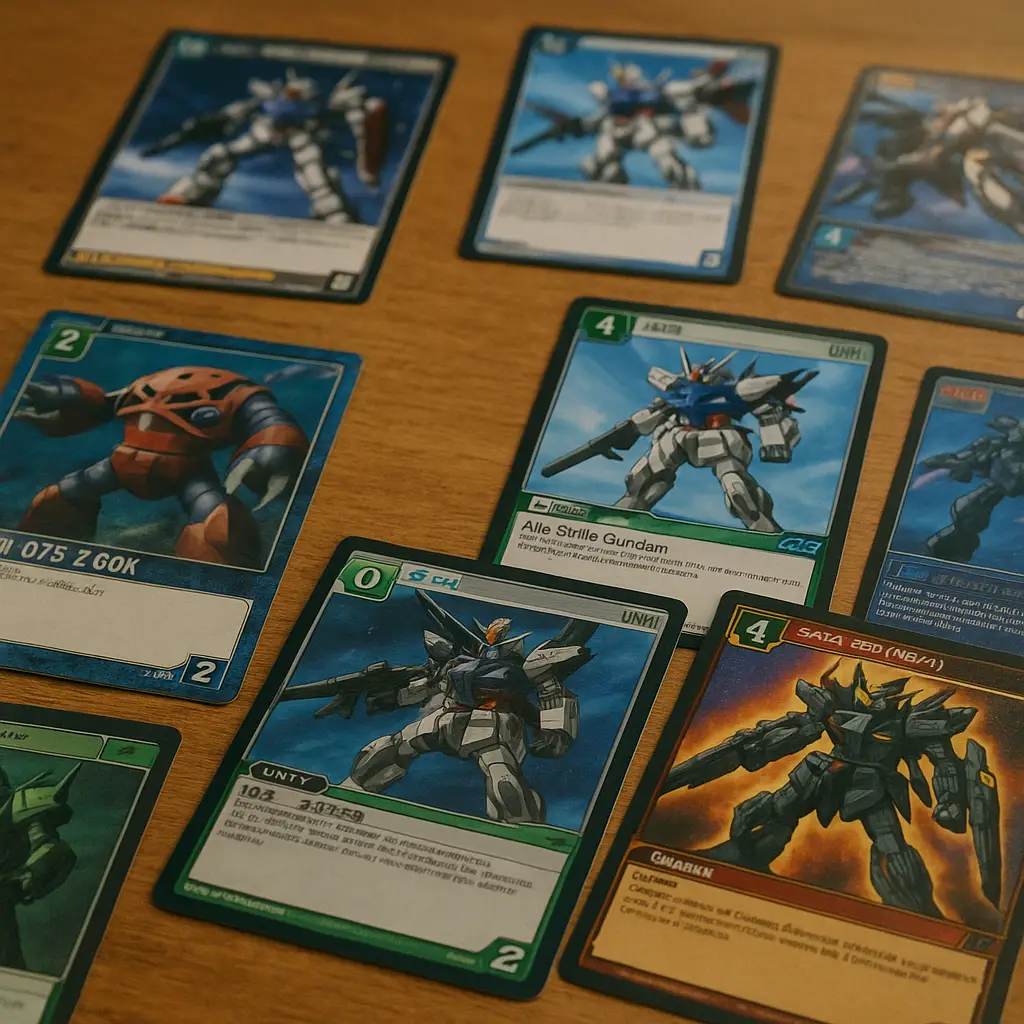
When Bandai launched Gundam War in February 1999, trading card games were experiencing a golden era. Titles like Magic: The Gathering had introduced the language of resource systems and turn-based combat, while anime franchises were beginning to experiment with card expansions of their own.
Gundam, with its rich timelines and factions, entered this world almost naturally. Players could finally place legendary mobile suits on the battlefield, assign pilots who shaped the outcome, and reenact wars that previously existed only on screen.
Gundam War stood apart because it didn’t feel like a spin-off. It felt like an extension of the universe.
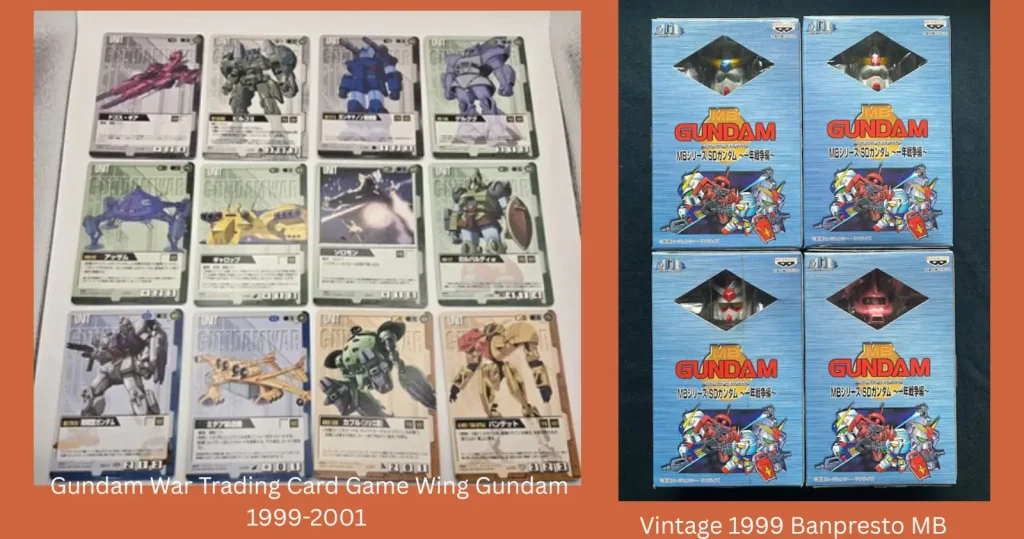
The rules were built around a simple but elegant idea:
your cards are your nation.
Your strength, your strategy, your endurance — all drawn from the same pile.
This deck, known as the Nation Pile, functioned as both your resource engine and your life total. Every time you drew a card, you gained possibilities. Every time your pile lost cards, your nation was closer to collapse.
The result was a game where tension rose steadily, not only from what you played, but from what you lost.
The Color System: Strategy Written in Factions
Over the years, players learned to recognize Gundam War through its colors. Each one captured a different philosophy of combat, mirroring the personalities of the factions they represented.
Blue
Known for balance and adaptability—Earth Federation, AEUG, and other protagonist-aligned groups.
These decks favored efficient mobile suits and steady tempo.
Green
Aggressive, disruptive, and explosive—Zeon, Delaz Fleet, and certain 00-era groups.
Well-suited for pressure players.
Black
Control-heavy, destructive, often unforgiving—Titans, Zanscare Empire, and similar authoritarian factions.
Where patience wins wars.
Red
Trick-oriented and reactive—Neo Zeon, Crossbone Vanguard, Jupiter Empire.
The color of countermeasures and precision strikes.
Brown
Inventive, flexible, and unusual—representing universes like Turn A, G Gundam, and Gundam X.
Famous for recursion and unconventional win paths.
White
Heroic, powerful, top-heavy—Gundam Wing, SEED, and others.
The color of iconic protagonists and late-game climaxes.
Purple
The modern hybrid—seen in Gundam 00 and Gundam AGE.
It blended aggression with utility, often introducing mechanics not found in other colors.
The beauty of this system was that it wasn’t just balance or flavor.
It was identity.
Players weren’t simply choosing a deck. They were choosing a philosophy— a stance on how to wage war in the Gundam universe.
Five Card Types That Shaped the Battlefield
While many card games followed similar traditions—creatures, spells, enchantments—Gundam War organized its world into five types that made perfect thematic sense:
1. Units
The centerpiece of the battlefield.
Mobile Suits, Armors, Cruisers, even Colonies.
Without Units, no battle could begin.
2. Characters
Pilots, officers, engineers—each defined not just by stats, but by story.
A Character bonded to a Unit felt like a narrative coming alive.
3. Commands
Sudden maneuvers, tactical surprises, turning points.
A nod to Gundam’s dramatic combat twists.
4. Operations
Environments, long-term strategies, logistical backdrops.
These cards set the mood of entire matches.
5. Generation Cards (G Cards)
The resource engine.
The factories, bases, and supply lines behind every mobile suit.
By structuring the game this way, Bandai ensured that the feel of each match mirrored the pacing of a Gundam episode:
a slow buildup, a rising tension, a decisive clash, and a clear strategic arc.
A Game That Endured for Nearly Two Decades
Gundam War did more than survive — it thrived.
It maintained an active lifespan of 19 years, supported by more than 40 expansions, countless regional tournaments, and a passionate international community.
It persisted not through constant reinvention, but through refinement.
New suits appeared as new series released.
Beloved pilots found their way into the card frames.
New factions emerged as the anime universe expanded.
And for a long time, it felt like Gundam War would go on forever.
But in 2018, the game finally reached its end.
The closure wasn’t dramatic.
No final set with a “Farewell” title.
Just a quiet conclusion to one of the longest-running non-Magic card games in history.
Fans kept collecting, trading, and playing, but Bandai had clearly begun preparing for something else—something modern, global, and renewed.
A Silence Between Generations
The years after Gundam War ended were strange.
There were still collectors.
There were still players who held onto their decks.
There were still tournaments run by communities, not companies.
But there was no official successor.
This absence created an interesting cultural window.
People rediscovered old cards.
Fan sites catalogued unit lists and rulings.
Collectors began treating older expansions like historical artifacts.
And a new wave of fans — those who grew up with 00, Iron-Blooded Orphans, or The Witch From Mercury — began wondering whether their Gundam would ever have a card game of its own.
It was the kind of quiet period that often precedes a rebirth.
The Return: A New Era Begins
Bandai eventually returned to the battlefield with a completely reimagined card game — the modern Gundam Card Game (GCG).
Where Gundam War carried the weight of a long legacy, the new GCG arrived with a clean slate, centered around a new flagship set:
Newtype Rising (GD01)
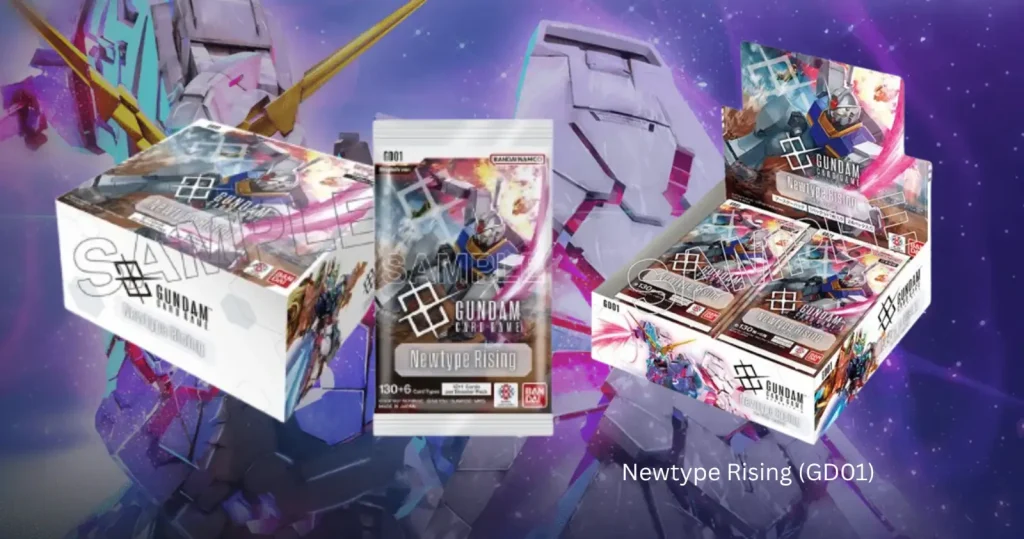
A modern, polished reintroduction of Gundam Card Game into the TCG world.
The reboot embraced faster games, tighter rules, and a design sensibility shaped by the success of Bandai’s modern TCGs like Dragon Ball Super Card Game and One Piece Card Game.
It was built for a new generation of players who expect:
- refined card frames
- clear rarities
- high-quality booster experiences
- digital deck building
- competitive balance
- global English releases
This wasn’t meant to replace Gundam War.
It was meant to reawaken the idea of Gundam as a strategic card battlefield.
Why the Modern GCG Feels Like a Natural Evolution
The new game retains the spirit of its predecessor—faction identity, pilot-unit synergy, the thrill of reenacting mobile suit battles—but it does so with:
- more accessible entry points,
- modern card templating,
- standardized rarities,
- and fast-paced tempo tailored for contemporary TCG culture.
Collecting feels more intuitive.
Deck construction feels smoother.
And battles feel cinematic, without sacrificing tactical nuance.
For returning fans, the new GCG feels like a homecoming.
For new fans, it feels like an invitation.
The Modern Rebirth, the Culture, and the Future of Gundam Card Games
Newtype Rising and the Shape of the Modern GCG
When Newtype Rising arrived, it didn’t feel like a replacement for Gundam War.
It felt like a restart—an intentional, hopeful reset button for a franchise ready to return to the tabletop with contemporary polish.
The modern Gundam Card Game (GCG) embraces the expectations of today’s TCG landscape.
Cards are clearer.
Rarities are immediately readable.
Booster boxes feel premium.
Starter decks are approachable for beginners, yet still meaningful for veterans.
Most importantly, the game understands one thing that older versions often took for granted: the world has changed.
Modern players want accessibility without losing depth.
They want card lists that are easy to explore.
They want deck engines that make sense without requiring encyclopedic rule knowledge.
They want mobile apps, online references, digital deck builders, and international support.
GCG steps into this world with confidence.
A System Built for Today’s TCG Generation
The new GCG maintains Gundam’s soul, but redesigns its skeleton.
1. Cleaner Card Frames
The artwork stands front and center.
Pilots and mobile suits are crisp, expressive, and cinematic.
2. A Modern Rarity Structure
Rarities scale intuitively, with clear distinctions that make collecting feel rewarding instead of overwhelming.
3. Streamlined Deck Construction
Decks feel both flexible and flavorful, allowing players to build around mobile suits, pilot synergies, or thematic squads from specific timelines.
4. Faster Battles
Tempo is tighter.
Decision-making is sharper.
Games feel like short tactical encounters rather than sprawling campaigns.
5. English-Language Support
This is critical.
Many international fans have waited decades for a globally aligned Gundam Card Game TCG.
Now they finally have one.
Through these changes, Bandai managed to create a game that’s modern without becoming generic—refined without losing character.
Why People Are Drawn to the New GCG
Across communities, you’ll hear similar thoughts repeated:
- It feels fresh.
- It feels cohesive.
- It feels designed with care.
- It captures both the energy of the anime and the tactile joy of a card battle.
Many longtime Gundam fans describe the experience as “finally seeing a card game that feels like the animation it came from.”
And newcomers—those who’ve never touched Gundam War—discover that the franchise’s factions translate naturally into deck archetypes.
The modern GCG succeeds because it respects the past, embraces the present, and builds toward the future with clarity.
Starter Decks and Booster Boxes Of Gundam Card Game : A New Entry Point
One of the most noticeable shifts in this new era is how inviting the product line feels.
Starter Decks
Designed around iconic mobile suits and their pilots.
They teach core mechanics while still being fun to upgrade.
Booster Boxes
Offer a curated selection of factions, suits, and characters, including highly sought-after cards that anchor new deck ideas.
Expansion Sets
Beginning with Newtype Rising, each wave introduces new timelines or variations:
- Universal Century
- Cosmic Era
- After Colony
- Anno Domini
- Post-Disaster
- Witch From Mercury
Each set carries its own personality, bridging multiple generations of Gundam fans into a shared battlefield.
The Thrill of Collectibility
Gundam has always blended storytelling with physical expression, especially through Gunpla.
Card collecting taps into similar instincts:
- wanting to hold your favorite mobile suit in your hand
- chasing alternate-art frames
- completing a timeline-themed deck
- building binders organized by faction or era
- appreciating the art as much as the mechanics
Modern GCG rarities elevate this experience.
Legend cards, for example, showcase mobile suits in dramatic compositions reminiscent of anime key visuals.
Collectors don’t just chase these cards for power.
They chase them because they feel like small, tangible pieces of the Gundam universe.
Why Gundam Card Games Endure Beyond Competition
Many TCGs live or die by their tournament scenes.
Gundam card games, however, draw strength from multiple pillars:
1. Lore
Players form emotional bonds with certain suits, pilots, and story arcs.
2. Faction Identity
Choosing Zeon vs. Earth Federation is more than gameplay — it’s allegiance.
3. Visual Storytelling
Card art functions like snapshots from animated history.
4. Cultural Memory
Mobile suits symbolize eras, philosophies, and characters people have grown up with.
5. Collectibility
Some fans treat the cards more like art prints or mini-posters than game pieces.
Few IP-based card games command this mixture of gameplay + nostalgia + cultural weight.
Community Of Gundam Card Game
Between Gundam War and the modern GCG, the community never truly disappeared.
Collectors, hobbyists, and fans kept:
- archiving card lists
- cataloguing rulings
- organizing local meetups
- sharing deck builds online
- translating old expansions
- preserving rare cards
- scanning art and maintaining databases
This long-standing passion makes the modern reboot feel like a natural continuation rather than a standalone product.
The new GCG isn’t entering an empty field.
It steps into a garden that fans tended for years.
The Heart of Competitive Play
Both Gundam War and the modern GCG rely on strategic fundamentals that reward foresight, adaptation, and momentum.
While the old game prioritized long-form tactical warfare through Nation Piles, the new GCG focuses on speed and modern tempo.
Matches tend to be:
- shorter
- more decisive
- more intense
The shift mirrors the evolution of TCG culture worldwide.
Players today enjoy games that resolve cleanly without sacrificing tactical sharpness.
Pilot-unit synergy remains a standout mechanic — seeing an iconic pilot land in the cockpit of their mobile suit is still one of the most satisfying moments in the game.
The Digital Future: Apps, Databases, and Online Deckbuilding
Although the new GCG does not revolve around digital play, its ecosystem supports:
- mobile card databases
- card search tools
- deck builders
- online communities
- digital card scans
- unofficial simulators for testing strategies
This hybrid model reflects the future of the TCG world — a blend of physical cards supported by digital tools.
As expansions grow, the online layer will likely become an even more important part of the GCG experience, helping players track new releases, card rulings, and meta evolutions.
A Legacy That Spans Generations
The story of the Gundam card game is not linear.
It is not a straight line from 1999 to today.
It is more like an orbit — looping between eras, ideas, and generations of fans.
More detail infomation on gundam.fandom.com
The old and the new coexist.
Collectors treasure the weight of older expansions.
Newcomers dive into Newtype Rising with curiosity and excitement.
And somewhere in the middle, both groups discover that Gundam’s appeal remains timeless.
This is the rare kind of franchise where nostalgia and innovation don’t clash — they reinforce one another
What a Card Game Can Teach About Gundam
Across its incarnations, the Gundam card game has captured something essential about the Gundam universe itself:
- conflict shaped by ideology
- characters defined by choices
- machines treated not as weapons, but extensions of human will
- timelines that echo history rather than escape it
Gundam War offered players a way to reenact history.
The modern GCG offers players a way to reinterpret it.
Both games—separated by decades—remind us that strategy isn’t just about winning.
It’s about understanding the forces behind each move: loyalty, ambition, sacrifice, resilience.
And maybe that’s why the Gundam card game continues to evolve.
Not because the rules demand it.
But because the world of Gundam itself keeps expanding, inviting each new generation to pick up a deck, shuffle the cards, and reenter the ongoing dialogue between humanity and the machines it creates.