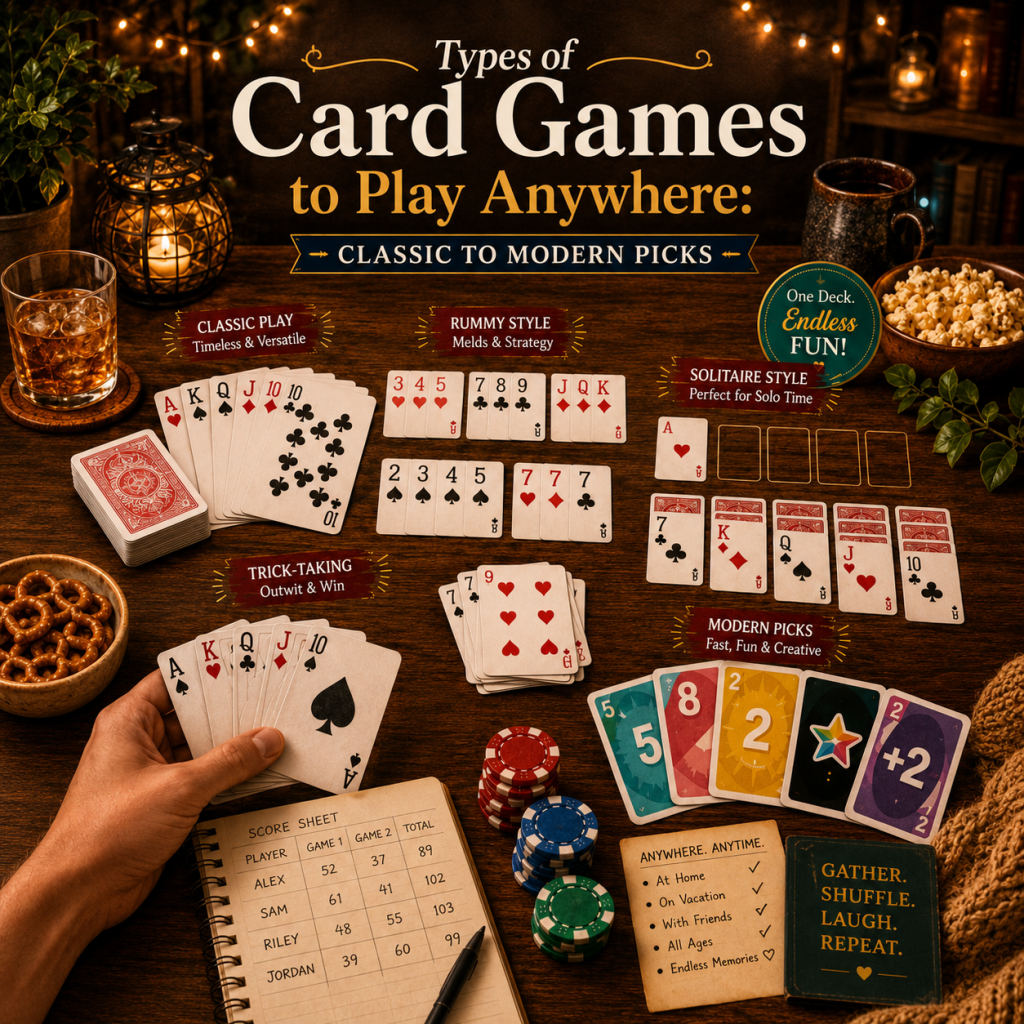
cardanoir.com – Card games have a special kind of charm. They do not need a large board, expensive equipment, or complicated preparation. A simple deck of cards can turn a quiet evening into a warm family moment, a friendly competition, or even a thoughtful solo activity. That is why understanding the different types of card games to play can help you choose the right game for the right occasion.
Some card games are fast and funny. Some are calm and strategic. Others test memory, patience, focus, or teamwork. The best part is that card games can be enjoyed almost anywhere: at home, during travel, at a cafe, on vacation, or during a casual weekend gathering.
Whether you are playing with children, friends, parents, or coworkers, there is always a card game style that fits the mood. Below is a complete guide to the most popular types of card games, how they feel when played, and why they remain timeless.
Why Card Games Are Still Loved Today
Card games remain popular because they feel simple, social, and flexible. You do not need a screen, a big room, or a long explanation before starting. Most games can be learned in a few minutes, but many still offer enough depth to stay exciting after repeated play.
Card games create conversation naturally. Players laugh, guess, bluff, remember, plan, and react to one another. This makes the experience feel more alive compared to activities where everyone is focused only on a device.
There is also a strong cause-and-effect element in card games. When players practice regularly, they usually become better at recognizing patterns, making decisions, and reading the flow of the game. As a result, the game becomes more satisfying because improvement feels visible.
Quick Overview of Popular Card Game Types
| Type of Card Game | Best For | Difficulty Level | Common Feel |
|---|---|---|---|
| Matching Card Games | Kids and families | Easy | Relaxed and fun |
| Shedding Card Games | Groups and parties | Easy to medium | Fast and competitive |
| Trick-Taking Games | Strategy lovers | Medium | Tactical and focused |
| Rummy-Style Games | Adults and families | Medium | Pattern-based and thoughtful |
| Solitaire Games | Solo players | Easy to hard | Calm and personal |
| Memory Card Games | Children and seniors | Easy | Brain-friendly and light |
| Party Card Games | Friends and gatherings | Easy | Funny and energetic |
| Strategy Card Games | Competitive players | Medium to hard | Deep and rewarding |
1. Matching Card Games
Matching card games are among the easiest types of card games to play, especially for children and beginners. The goal is usually simple: find pairs, match numbers, match colors, or collect similar cards.
Why Matching Games Work So Well
Matching games are easy to understand because they rely on visual recognition. Players do not need complex rules to enjoy them. This makes them perfect for family nights where different age groups are playing together.
Examples of matching-style games include memory pair games, Go Fish, and simple picture-card games. These games help players practice attention and recall while still feeling light and enjoyable.
Best Moment to Play
Matching games are best when you want something casual, gentle, and family-friendly. They are also great for children who are just learning how to follow turns and basic rules.
2. Shedding Card Games
Shedding games are all about getting rid of the cards in your hand. The first player to empty their hand usually wins. This creates a fast, exciting rhythm because every turn can change the direction of the game.
Popular examples include Crazy Eights, Uno-style games, and other color or number-based card games.
The Fun Behind Shedding Games
The beauty of shedding games is their speed. Players do not have to wait too long between turns, and the rules are often easy to follow. Because the game changes quickly, everyone stays alert.
Cause and effect: when a player saves a special card for the right moment, it can completely change the outcome. This creates a fun mix of luck and timing.
Quick Review
Shedding card games feel energetic and social. They are not always the deepest games, but they are excellent for laughter, friendly teasing, and keeping a group entertained.
3. Trick-Taking Card Games
Trick-taking games are classic and strategic. In this type of game, each player plays a card in a round, often called a “trick.” The strongest card, depending on the rules, wins that trick.
Examples include Spades, Hearts, Bridge, and Whist.
Why Trick-Taking Games Feel Smart
Trick-taking games reward observation. Players need to remember which cards have already been played, predict what others might hold, and decide when to use strong cards.
This type of game is perfect for people who enjoy thinking ahead. It is not only about luck; it is also about timing, reading the table, and making careful decisions.
Who Should Try Trick-Taking Games?
These games are ideal for adults, teens, and players who enjoy strategy. They may take a little longer to learn, but once the rhythm becomes familiar, the experience feels deeply satisfying.
4. Rummy-Style Card Games
Rummy-style games focus on building sets and sequences. Players collect cards that match by number, rank, or order. The goal is usually to organize your hand into useful combinations.
Examples include Gin Rummy, Indian Rummy, and Contract Rummy.
The Appeal of Rummy Games
Rummy games are enjoyable because they balance luck and skill. You may not control which card you draw, but you can control how you arrange your hand and when you discard.
This makes every choice feel meaningful. A careless discard can help another player, while a smart hold can prepare your winning combination.
Best For Calm Competition
Rummy-style games are great for people who like thoughtful card play without making the game too heavy. They work well for quiet evenings, family gatherings, and friendly adult game nights.
5. Solitaire and Solo Card Games
Not every card game needs a group. Solitaire games are designed for one player and are perfect when you want to relax, focus, or pass time quietly.
Classic Solitaire, Spider Solitaire, and FreeCell are popular examples.
Why Solo Card Games Are Worth Playing
Solo card games train patience and planning. They give players a peaceful challenge without pressure from others. This makes them useful for short breaks, travel time, or quiet moments at home.
The effect of playing solo card games regularly is often better focus. Players learn to scan possibilities, avoid rushed moves, and think a few steps ahead.
Personal Review
Solitaire-style games feel simple at first, but they can become surprisingly addictive in a good way. The satisfaction comes from slowly turning a messy layout into an organized finish.
6. Memory Card Games
Memory card games are excellent for sharpening attention. These games usually require players to remember card positions, previous moves, or hidden information.
They are especially popular for children, but adults can enjoy them too.
Why Memory Games Are Useful
Memory games are not only entertaining; they also feel mentally refreshing. They encourage players to stay present and pay attention to details.
For families, memory games are a good choice because children can compete fairly with adults. Sometimes, kids even win because their focus is sharper than expected.
Best Playing Tip
Start with fewer cards for beginners, then increase the number as players become more confident. This keeps the game fun instead of frustrating.
7. Party Card Games
Party card games are designed for laughter, quick reactions, and social interaction. These games are usually less serious and more focused on entertainment.
Some party card games involve questions, funny prompts, speed challenges, or creative answers.
Why Party Card Games Bring People Together
Party games work because they break the ice. Even people who do not usually play games can join easily. The rules are often simple, and the fun comes from people’s reactions.
These games are perfect for birthdays, small gatherings, college nights, office breaks, or weekend hangouts.
What Makes a Good Party Card Game?
A good party card game should be:
- Easy to explain
- Fast to start
- Funny without being too complicated
- Enjoyable even for beginners
- Flexible for different group sizes
8. Strategy Card Games
Strategy card games are built for players who enjoy deeper decisions. These games may include deck-building, resource management, special card abilities, or long-term planning.
Examples include collectible card games, fantasy battle card games, and modern strategy deck games.
Why Strategy Card Games Feel Rewarding
Strategy card games give players a strong sense of progress. The more you understand the cards, the better your decisions become. This creates a clear connection between learning and winning.
Cause and effect: when players build a stronger strategy, they make fewer random moves. As a result, every round feels more controlled, more competitive, and more exciting.
Best For Dedicated Players
These games are best for people who enjoy learning systems, testing combinations, and improving over time. They may not be the easiest choice for a casual family night, but they are excellent for players who want a richer challenge.
9. Classic Family Card Games
Classic family card games are timeless because they are easy to teach and enjoyable across generations. Games like Go Fish, Old Maid, Crazy Eights, and simple Rummy variations are often passed down from parents to children.
Why Classic Games Never Disappear
Classic card games are familiar, affordable, and warm. They do not try too hard to be complicated. Instead, they create a comfortable space where everyone can participate.
For many people, these games are connected to childhood memories, family holidays, and relaxed evenings. That emotional value makes them more than just games.
How to Choose the Right Type of Card Game
Choosing the best card game depends on the people, time, and mood. A strategic game may be great for two focused players, but it might feel too heavy for a loud group gathering. On the other hand, a party card game may be perfect with friends but too chaotic for someone who wants a quiet challenge.
Here is a simple guide:
- Choose matching games for kids and beginners.
- Choose shedding games for fast group fun.
- Choose trick-taking games for thoughtful competition.
- Choose rummy-style games for balanced strategy.
- Choose solitaire games for solo relaxation.
- Choose party games for laughter and social moments.
- Choose strategy games for deeper long-term play.
The best card game is not always the most famous one. It is the one that fits the table, the players, and the mood of the moment.
Real Playing Experience: What Makes Card Games Enjoyable?
From a real playing perspective, card games become enjoyable when the rules are clear, the pace feels smooth, and everyone gets a chance to participate. A game that is too slow can make beginners lose interest. A game that is too random can make experienced players feel disconnected. The best card games usually sit somewhere in the middle.
For example, shedding games are great when you want instant fun. Rummy-style games are better when you want a calm but competitive session. Trick-taking games feel satisfying when players enjoy reading each other’s moves. Solitaire is perfect when the goal is not social interaction, but personal focus.
That flexibility is the reason card games never feel outdated. One deck can create many different experiences.
FAQ About Types of Card Games to Play
1. What are the easiest types of card games to play?
The easiest types of card games to play are matching games, shedding games, and simple family card games. These usually have clear rules and can be learned quickly by beginners.
2. What card games are best for families?
Family-friendly card games include Go Fish, Crazy Eights, Old Maid, simple Rummy, and memory card games. These games are easy enough for children but still enjoyable for adults.
3. What type of card game is best for strategy lovers?
Trick-taking games, Rummy-style games, and modern strategy card games are best for players who enjoy planning, reading opponents, and making thoughtful decisions.
4. Can card games be played alone?
Yes, many card games can be played alone. Solitaire, Spider Solitaire, and FreeCell are popular solo card games that are relaxing and mentally engaging.
5. What card games are good for parties?
Party card games, fast shedding games, and prompt-based card games are great for parties. They are easy to start, encourage laughter, and work well with larger groups.
Conclusion
The best types of card games to play are the ones that match your mood, your group, and the kind of experience you want to create. Matching games are light and friendly, shedding games are fast and exciting, trick-taking games are strategic, Rummy-style games are thoughtful, solitaire games are calming, and party card games are perfect for laughter. With just a simple deck or a small card set, you can create hours of entertainment that feels personal, social, and timeless.