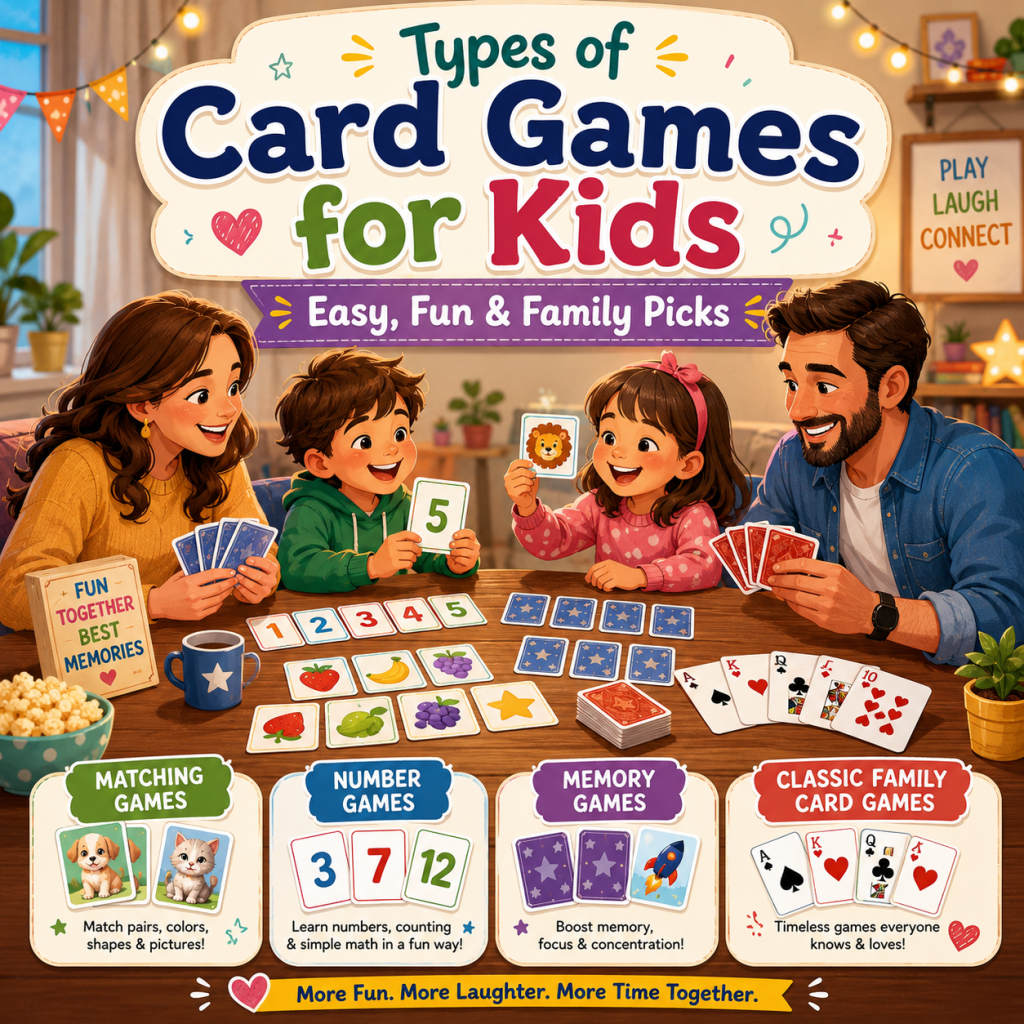
cardanoir.com – Card games are one of the simplest ways to keep children entertained while also helping them learn. A small deck of cards can create laughter, friendly competition, memory practice, counting skills, patience, and family connection. That is why knowing the best types of card games for kids can make playtime more meaningful, especially when parents want an activity that feels light but still useful.
Unlike many modern games that require screens, apps, or complicated tools, card games are easy to prepare. Children can play them at home, during travel, at school breaks, or during family gatherings. Some games are perfect for toddlers learning colors and shapes. Others are better for older kids who enjoy strategy, numbers, and quick thinking.
The best thing about card games is their flexibility. They can be silly, calm, competitive, educational, or cooperative depending on the rules. With the right choice, kids do not only play; they also learn how to wait for turns, follow instructions, make choices, and handle winning or losing with a better attitude.
Why Card Games Are Great for Kids
Card games are more than a fun way to pass time. They support many small but important skills in a natural way. Children do not feel like they are studying, but their brains are still working.
When kids play card games, they often practice:
- Recognizing numbers, symbols, colors, and patterns
- Remembering card positions or previous moves
- Counting points or matching values
- Taking turns and following rules
- Making decisions based on the cards they hold
- Communicating with other players
Cause and effect: when children play simple card games regularly, they become more comfortable with rules and problem-solving. As a result, they usually become more patient, more focused, and more confident in group activities.
Quick Table of Card Game Types for Kids
| Type of Card Game | Best Age Range | Main Skill Built | Game Feeling |
|---|---|---|---|
| Matching Card Games | 3+ | Memory and recognition | Calm and simple |
| Number Card Games | 5+ | Counting and math | Educational and fun |
| Shedding Card Games | 6+ | Strategy and timing | Fast and exciting |
| Memory Card Games | 3+ | Focus and recall | Gentle and brain-friendly |
| Family Classic Games | 5+ | Social skills | Warm and familiar |
| Storytelling Card Games | 4+ | Imagination | Creative and playful |
| Cooperative Card Games | 5+ | Teamwork | Supportive and friendly |
| Strategy Card Games | 8+ | Planning | More challenging |
1. Matching Card Games for Young Kids
Matching games are among the easiest card games for kids because the rules are simple. Children only need to find cards that look the same, have the same color, or belong to the same group.
Why Matching Games Work Well
Matching games help children recognize patterns. They are especially good for younger kids because they do not require reading ability. A child can understand the game by looking at pictures, numbers, or colors.
Popular matching-style games include memory pairs, animal matching cards, color matching cards, and shape matching games.
Best Playing Situation
Matching card games are perfect for quiet afternoons, preschool activities, and family time with younger children. They are also useful when parents want a short game that does not take too much energy.
2. Memory Card Games for Focus and Recall
Memory games are simple but powerful. Cards are placed face down, and players take turns flipping two cards at a time. If the cards match, the player keeps them. If they do not match, the cards are turned back over.
How Memory Games Help Kids
Memory games train children to pay attention. They learn to remember where certain cards are placed and use that information on their next turn.
This creates a clear cause-and-effect pattern: the more carefully a child watches the cards, the better chance they have to find a match. Over time, this can improve concentration and visual memory.
Real Review
In real family play, memory card games often surprise adults. Kids can become very sharp at remembering positions, and sometimes they beat older players easily. The game feels fair, simple, and satisfying because everyone has the same chance to focus and win.
3. Number Card Games for Counting Practice
Number card games are great for children who are learning basic math. These games can use a standard deck of cards or special number cards.
Simple Number Game Ideas
Parents can create easy rules such as:
- Draw two cards and add the numbers together.
- Compare two cards and see which number is bigger.
- Arrange cards from smallest to largest.
- Match cards that create a total of ten.
- Count points after each round.
These games make numbers feel playful instead of stressful. Kids can practice addition, comparison, and order without feeling pressured.
Best Age Group
Number card games are usually best for kids aged five and above. Younger children can still join with simple number recognition, while older kids can play with addition, subtraction, or even multiplication rules.
4. Shedding Card Games for Fast Fun
Shedding games are card games where players try to get rid of all the cards in their hand. These games are exciting because every turn can change the result.
Why Kids Love Shedding Games
Children enjoy shedding games because they move quickly. There is less waiting, more reaction, and more surprise. Cards with special actions can make the game even more fun.
Games similar to Crazy Eights or color-and-number matching games are good examples. Kids learn to look at the card on the table, check their hand, and choose the best card to play.
What Kids Learn
Shedding games teach timing and decision-making. A child may learn that playing a special card too early can be less useful, while saving it for the right moment can help them win.
5. Classic Family Card Games
Classic family card games are always a good choice because they are easy to teach and familiar across generations. Games like Go Fish, Old Maid, Snap, and Crazy Eights are simple enough for kids but still fun for adults.
Why Classic Games Stay Popular
Classic games are popular because they bring people together without making the rules too complicated. A child can learn the basic idea quickly and start playing within minutes.
These games are also good for teaching social habits. Kids learn to ask questions, answer politely, wait for their turn, and accept the result of the game.
Best Family Moment
Classic card games are perfect for weekends, holidays, rainy days, and family nights. They create a warm feeling because everyone can sit together, talk, laugh, and play without needing a screen.
6. Storytelling Card Games for Creative Kids
Storytelling card games use picture cards, character cards, or prompt cards to help children create stories. These games are excellent for kids who love imagination.
How Storytelling Cards Work
A child may draw three cards and use them to create a short story. For example, one card shows a castle, another shows a cat, and another shows a rainy day. The child then builds a story using those elements.
This type of game improves creativity, speaking skills, and confidence. It also helps children organize ideas in a fun way.
Why Parents Like It
Storytelling card games do not focus too much on winning. The goal is expression. This makes them great for children who feel nervous in competitive games.
7. Cooperative Card Games for Teamwork
Not every card game needs one winner. Cooperative card games encourage children to work together toward a shared goal.
Why Cooperative Games Are Helpful
Cooperative games teach teamwork. Instead of thinking only about their own cards, children learn to discuss choices, support friends, and make group decisions.
This is especially useful for kids who get upset easily when they lose. In cooperative games, the focus shifts from beating others to solving a challenge together.
Best For Group Play
Cooperative card games are great for classrooms, siblings, and playdates. They help children practice communication without creating too much pressure.
8. Strategy Card Games for Older Kids
Older kids often enjoy card games with more planning. Strategy card games may involve collecting sets, building combinations, managing special cards, or predicting what other players might do.
Why Strategy Games Are Good for Growth
Strategy card games help children think ahead. They learn that every choice can affect the next turn. If they use a strong card too soon, they may not have it later. If they wait too long, they may miss the best chance.
This kind of thinking helps kids develop patience and planning skills. It also makes the game feel more rewarding because improvement becomes visible over time.
Best Age Range
Strategy card games are usually better for kids aged eight and above. At this age, many children can understand longer rules and enjoy deeper challenges.
How to Choose the Right Card Game for Kids
Choosing the right game depends on the child’s age, mood, and attention span. A five-year-old may enjoy matching and memory games, while a ten-year-old may prefer strategy or fast-paced games.
Here is a simple guide:
- Choose matching games for toddlers and preschoolers.
- Choose memory games for focus and calm play.
- Choose number games for math practice.
- Choose shedding games for fast and exciting fun.
- Choose storytelling games for creative children.
- Choose cooperative games for teamwork.
- Choose strategy games for older kids who like challenges.
The best card game is not always the most advanced one. It is the game that keeps children engaged, comfortable, and happy to play again.
Tips to Make Card Games More Enjoyable for Kids
A good card game session should feel fun, not forced. Children enjoy games more when the rules are clear and the atmosphere is relaxed.
Helpful Tips for Parents
- Start with simple rules before adding extra challenges.
- Keep the first round short so kids do not lose interest.
- Praise effort, not only winning.
- Let children help shuffle, deal, or organize cards.
- Change the game if the child looks bored or frustrated.
These small details can make card games feel more positive. When kids enjoy the experience, they are more likely to ask for another round.
FAQ About Types of Card Games for Kids
1. What are the easiest types of card games for kids?
The easiest types of card games for kids are matching games, memory games, Go Fish, Snap, and simple number card games. These games have clear rules and are easy for beginners.
2. What card games help kids learn?
Number card games, memory games, matching games, and storytelling card games can help kids learn counting, focus, pattern recognition, and communication skills.
3. What age can kids start playing card games?
Many children can start with simple matching or picture card games around age three. More advanced games can be introduced as they grow older.
4. Are card games good for family bonding?
Yes, card games are excellent for family bonding because they create shared time, conversation, laughter, and friendly interaction without needing screens.
5. What card games are best for older kids?
Older kids may enjoy strategy card games, Rummy-style games, shedding games, and cooperative card games because these offer more decisions and challenges.
Conclusion
The best types of card games for kids are simple, fun, and useful for everyday learning. Matching games help with recognition, memory games build focus, number games support math skills, shedding games create excitement, storytelling games grow imagination, cooperative games teach teamwork, and strategy games help older kids plan ahead. With the right card game, children can laugh, learn, connect with family, and build valuable skills through play.