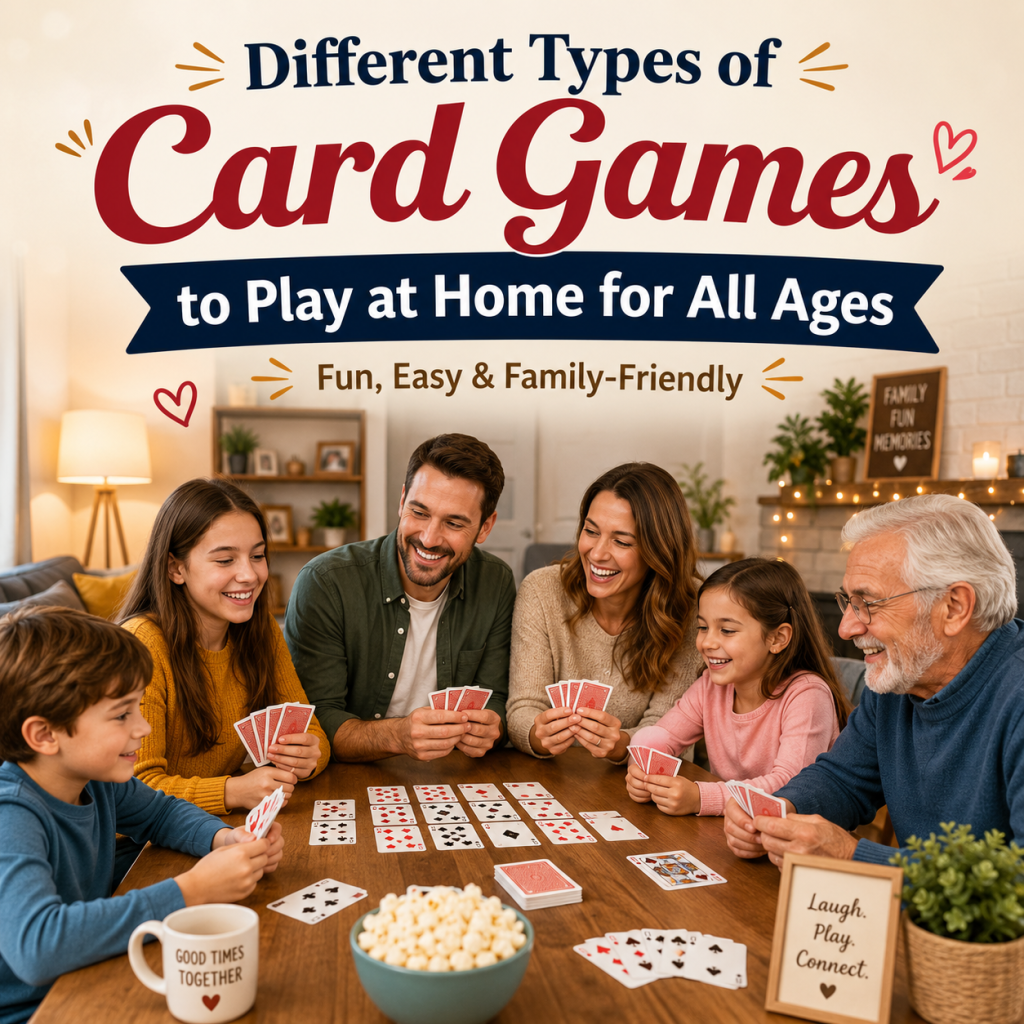
cardanoir.com – There is something timeless about gathering around a table with a deck of cards. No complicated setup, no expensive equipment, and no need for a big space. Just a simple deck, a few players, and the right game can turn an ordinary evening into a memorable night. That is why people continue searching for different types of card games to play at home, especially when they want entertainment that feels relaxed, social, and easy to start.
Card games are flexible. They can be calm and strategic, loud and funny, fast and competitive, or slow and thoughtful. Some games are perfect for kids, some are better for adults, and others work beautifully for mixed groups. The best part is that most card games can be adjusted based on time, skill level, and the number of players.
Whether you are planning a family night, a weekend hangout, a quiet evening with a partner, or a casual party with friends, the right card game can create the exact mood you want.
What Makes Card Games Great for Home Entertainment?
Card games are popular because they are simple but never boring. A single deck can produce dozens of different experiences. One night, you might play a quick matching game with kids. Another night, you might enjoy a strategic round of Rummy or a funny party-style game with friends.
The Main Reasons Card Games Work So Well at Home
Card games are ideal for home because they are:
- Affordable and easy to prepare
- Portable and playable almost anywhere
- Suitable for many ages and skill levels
- Great for improving focus, memory, and decision-making
- Perfect for both small and large groups
- Easy to repeat without feeling exactly the same
Cause and Effect: Why Simple Games Create Strong Memories
Cause: Card games bring people face-to-face without screens or distractions.
Effect: Conversations flow more naturally, laughter happens more often, and the game becomes part of the memory rather than just an activity.
That is the hidden charm of playing cards at home. It is not only about winning. It is about the small reactions: someone bluffing badly, a child celebrating a lucky draw, or a quiet player suddenly making a brilliant move.
Quick Comparison Table of Card Game Types
| Card Game Type | Best For | Skill Level | Number of Players | Mood |
|---|---|---|---|---|
| Classic Card Games | Families and mixed groups | Easy to medium | 2-6 | Relaxed |
| Strategy Card Games | Competitive players | Medium to hard | 2-5 | Focused |
| Party Card Games | Friends and gatherings | Easy | 4+ | Funny and loud |
| Two-Player Card Games | Couples or close friends | Easy to medium | 2 | Calm or competitive |
| Kids’ Card Games | Children and family nights | Easy | 2-6 | Light and fun |
| Fast-Paced Card Games | Short breaks | Easy | 2-8 | Energetic |
Classic Card Games to Play at Home
Classic card games are the easiest place to start. They are familiar, flexible, and usually simple enough for new players to learn quickly. These games are great when you want something comfortable but still engaging.
1. Rummy
Rummy is one of the most popular card games to play at home because it blends memory, planning, and timing. Players try to form sets or sequences from the cards in their hands. The game feels calm at first, but it becomes more intense as players get closer to finishing.
Why it works at home:
Rummy is perfect for families or adults who enjoy thinking ahead without making the game feel too heavy.
2. Crazy Eights
Crazy Eights is simple, quick, and easy to teach. Players take turns matching the top card by number or suit, while eights act as wild cards. The goal is to get rid of all your cards first.
Review:
Crazy Eights is one of those games that feels effortless. It is light, fast, and ideal when you want something that does not require too much explanation.
3. Go Fish
Go Fish is a friendly classic, especially for kids. Players ask each other for cards to complete matching sets. It helps children practice memory, patience, and basic strategy.
Best Situation for Go Fish
Go Fish is best when the group includes younger players. It keeps the rules simple while still giving everyone a chance to participate.
Strategy Card Games for More Competitive Players
If your group enjoys deeper thinking, strategy card games are a great choice. These games reward planning, observation, and smart decision-making.
1. Spades
Spades is a trick-taking game where players estimate how many tricks they can win. It is often played with partners, which makes communication and teamwork important.
Cause: Players must predict their performance before the round begins.
Effect: Every card matters, and the pressure builds as the round continues.
2. Hearts
Hearts is another trick-taking game, but the goal is usually to avoid certain cards. It is clever, tense, and sometimes surprisingly funny because players often try to pass trouble to someone else.
Why people enjoy it:
Hearts has a nice balance of strategy and mischief. It is not only about playing your best cards; it is also about knowing when to hold back.
3. Bridge
Bridge is one of the most respected card games in the world. It requires partnership, bidding, memory, and careful planning. It may take more time to learn, but it is deeply rewarding.
Is Bridge Good for Home Play?
Yes, especially for adults who enjoy long sessions and thoughtful gameplay. Bridge is not the fastest option, but it is excellent for players who want a card game with depth.
Party Card Games for Friends and Large Groups
Party card games are all about laughter, speed, and reactions. These games are not always about deep strategy. Instead, they focus on fun, surprise, and group energy.
1. Spoons
Spoons is fast, chaotic, and hilarious. Players pass cards around while trying to collect four of a kind. Once someone grabs a spoon from the center, everyone else rushes to grab one too.
Review:
Spoons is perfect when the room needs energy. It creates instant laughter because people are focused one second and panicking the next.
2. President
President is a ranking-style card game where players try to get rid of their cards as quickly as possible. The winner becomes the “President,” while the last player gets the lowest rank for the next round.
Best for:
Groups of friends who enjoy playful competition and social teasing.
3. Cheat
Cheat, also known as Bluff, is a game where players place cards face down and announce what they are playing. The catch is that they may be lying. Other players can challenge them.
Why Cheat Is So Fun
The fun comes from reading people. Some players lie confidently, while others give themselves away immediately. It is simple, but the social tension makes it exciting.
Two-Player Card Games to Play at Home
Not every card game needs a large group. Some of the best games work beautifully with just two people.
1. Gin Rummy
Gin Rummy is a smooth two-player game that rewards observation and planning. Players form combinations and try to reduce the value of unmatched cards.
Why it works:
It feels personal and focused. Every card your opponent picks up can reveal something about their plan.
2. War
War is one of the easiest card games ever. Each player flips a card, and the higher card wins. It is mostly based on luck, but that simplicity makes it relaxing.
Best for:
Kids, casual play, or moments when you want a no-pressure game.
3. Speed
Speed is a fast two-player game where players race to place cards in sequence. It requires quick thinking and sharp hands.
Best Mood for Speed
Play Speed when you want energy. It is not a quiet game; it is intense, quick, and great for people who like fast reactions.
Family-Friendly Card Games for All Ages
Family card games need to be easy enough for younger players but still fun for adults. The best ones create shared moments without making anyone feel left out.
1. Old Maid
Old Maid is simple, funny, and great for children. Players try to make pairs and avoid being left with the unmatched queen or special card.
2. Slapjack
Slapjack is a reaction game where players slap the pile when a jack appears. It is easy to learn and usually gets loud very quickly.
3. Memory Card Matching
While often played with special cards, memory matching can also be created with a regular deck. Players take turns flipping cards and trying to remember their positions.
Family review:
This type of game works well because everyone can play together. Younger players get excited, while adults still enjoy the challenge of remembering card positions.
Easy Card Games for Beginners
When introducing card games to new players, choose games with short rules and quick rounds. This keeps the mood light and prevents the game from feeling like homework.
Best Beginner-Friendly Options
- Crazy Eights
- Go Fish
- War
- Old Maid
- Slapjack
- Spoons
These games are easy to teach, quick to play, and forgiving for beginners.
Why Beginner Games Matter
Cause: If the first game feels too complicated, new players may lose interest.
Effect: Easy card games help everyone feel included and make the group more willing to try other games later.
How to Choose the Right Card Game for Your Home
Choosing the right game depends on your group, mood, and available time. A quiet night with two people needs a different game than a lively party with eight friends.
Simple Selection Guide
| Situation | Recommended Game |
| Playing with kids | Go Fish, Old Maid, Slapjack |
| Playing with a partner | Gin Rummy, Speed, War |
| Family night | Crazy Eights, Rummy, Memory |
| Competitive group | Spades, Hearts, Bridge |
| Party atmosphere | Spoons, Cheat, President |
| Short play session | War, Speed, Crazy Eights |
Quick Tips Before Starting
- Pick a game that matches the youngest or newest player’s skill level.
- Keep the first round casual and explain while playing.
- Avoid long rule explanations at the start.
- Use points only if the group enjoys competition.
- Let players switch games when the energy changes.
FAQ About Different Types of Card Games to Play at Home
1. What are the best card games to play at home with family?
The best family card games include Crazy Eights, Go Fish, Rummy, Old Maid, Slapjack, and Memory. These games are easy to learn and work well for mixed ages.
2. What card games can two people play at home?
Two people can play Gin Rummy, War, Speed, Double Solitaire, and simple variations of Rummy. These games are great for couples, siblings, or close friends.
3. What is the easiest card game for beginners?
War is one of the easiest card games because it requires almost no strategy. Crazy Eights and Go Fish are also excellent beginner-friendly options.
4. What card games are best for parties?
Spoons, Cheat, President, and fast-paced matching games are great for parties because they create laughter, movement, and quick reactions.
5. Can card games be educational for children?
Yes. Card games can help children practice memory, counting, pattern recognition, patience, and social skills such as taking turns and following rules.
Conclusion
Different types of card games to play at home can turn a simple evening into something warm, social, and memorable. From classic games like Rummy and Crazy Eights to strategic choices like Spades and Hearts, every type of card game offers a different kind of fun. Party games bring laughter, two-player games create close competition, and family-friendly games help everyone join in without pressure. The beauty of card games is their simplicity: one deck can fit many moods, many ages, and many moments. Whether you want a quiet challenge, a fast laugh, or a full family game night, there is always a card game that fits perfectly at home.