If the classic Golf card game is known for its light strategy and quick rounds, 9-Card Golf is the version that says, “Let’s raise the stakes a little.” With a bigger grid, more hidden information, and more room for brilliant plays (or painful mistakes), this variant amplifies everything people already love about Golf.
Even with a bigger grid, 9-Card Golf stays welcoming for families while offering enough depth to satisfy players who enjoy pattern-spotting, probability reading, and sharp risk-reward decisions. And if you’re already exploring Golf variations—whether you’re curious about the quick, tactical flow of 4-Card Golf (Open-Face Golf) or the higher-intensity pace of Double-Deck Golf—the 9-card format easily earns its place in the spotlight as the version that adds true puzzle and progression without losing the charm of classic Golf.
What Exactly Is 9-Card Golf?
9-Card Golf is a popular variation of the traditional Golf card game in which each player builds a 3×3 grid of nine cards, all aiming for the same universal goal:
Score the lowest total points by the end of the round.
Unlike 6-Card Golf (the most commonly played version), 9-Card Golf gives players more cards to manage, more opportunities for matching columns, and more moments where a single swap completely changes your fate.
It also introduces a subtle hybrid feel — part set-collection, part deduction, part push-your-luck.
What You Need to Play
To run a proper 9-Card Golf table, you’ll need:
- Two full decks of standard playing cards
- Four jokers total (recommended for classic scoring)
- 2–4 players (more players require additional decks)
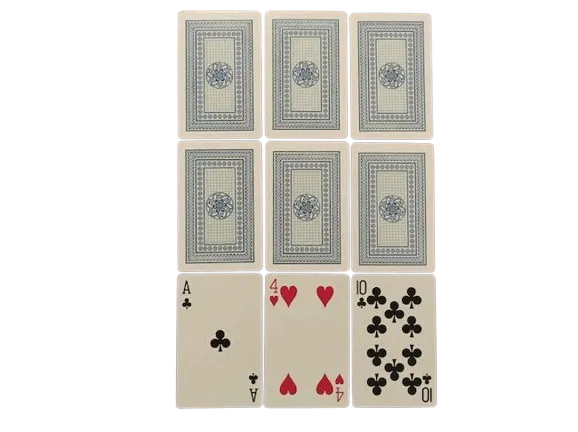
Each player receives nine cards dealt face-down, arranged into the signature 3×3 layout. No one may peek at their cards except during play.
This setup is referenced in gameplay tutorials and official walkthroughs, including the instructional breakdown provided by GatherTogetherGames.
Why People Love This Variant
- More cards = more decisions. Every draw or discard has bigger ripple effects.
- Matching columns becomes a real strategy, not just accidental luck.
- Hidden-card tension lasts longer, since players begin with nine unknowns instead of six.
- Rounds feel more dynamic because the board evolves more slowly.
- Perfect for puzzle-minded players who enjoy optimizing layouts.
If 6-Card Golf is the “casual quick round,”
9-Card Golf is the “sit down and think a bit” version — still simple, but far more rewarding.
How to Play 9-Card Golf
1. Setup
- Shuffle the decks together.
- Deal nine cards face-down to each player, one at a time.
- Arrange your cards into a 3×3 grid.
- Place the remaining deck in the center and flip one card to start the discard pile.
- Each player flips two of their nine cards face-up to begin — this happens only once per round.
2. Goal of the Game
End the round with the fewest points.
Cards carry specific values:
| Card | Value |
|---|---|
| Joker | –2 |
| King | 0 |
| Ace | 1 |
| 2–10 | Face value |
| Jack, Queen | 10 points |
Matching three cards in a column = 0 points for that entire column.
This is the heart of 9-Card Golf’s strategy.
3. Turn Structure
Every turn follows the same flow:
A. Draw one card:
- The top of the draw deck
OR - The top of the discard pile
B. Choose one:
- Replace any card in your grid (even a face-up one)
—then discard the replaced card - OR discard the card you just drew
Discarded cards always go face-up.
This is the engine of the entire game:
draw → evaluate → replace or discard.
Simple, but incredibly tactical when nine cards are involved.
4. Revealing Cards
When you replace a face-down card, you must flip the new card face-up.
If you discard your draw, you do not flip any cards automatically.
5. End of Round
When a player ends their turn with all nine cards face-up, they trigger the final round.
All other players get one last turn.
After that, any remaining face-down cards on their boards must be flipped and scored.
This pacing mirrors the standard nine card rules documented in gameplay tutorials.
Scoring in 9-Card Golf (Explained Simply)
At the end of the round:
- Check each column (3 cards per column).
- If all three cards share the same rank → that column is worth 0 points.
- Add values of unmatched cards normally.
- Total all columns to get your round score.
A commonly played optional rule:
- Four-card square of matching ranks = –25 points (powerful but rare).
Play continues for nine rounds (just like standard Golf).
Lowest total score wins the game.
Strategy: How to Actually Win 9-Card Golf
9-Card Golf rewards players who stay flexible but observant. Some of the strongest principles include:
1. Early Game: Scout Your Board
Use your first few turns to:
- Flip low-value cards,
- Identify potential matching columns,
- Eliminate high penalties (Jacks, Queens, 10s).
2. Mid Game: Build Columns Intentionally
Once patterns emerge, focus on:
- Building columns of three identical ranks
- Using kings and jokers strategically
- Redirecting discarded cards to block opponents
3. Late Game: Control the Clock
You don’t always want to be the one who triggers the end.
Sometimes it’s wiser to:
- Hold off revealing your final card
- Force other players into rushed decisions
- Or strike when your grid is optimized
4. Prioritize Information
Replacing a down-card gives you knowledge.
Drawing from the discard gives you certainty.
Players who manage information best often dominate the table.
Why 9-Card Golf Belongs in Every Card Game Rotation
9-Card Golf stays true to the charm of the original card game Golf — easy rules, satisfying choices, and unpredictable swings — but adds just enough depth to make it more strategic and immersive.
It’s perfect for:
- Game nights with friends
- Families wanting something familiar yet fresh
- Card-game enjoyers who love structured puzzles
- Competitive players who enjoy optimizing layouts
The 3×3 grid creates a board-like feel, the scoring rewards clever planning, and the longer arc of each round gives everyone room to pull off surprising, memorable plays.
If 6-Card Golf is your warm-up, 9-Card Golf is your main event.