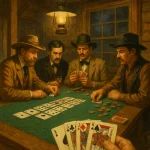
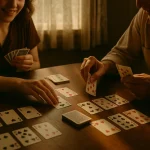
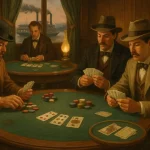
Imagine a cozy living room in the American Midwest during the 19th century. Four players lean forward around a wooden table, shuffling a slim deck of just 24 cards. The air is thick with concentration, but laughter breaks through every now and then. They’re playing Euchre in other terms like Lanterluy or Labate, a card game that has survived centuries and continues to bring people together. Some places this game callled by the name Dirty Clubs or Cut-throat Euchre.
If you think about it, not many games can claim such a perfect mix of simplicity and tactical depth. So what makes the Euchre card game such a cultural treasure? Let’s deal in.
A Brief History of Euchre
Euchre’s story begins in early 19th-century America, though its roots likely stretch back to European trick-taking games such as Jucker from Alsace. German immigrants brought it across the Atlantic, and it quickly became a favorite in U.S. regions like the Midwest.
Few people realize that the familiar Joker traces its roots back to the Origins of Euchre.
It started as a simple “best bower” — the strongest trump card — but over time, it outgrew the game itself, becoming a universal symbol in decks across the globe.
How to Play Euchre
Four players, two teams, and just 24 cards — that’s all it takes to play Euchre. Using only the nines through aces, players battle to win tricks by following the lead suit or outsmarting opponents with a chosen trump suit.
Here’s the flow in simple terms:

- Deal – Each player gets five cards, and the top card of the deck is flipped face-up.
- Making Trump – Players decide if the face-up card’s suit will be trump, or pass until another suit is chosen.
- Play – Players must follow suit if possible. The highest card in the lead suit—or the highest trump—wins the trick.
- Scoring – Partnerships score points for winning the majority of tricks (three or more out of five). Going “alone” (without your partner’s help) is a high-risk, high-reward move.
It sounds simple enough, but that balance between cooperation and nerve is what keeps players hooked. Bid Euchre carries that same spark — the same social dance of trust and trickery — just reimagined for those who love pushing tradition a little further.
The Role of Trump and the Bowers
The trump suit is what makes Euchre shine. Once chosen, the Right Bower (Jack of trump suit) becomes the highest card in the game, followed by the Left Bower (Jack of the same color suit). This little twist turns ordinary Jacks into game-changing powerhouses.

Think of it as Euchre’s signature flavor: it’s not just about high Aces, but about wielding those tricky Jacks with perfect timing.
Strategies That Make Euchre Addictive
- Play the odds – Remember only 24 cards are in play. Tracking which high cards are gone gives you a huge edge.
- Trump wisely – Don’t call trump unless you’ve got solid support. Overreaching can hand the other team points.
- Work with your partner – Silent teamwork is everything. If your partner leads a trump, they’re probably setting you up.
- Know when to go alone – Risky, but glorious if you pull it off. Save it for hands where your trumps dominate.
If you think about it, Labate isn’t just about cards—it’s about reading people and playing the table.
Euchre Across Cultures
Euchre found its deepest roots in North America, especially across Ontario and the American Midwest. In some towns, you can still find local tournaments or family game nights built entirely around this beloved pastime.
Compared to relatives like Bridge—which leans on complex bidding—or Hearts, known for its avoidance play, Euchre hits a perfect balance: quick, clever, and surprisingly beginner-friendly.
Digital and Modern Adaptations
Euchre has evolved far beyond kitchen tables. Today, online platforms and mobile apps let friends and strangers team up from anywhere in the world. Some versions even experiment with custom rules, proving that the old game still knows how to keep things fresh.
Yet, for many players, nothing replaces the classic setup: four friends, a short deck, a bit of laughter, and the friendly debate over who called trump.
Why the Euchre Card Game Endures
What keeps this card game is relevant after all these years? It quietly teaches timeless lessons:
- Cooperation without constant talk.
- Strategy built on limited information.
- The rush of daring moves when you decide to “go alone.”
More than anything, Labate connects people. It’s not just a game of cards—it’s a social ritual. And even as newer, flashier titles come and go, this humble trick-taking game still holds a seat at the table.
A Small Deck, Endless Stories
When you play Euchre, you’re not just flipping cards—you’re continuing a tradition that spans centuries. You’re mastering a game that taught the world the value of the Joker. And you’re sharing laughs, risks, and triumphs with friends.
If this trick-taking gem has sparked your interest, you might also enjoy exploring other classic types of card games that have stood the test of time.