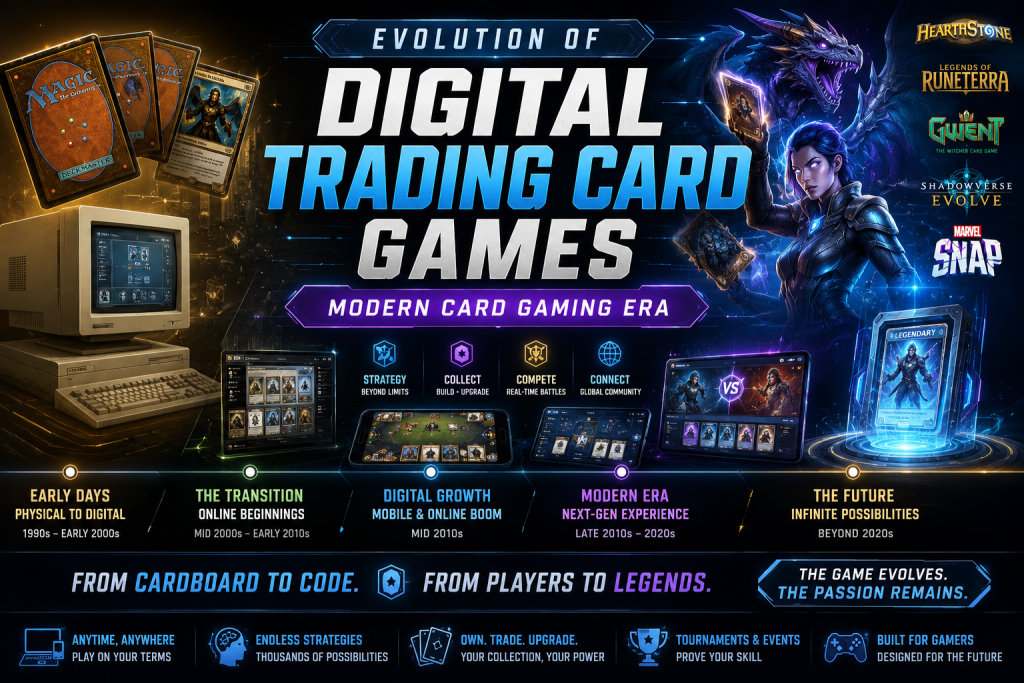
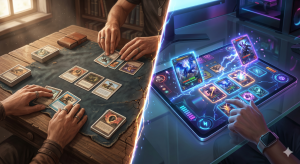
cardanoir.com – Have you ever imagined carrying thousands of rare, valuable collectible cards right inside your front pocket without ever worrying about frayed edges or fading colors? Thanks to the rise of digital trading card games (DTCG), that childhood imagination has officially morphed into a massive digital reality. The gaming industry landscape has shifted radically; the wooden tables at local hobby shops where players once gathered to map out strategies have now migrated directly onto the screens of our handheld devices.
This phenomenon is far from a passing trend. The radical transformation from physical cardboard to dynamic pixel assets has birthed a brand-new competitive ecosystem that is vastly more inclusive, fast-paced, and intensely competitive. For a generation raised on holding tangible cards, this transition might feel a bit jarring at first. However, once you experience the sheer flexibility and tactical depth offered by a virtual ecosystem, it is incredibly difficult to go back to the old ways.
Why Virtual Cards Are Displacing Physical Dominance
It boils down to a simple reality: accessibility and convenience. When playing conventional card games, you are forced to carry bulky deck boxes, find an opponent who shares the exact same free hours, and clear a dedicated physical space just to shuffle and play. Digital trading card games completely strip away this physical bureaucracy. All you need to do is open an app, hit the matchmaking button, and within seconds, you are facing off against a player from the other side of the globe.
The direct result of this frictionless access is exponential community growth. Because it is no longer restricted by geographic boundaries, global tournaments can be hosted daily without massive logistical overhead. Consequently, the gaming ecosystem becomes much more vibrant, dynamic, and continuously active 24 hours a day.
Comparative Analysis: Physical vs. Digital Gaming Experience
To get a clearer picture of this evolving landscape, let us dissect the fundamental differences between these two card gaming mediums through the comparative table below:
| Feature Aspect | Conventional Physical Trading Card Games | Modern Digital Trading Card Games |
| Calculation Speed | Manual; highly prone to human arithmetic errors | Automated instantly by the game’s internal system |
| Collection Maintenance | Requires protective sleeves and dedicated binders | 100% safe from physical wear, tear, and aging |
| Opponent Matchmaking | Restricted to local player bases or hobby shops | Global, instant, and available 24/7 |
| Mechanic Updates | Must wait for the next physical print run/set release | Periodic balancing adjustments via live online patches |
| Upfront Investment | Tends to be expensive to purchase starter decks | Generally Free-to-Play with optional microtransactions |
The Anatomy of Gameplay Mechanics in Modern DTCG
Every single title within the digital trading card games genre features a unique set of rules, yet they all converge on one core pillar: precise resource management. You cannot simply drop your strongest card onto the field on the very first turn. There is always an energy system—whether tracking as mana, elixir, or action points—that increments gradually with every passing round.
[Card Draw Phase] -> [Mana/Energy Management] -> [Strategy/Unit Execution] -> [Attack Phase]
The primary reason a player dominates a match is rarely because they possess a card with the highest raw attack stats, but rather due to their ability to read the tempo of the game. The negative consequence of miscalculating a single minor card deployment during the early phase can easily cascade into a total loss during the late game. This is exactly where the tactical beauty lies, keeping players hooked in front of their screens for hours on end.
The Critical Role of Effect Synergy and Deck Composition
Building a truly solid deck is a lot like balancing a gourmet recipe. You need the perfect harmony between offensive units, defensive options, and utility cards (spells or support effects).
-
Aggressive Decks (Aggro): Focuses on lightning-fast, low-cost attacks designed to end the game as quickly as possible.
-
Control Decks (Control): Prioritizes a highly defensive playstyle, systematically dismantling the opponent’s strategy until they run completely out of options.
-
Combination Decks (Combo): Relies on highly specific interactions between a handful of cards to unleash an instant, devastating game-winning effect.
Why RNG Mechanics Regularly Dictate the Terms of Victory
Random Number Generation (RNG), or the luck factor involved in drawing randomized cards, serves as both the ultimate flavor enhancer and the biggest source of frustration in virtual card gaming. Because this element of unpredictability exists, matches never feel repetitive. As a positive byproduct, a player utilizing a standard deck still maintains a fighting chance against a seasoned veteran if they can maximize a perfectly timed, lucky top-deck draw.
Authentic Gameplay Review: Navigating the Trenches of Competition
As someone who has clocked hundreds of hours across multiple digital trading card games platforms, I want to share an honest impression of what it genuinely feels like to dive deep into this competitive ecosystem. The competitive atmosphere delivered here feels incredibly raw and instantly pumps adrenaline through your veins.
The moment you step into a Ranked Match, the entire vibe shifts dramatically. Every single choice feels incredibly heavy. The sheer rush of adrenaline when you successfully pull off a massive comeback while your health points (HP) are sitting at a measly one—all thanks to a perfectly calculated card combo—provides a hit of dopamine that other gaming genres simply cannot replicate. The tension is authentic; you genuinely feel the psychological pressure even if your opponent is nothing more than a static avatar on the other end of a screen.
However, there is a critical caveat to look out for: the challenge of meta-gaming. Developers frequently release new expansions with cards that are slightly too powerful (overpowered), causing strategy variations at tournament levels to become somewhat homogenous. If you lack the adaptability to tear down and rebuild your deck composition according to the latest live trends, you will find yourself easily run over by players who are quicker to read the shifting tactical meta.
Creative Economy Impacts and Monitization Potential in Virtual Card Gaming
The presence of modern card games is no longer just a casual way to blow off steam during downtime. This sector has mutated into a highly lucrative frontier for the creative economy, rewarding those who are sharp enough to spot the business opportunities baked into the system.
-
Professional Esports Careers: International tournaments now boast prize pools reaching millions of dollars, paving a legitimate career path for exceptionally talented players.
-
Content Creation and Streaming: The sheer depth of unique mechanics means that content surrounding strategy guides, experimental off-meta decks, and live match commentary is highly sought after across major video platforms.
-
Account and Rare Asset Ecosystems: On specific platforms leveraging decentralized web architectures, ownership of incredibly scarce virtual cards holds real-world economic value, allowing them to be traded openly on digital marketplaces.
Ultimately, digital trading card games have successfully proven that they are not just a lazy digital port of a physical pastime. The genre has evolved into a powerhouse entertainment medium that offers profound strategic depth, seamless global access, and gorgeous visual effects that treat the eyes. Because technology integration continues to mature, the barrier to entry for beginners is becoming lower than ever, which inevitably results in a larger, more tight-knit global community moving forward. If you are looking for a game that sharpens your mental acuity while simultaneously feeding a love for aesthetic collecting, stepping into the world of virtual cards is easily the best move you can make right now.
Frequently Asked Questions (FAQ)
1. Are virtual card games friendly toward Free-to-Play (F2P) players?
Yes, the vast majority of modern platforms utilize highly rewarding systems for free-to-play users. You can easily unlock premium tier cards simply by completing daily quests, leveling up your profile, and consistently winning matches without spending a single dime.
2. What is the average time commitment required for a single match?
Match lengths vary quite a bit depending on the speed of the decks involved, but a standard game generally clocks in between 5 to 15 minutes. This fast pace makes it incredibly convenient to play during short breaks in your daily routine.
3. Do I need a high-end flagship device to run these games smoothly?
Not at all. Because the underlying gameplay structure is turn-based, these games do not demand the heavy graphical processing power typical of open-world action games or battle royales. A standard mid-range device is more than capable of delivering a flawless, smooth experience.
4. What is the best way for a complete beginner to start building their very first deck?
The smartest initial step is to focus entirely on clearing all built-in tutorial modes and solo story campaigns. Through these modes, you will unlock a deep understanding of core mechanics alongside a healthy stash of fundamental starter cards to seed your collection.
5. Can the cards we own lose their effectiveness due to game updates?
Functionally no, but their power rankings certainly can. Developers frequently introduce balance changes where cards deemed overperforming are tuned down (nerfed) to ensure the competitive ecosystem remains healthy, diverse, and fair for everyone.