How many types of card games are there? The question sounds like it should have a tidy answer—until you actually try to count. Card games have crossed centuries, cultures, and platforms, branching into thousands of versions. The best way to answer is by looking at the major families that most games belong to.
Understanding Card Game “Types”
When someone asks how many types of card games are there, they often mean one of two things: the number of major categories, or the number of individual games overall. Those are very different.
Major categories are like “genres.” They describe the core mechanic: how turns work, what the objective is, and what counts as a winning strategy. Individual games, on the other hand, multiply quickly because small rule changes can create a brand-new experience.
The Core Families of Card Games
1) Trick-Taking Games
Trick-taking games revolve around rounds where each player plays one card. The “best” card wins the trick, based on suit rules, trump rules, or ranking rules. The strategy is less about brute force and more about timing, memory, and reading intent.
This family is one of the oldest and most structured, with endless regional rule sets that change how scoring, partnerships, and trump work. That’s why trick-taking alone can feel like a world inside the world.
2) Matching and Shedding Games
These games are built for speed and accessibility. The goal is usually to empty your hand by matching cards (by color, number, symbol, or suit) and using special actions to disrupt others. They’re popular in family settings because you can learn them quickly, then immediately start making mischief.
The twist is that tiny rule changes—like a new action card or a different penalty—can create a totally new version. That’s why this category keeps expanding without anyone noticing.
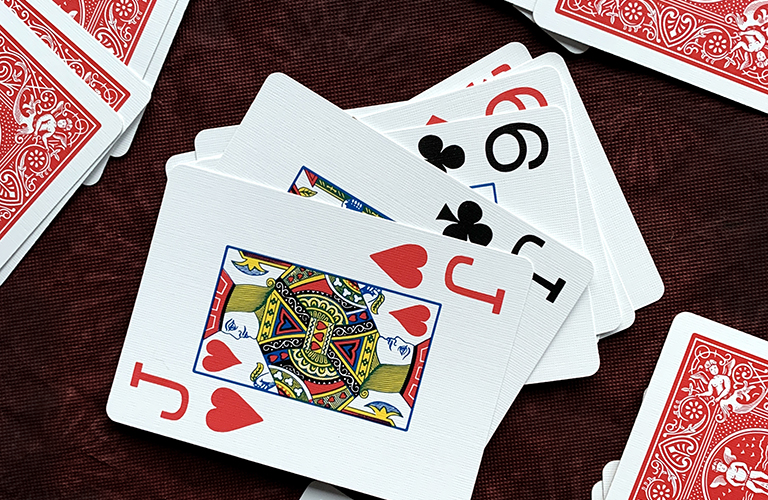
3) Melding (Rummy-Style) Games
Melding games reward organization. Players form sets (same rank) or runs (sequences), drawing and discarding while shaping a messy hand into something that scores. The tension comes from deciding what to keep, what to release, and what your opponents might be collecting.
This family has spread globally because it adapts well to different cultures: deck sizes change, scoring changes, even objectives change. And each change can produce a new named game.
4) Gambling and Casino Card Games
Casino-style card games introduce betting, probability, and risk. Many are played against the house, which shifts the strategy from outplaying opponents to managing decisions under uncertainty.
The math matters here: odds, expected outcomes, and bankroll decisions shape long-term results. Rule variations also explode quickly—change a payout, add a side bet, tweak a dealing rule—and you’ve created a new version.
5) Solitaire (Single-Player) Games
Solitaire games are built for one player, often blending luck with puzzle-solving. The goal may be to build foundations, clear a tableau, or arrange sequences. The charm is quiet focus: you’re competing with constraints, not another person.
There are hundreds of known solitaire variants, and hobbyists still create more. In solitaire, the layout itself can be “the rules,” and layouts are endlessly inventable.
6) Climbing or Ladder Games
Climbing games are about escalation. Players must beat the last play using a stronger combination: higher singles, higher pairs, stronger runs, or better patterns. This creates fast tempo, momentum swings, and dramatic endgames.
Strategy often comes down to timing—holding powerful combinations until the moment they matter, while still staying flexible enough to avoid getting trapped with unplayable cards.
7) Collectible and Custom-Deck Games
This is a modern family where strategy begins before the first turn. Players build decks, plan synergies, and adjust based on what’s popular in the community. The “game” includes deck design, not just gameplay.
Because new cards and expansions can appear regularly, this family never stops evolving. In practice, it creates a moving target—new strategies, new subtypes, new mini-genres.
So, How Many Types of Card Games Are There?
If we’re talking about broad, structural families, a practical answer is: around 6 to 10 major types, depending on how finely you split categories.
But if you mean individual games and variations, the answer becomes: thousands—and growing.
- Different regions create local rule sets.
- Small tweaks produce brand-new variants.
- Digital platforms encourage experimentation.
- New designer games appear every year.
That’s why how many types of card games are there can’t be answered with one final number. It’s a living ecosystem, not a closed catalog.
Why the Number Keeps Growing
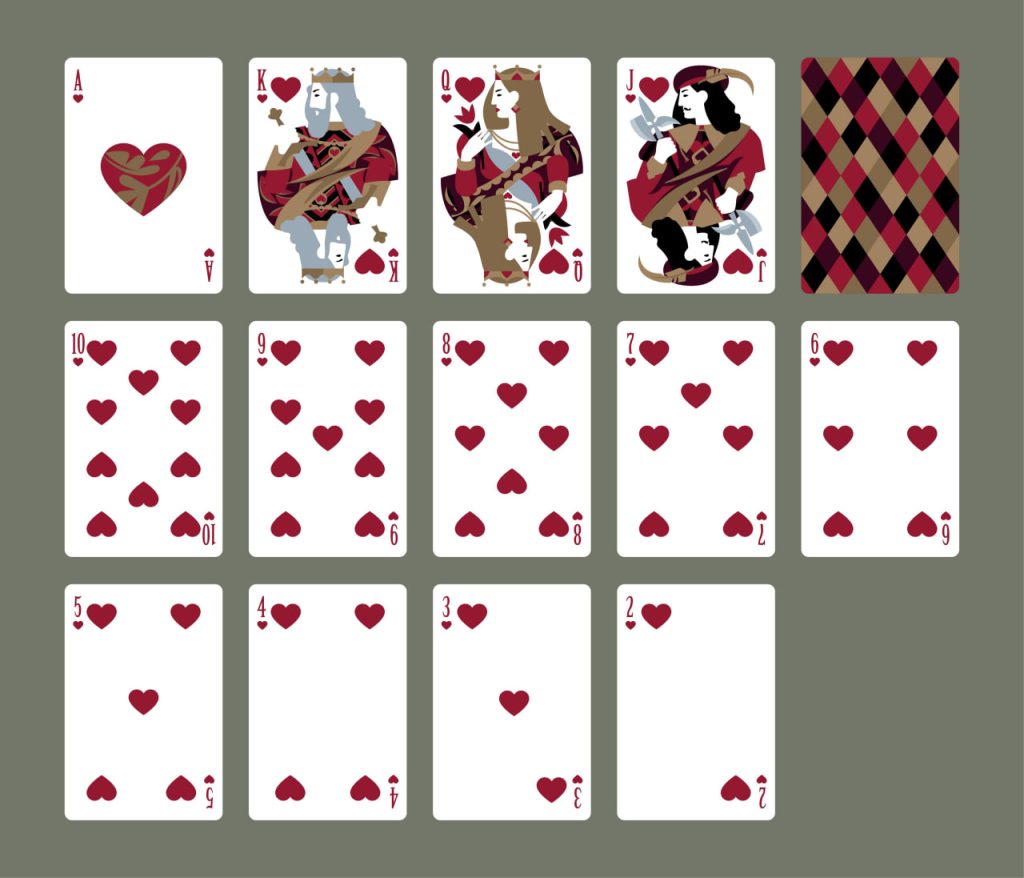
A standard deck looks limited—just 52 cards—yet it’s a creativity machine. Change the objective, change the scoring, change what counts as “high,” and you get a different game. Humans naturally build patterns, then formalize them into rules, then teach those rules, then remix them. That remixing is the engine behind growth.
In a way, card games are cultural software: the same components, endlessly reprogrammed.
FAQ
1) Is there an exact number of card game types?
No. There is no universal master list that captures every traditional game, every local variation, and every modern design. The total keeps expanding.
2) How many major categories exist?
Most practical classifications land between 6 and 10 major families, including trick-taking, matching/shedding, melding, gambling/casino, solitaire, climbing, and collectible/custom-deck games.
3) Which category has the most variations?
Melding (rummy-style) and solitaire games have huge libraries of variations. Collectible games also expand rapidly because new cards continuously reshape the meta.
4) Are digital card games counted separately?
Sometimes. Many digital card games are adaptations of traditional mechanics, but purely digital designs can introduce new systems that function like entirely new types.
5) Will new card game types continue to emerge?
Yes. As long as people enjoy competition, strategy, and social play, new variants and new designs will keep appearing.
Final thought: asking how many types of card games are there is less about counting and more about recognizing how endlessly adaptable a deck of cards can be.