
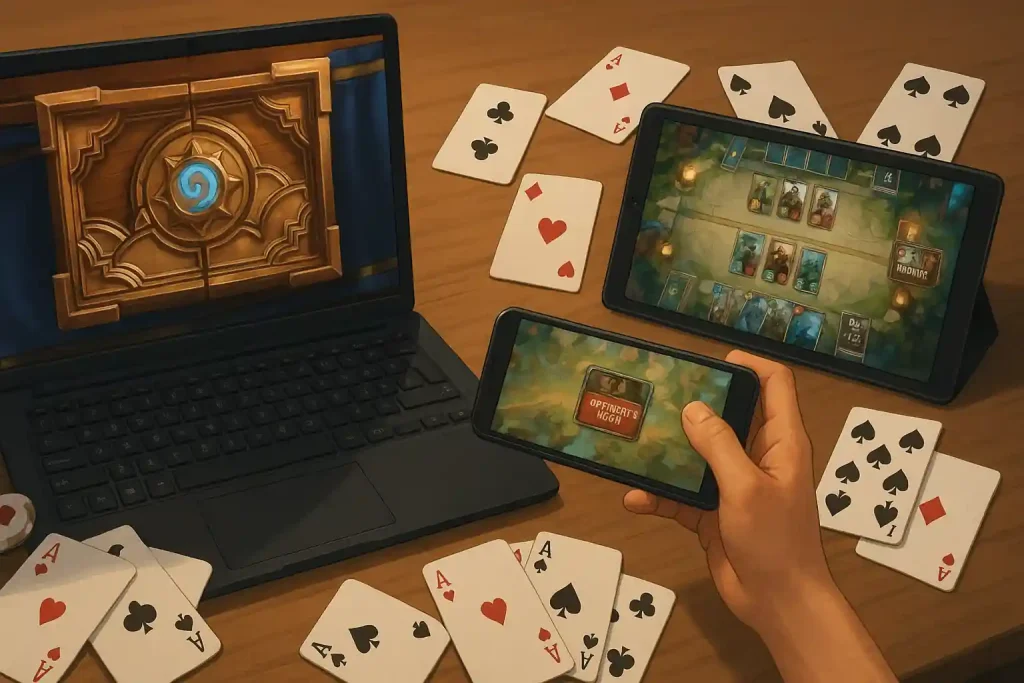
Card games have always been about connection—friends and family gathered around a table, shuffling decks, and trading strategies. But in the 21st century, that table has gone global. With the rise of the internet and smartphones, digital card games and online card games have opened new ways to play, learn, and compete.
Today, millions of players log in daily to practice, test strategies, and challenge opponents across the world. From casual Solitaire apps to professional Hearthstone tournaments, online play has transformed card games into a living, evolving ecosystem.
The Evolution of Digital Card Games
The story of digital card games mirrors the growth of technology itself.
- Early Days: In the 1990s, Microsoft bundled Solitaire and Hearts with Windows. Millions learned the basics of card play simply because the games came pre-installed. Solitaire, in particular, became a cultural phenomenon.
- The Online Boom: As the internet grew, so did online Poker rooms and Bridge communities. Suddenly, you could find a match at any time, with opponents on the other side of the globe.
- Digital-First Games: In the 2010s, developers began designing games exclusively for online platforms. Titles like Hearthstone, Legends of Runeterra, and Gwent were built for the digital space, using mechanics impossible in physical decks.
This timeline shows how quickly card games adapted to modern life, blending tradition with innovation.
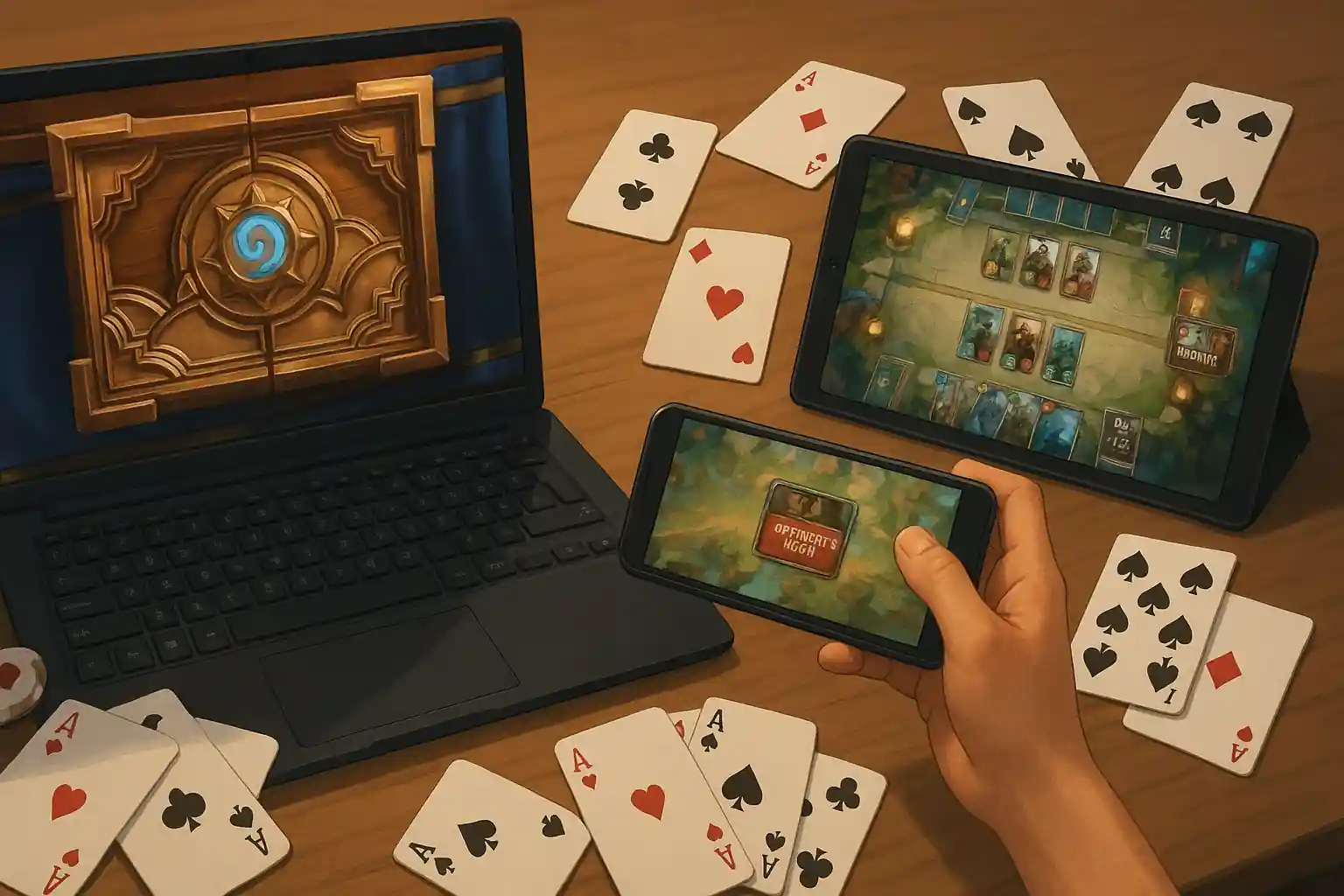
Popular Digital & Online Card Games
The landscape is diverse, ranging from casual solo play to competitive esports.
Hearthstone
Launched by Blizzard in 2014, Hearthstone simplified collectible card gameplay for the digital age. With animated effects, intuitive mechanics, and consistent updates, it remains one of the most popular online card games.
Legends of Runeterra
Riot Games brought its League of Legends universe into card form with Legends of Runeterra. Players appreciate its generous economy and tactical depth, making it one of the fairest digital card games available.
Gwent
Originally a mini-game in The Witcher 3, Gwent became a standalone phenomenon. It emphasizes bluffing, sequencing, and faction-specific strategies, making each match feel like a duel of wits.
Online Poker
Poker’s digital transition transformed it into a global sport. Platforms like PokerStars and 888Poker allow millions to play Texas Hold’em, Omaha, and more. Online tournaments now offer prize pools rivaling traditional sports events.
Online Solitaire
Solitaire’s simplicity continues to shine online. Mobile apps and browser versions attract both casual players and dedicated fans who enjoy its calm, logic-driven gameplay.
Features That Define Digital Card Games
What makes digital and online card games stand apart?
- Accessibility: Anyone with a phone or PC can join.
- Design & Animation: Cards come alive with visuals and sound effects.
- Global Community: Players can face opponents from every continent.
- Regular Updates: Developers introduce expansions, new cards, and balance patches.
- Analytics & Tracking: Many apps provide stats and histories, letting players refine strategies over time.
Competitive Scene and Esports
The competitive scene for digital card games has grown dramatically:
- Hearthstone World Championship draws massive online audiences.
- Magic: The Gathering Arena bridges traditional play and esports, bringing MTG tournaments online.
- Legends of Runeterra hosts official Riot-backed competitions.
- Online Poker tournaments offer multi-million-dollar prize pools, streamed worldwide.
Streaming platforms like Twitch and YouTube further amplify this culture, with card game professionals sharing strategies, gameplay, and community discussions.
Benefits and Challenges of Online Card Games
Like any innovation, digital and online card games come with pros and cons.
Benefits
- Play anytime, anywhere.
- Lower barrier to entry compared to physical decks.
- Endless opportunities to practice and test strategies.
- Access to a global pool of players and playstyles.
Challenges
- Risk of overspending on microtransactions in CCGs.
- Screen fatigue and lack of face-to-face interaction.
- Dependence on internet access and platform stability.
The key is balance: enjoy the accessibility of digital platforms while still appreciating the social and tactile experience of physical decks.
The Future of Digital & Online Card Games
Where are we headed next? Innovations hint at a new era:
- VR & AR Integration: Imagine playing Poker in a virtual casino or dueling with holographic cards at your desk.
- Blockchain Collectibles: Some developers experiment with NFTs and blockchain-based game cards, allowing digital ownership and trading.
- Cross-Platform Play: Expect more seamless experiences across PC, mobile, and console.
- Hybrid Play: Blending physical and digital experiences—scanning real decks into online games—is already being tested.
The possibilities ensure that digital card games will only grow in relevance.
Digital and online card games represent the evolution of a timeless pastime. From Windows Solitaire to Hearthstone esports, they demonstrate how card games adapt to each generation while preserving their spirit of strategy, luck, and community.
To keep exploring, revisit the Rules of Card Games for a foundation in mechanics, or dive into Card Game Strategies to sharpen your skills in both physical and digital arenas.
Cardanoir remains your guide through this exciting landscape—where every shuffle, whether digital or real, connects players around the globe.