

Card games have long been a universal form of play, bridging cultures and generations. From the ornate decks of Asia to the elegant trick-taking games of Europe, traditional card games offer a glimpse into history, culture, and human creativity. Each region has developed its own rules, symbols, and traditions, proving that no matter where you are in the world, you will likely find a group of people gathered around a table with game cards in hand.
-
Skat Card Game Rules Explained
cardanoir.com – The skat card game has a reputation, and it is deserved. Three players, three completely different game types, and an auction where you bid numbers rather than contracts. Germany treats it as a national sport. There are clubs, leagues, a world championship, and a governing body that publishes the official rules. Yet the…
-
Belote: How France’s National Card Game Is Played
cardanoir.com – The belote card game is played in more French homes than any other, and it has one rule that breaks every instinct you brought with you: in the trump suit, the Jack is the strongest card in the deck, and the Nine is second. Not the Ace. A Jack worth 20 points and a Nine worth…
-
Briscola: Italy’s Favorite Card Game Explained
cardanoir.com – The Briscola rules fit on a beer mat, which is roughly where most Italians learn them. Three cards in hand, no obligation to follow suit, first to 61 points wins. A round takes ten minutes. Then you play a few games and realise the simplicity was a trap. The Briscola rules leave almost…
-
Hanafuda Cards: The Story Behind Japan’s Flower Deck
cardanoir.com – A deck of hanafuda cards carries no numbers at all. You will find no ranked indices, no familiar suits, and no face cards — instead, twelve flowers do all the work. That absence, however, is not decoration. Japanese card makers stripped the numbers out on purpose, because a government that kept banning gambling…
-
Different Types of UNO Card Games: Complete Guide for Players
cardanoir.com – UNO has remained one of the most recognizable family card games because its basic idea is wonderfully simple: match a card by color, number, or symbol, use action cards at the right moment, and become the first player to empty your hand. The familiar rules are only the beginning. Today, there are many…
-
Types of Card Games in Casino: Rules, Styles, and Player Guide
cardanoir.com – Casino floors are filled with flashing machines, spinning wheels, and busy tables, but card games remain among the most recognizable attractions. They combine simple physical tools with rules that can range from extremely easy to deeply strategic. There are many types of card games in casino environments. Some ask players to compete directly…
-
Types of Solitaire Card Games Free: A Complete Player Guide
cardanoir.com – Solitaire may look like a simple card game, but its world is far larger than many players expect. Klondike is the version most people recognize, especially from classic computer systems, yet it represents only one branch of a broad family of single-player card games. There are solitaire variations built around arranging complete sequences,…
-
Types of Rummy Card Games: Rules, Variations, and Best Picks
cardanoir.com – Rummy is not just one card game. It is a large family of matching games built around a simple idea: arrange cards into valid groups before the other players do. Those groups usually take the form of sets, which contain cards of the same rank, or runs, which contain consecutive cards from the…
-
Best Card Games for Family Game Night: Easy Picks for All Ages
A family game night sounds simple: gather everyone around the table, bring out a game, and enjoy an evening without screens or complicated plans. In reality, choosing the right game can be surprisingly difficult. One person may prefer strategy, another may want something fast, while younger players can quickly lose interest when the rules become…
Many traditional card games trace their roots back to the history of card games, where early decks spread across continents through trade, conquest, and cultural exchange. Today, exploring card games around the world is not just about fun—it’s about understanding cultural identity and heritage.
Card Games in Asia
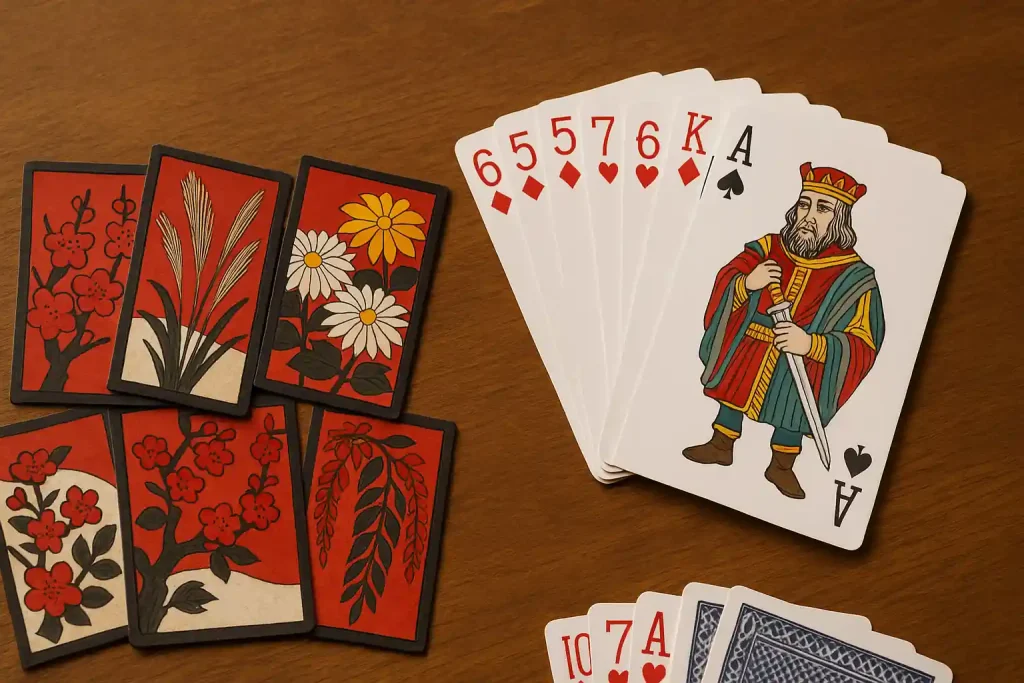
Asia is often credited as the birthplace of card games, with the earliest references dating back to the Tang dynasty (9th century) in China. These early game cards were not only used for play but also as tokens in gambling and even as teaching tools. Over time, the designs and rules spread across neighboring regions, influencing Japan, India, and beyond.
Hanafuda (Japan)

Hanafuda, literally “flower cards,” originated when Japanese authorities restricted gambling with standard playing cards in the 16th century. To adapt, players created new decks decorated with seasonal flowers and symbolic art.
- Deck design: 48 cards divided into 12 suits, each representing a month of the year with plants like cherry blossoms or chrysanthemums.
- Gameplay: The most famous game, Koi-Koi, involves forming combinations of flowers to score points.
- Cultural role: Hanafuda is often played during family gatherings in Japan, especially during holidays. Nintendo, before becoming a video game giant, started as a Hanafuda card producer in 1889.
Chinese Poker (China)
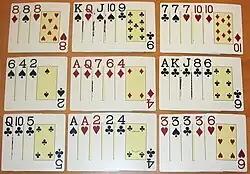
Chinese Poker, also known as “13-card game,” showcases China’s contribution to modern strategic play.
- Setup: Each player is dealt 13 cards and must divide them into three hands: a two-card front hand, a five-card middle hand, and a five-card back hand.
- Objective: Each hand is compared with the opponents’ corresponding hands, scoring points based on strength.
- Appeal: It’s simple to learn but strategically deep, combining Poker’s hand rankings with careful card arrangement. Today, Chinese Poker is a favorite among professional players for side games during major Poker tournaments.
Andar Bahar (India)
India’s traditional card games often emphasize simplicity and accessibility, and Andar Bahar is the perfect example.
Cultural presence: Though simple, Andar Bahar remains part of India’s vibrant card-playing culture, alongside other favorites like Teen Patti (Indian Poker).
How it works: A single card is placed face-up, and players bet on whether a matching card will appear on the Andar (inside) or Bahar (outside) pile.
Pace: The game is fast, relying entirely on luck, making it popular for casual entertainment.
Card Games in Europe

Europe encountered card games through trade routes with Asia, particularly via the Mamluks in the Middle East during the late Middle Ages. By the 14th century, Europe had adopted playing cards, and by the 15th century, distinct regional decks and traditional card games flourished.
Tarock (Austria/France)
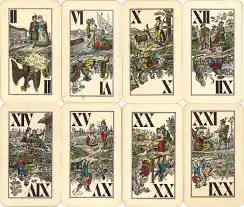
Tarock, also known as Tarot, originally began as a game before being associated with fortune-telling.
- Deck features: A 78-card deck including 22 trump cards (tarots) and 56 suited cards.
- Gameplay: Trick-taking with bidding, where players use trumps strategically to win rounds.
- Legacy: Tarock remains a beloved pastime in Austria and central Europe, demonstrating that Tarot’s gaming roots remain alive.
Skat (Germany)
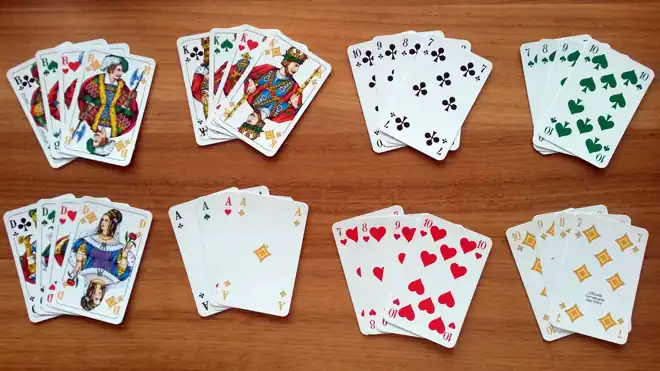
Skat emerged in Germany in the early 19th century and quickly became the nation’s official card game.
- Setup: Played with three players and a 32-card deck.
- Rules: One player competes against the other two in a battle of bidding, trick-taking, and scoring.
- Cultural weight: Skat clubs exist across Germany, with tournaments and leagues preserving its legacy as a true German tradition.
Briscola (Italy)
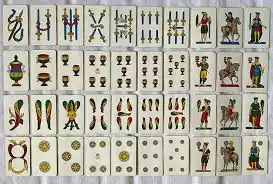
Briscola is one of Italy’s most iconic traditional card games.
- Deck: A 40-card Italian deck divided into suits of swords, batons, coins, and cups.
- Objective: Players try to win tricks containing valuable cards, with trumps adding tactical depth.
- Popularity: Briscola is a staple in cafes, family gatherings, and festivals across Italy, often passed down across generations.
Card Games in the Americas
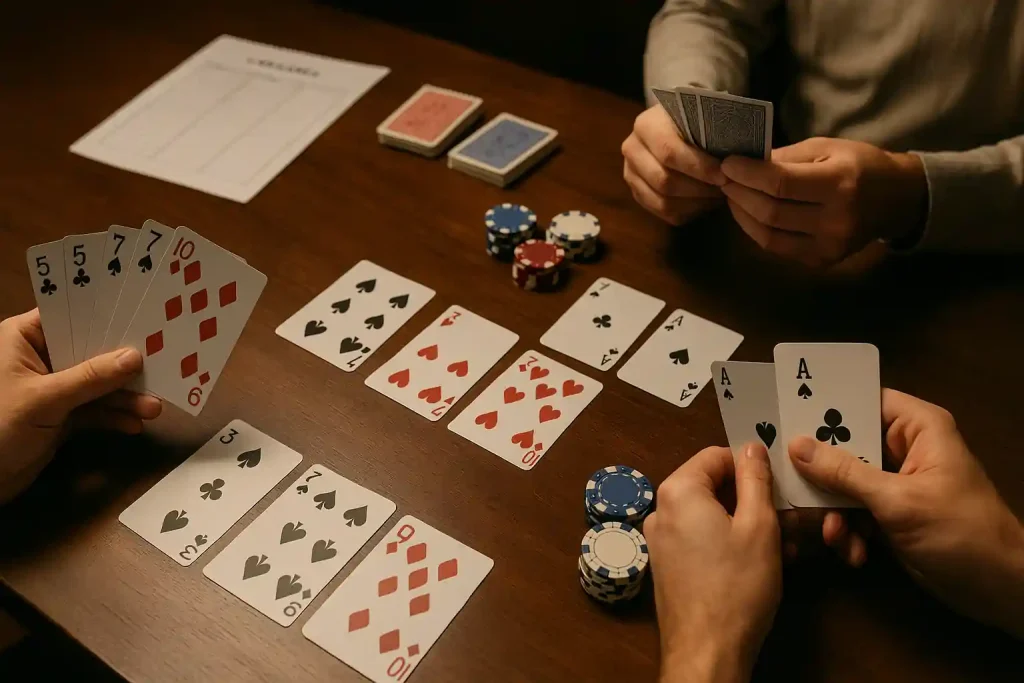
The Americas have embraced both imported European styles and homegrown innovations, giving rise to some of the most famous card games worldwide. Over centuries, they have developed into cultural staples—played in casinos, homes, and even digitally.
Rummy (United States / India Popularity)
Rummy is one of the most widely recognized traditional card games, and while its origins are debated, the modern form became highly popular in the United States during the early 20th century.
- Gameplay: Players aim to form sets (three or four of a kind) and runs (sequential cards of the same suit).
- Variations: Gin Rummy (two-player), Indian Rummy (a longer multi-deck version), and Kalooki.
- Appeal: Rummy is easy to learn yet strategic, making it popular across different age groups.
- Cultural footprint: Today, Rummy is considered both a family game in America and a cultural staple in India, where massive communities play it online.
Poker (United States)

Poker is perhaps the most iconic American export in the world of card games. Its rise from riverboats in the 19th century to televised tournaments today reflects its cultural impact.
- Texas Hold’em: The most famous variant, with two hole cards and five community cards.
- Other variants: Omaha, Seven-Card Stud, and Draw Poker.
- Cultural significance: Poker has become a symbol of risk, psychology, and skill. Professional Poker tournaments like the World Series of Poker (WSOP) have turned it into a spectator sport.
- Beyond casinos: Families and friends also play Poker casually, adapting house rules to create fun variations.
Canasta (South America)
Canasta, created in Uruguay in the 1930s, spread like wildfire through South America and then internationally.
- Mechanics: A rummy-style partnership game where players try to form melds of seven cards called “canastas.”
- Popularity boom: By the 1950s, Canasta had become an international craze, rivaling Bridge in popularity.
- Legacy: Although less common today than Poker or Rummy, Canasta still holds nostalgic value and is played in Latin American communities and online platforms.
Piquet & Conquian (Historic Influence)
- Piquet: Introduced from France, it became a popular game in early American colonies and influenced local variants.
- Conquian: Originating in Mexico, Conquian is considered the ancestor of modern Rummy, showing how cultural exchange shaped game evolution in the Americas.
Card Games in Africa & the Middle East
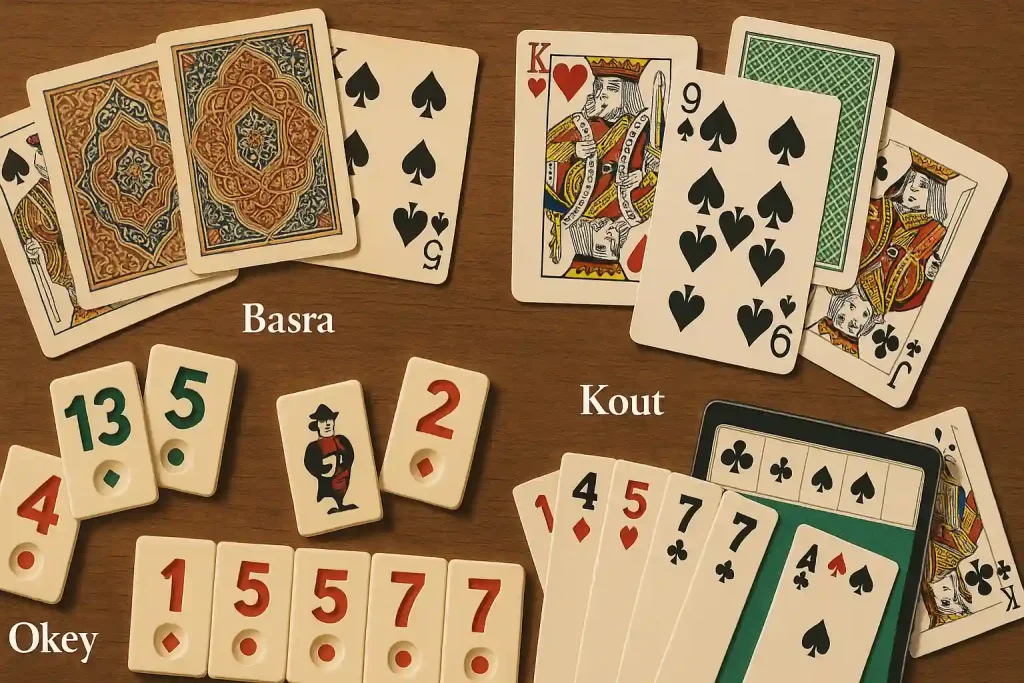
Though less globally documented, Africa and the Middle East have rich traditions of traditional card games. Many of these games reflect community, strategy, and adaptations of European influences.
Basra (Middle East)
Basra (also known as “Basra El Kabeer”) is a fishing-style game deeply rooted in Egypt and neighboring countries.
- Rules: Players capture table cards by matching values or combining sums (e.g., playing a 7 to capture a 3 and 4).
- Objective: The goal is to collect valuable cards, with certain suits or ranks carrying extra points.
- Social role: Commonly played in cafes and homes, Basra is seen as both entertainment and a social tradition.
Kout (Morocco)
Kout (also called “Cout”) is Morocco’s beloved trick-taking card game.
- Setup: Played with a 32-card deck by four players in two partnerships.
- Gameplay: Bidding determines the contract, and tricks are played to fulfill it.
- Tradition: Kout is often played during Ramadan nights and family gatherings, making it more than just a game—it’s part of cultural identity.
Okey Rummy (Turkey)
While Okey is usually tile-based today, it has roots in card game mechanics similar to Rummy.
- Gameplay: Forming sets and runs, much like Rummy, but adapted to numbered tiles.
- Cultural spread: It became a staple of Turkish coffeehouses and social clubs.
- Connection to cards: Its mechanics show how card games influenced other gaming traditions across the Middle East.
Other African & Middle Eastern Variations
Khunnas (Egypt): A fast-paced shedding game unique to Egyptian culture.
Baloot (Saudi Arabia): A trick-taking game similar to French Belote, widely played in the Gulf region.
Matatu (Uganda/Kenya): A shedding game similar to UNO, using a standard 52-card deck, popular among youth.
Regional Decks and Distinct Styles
Regional decks often fall into distinct types of card games. For example:
- Asian decks: Flower-based or character-based like Hanafuda.
- European decks: Suits of swords, cups, coins, and batons in Italian or Spanish styles.
- American decks: Standard 52-card pack used for Poker, Rummy, and Blackjack.
- African & Middle Eastern decks: Often borrow elements but localize rules and suits.
This diversity demonstrates how cultures adapted game cards to their own aesthetics and traditions.
Connect Each Other Just From Card Games
Studying card games around the world helps us see how play connects cultures. From gambling halls to family kitchens, card games mirror society’s values, from competition and cooperation to storytelling and symbolism.
They are also living traditions: modern players continue to adapt old rules, invent house variations, and bring classics online. This continuity proves that traditional card games are more than entertainment—they are cultural heritage.
From Around The world
From Hanafuda in Japan to Poker in the United States, from Skat in Germany to Basra in Egypt, traditional card games reflect humanity’s shared love of play. Each region offers its own decks, mechanics, and cultural flavor, proving that card games around the world are as diverse as the people who play them.
To keep exploring, dive into the History of Card Games to understand their origins, or browse Types of Card Games to see how these traditions fit into the broader picture.
Cardanoir will continue to celebrate the global language of card games, where every shuffle and deal tells a cultural story.