cardanoir.com – MTG Arena is the easiest way to learn Magic: The Gathering and the easiest way to waste three months of progress in your first week. The game itself is free, well built, and genuinely good. The economy underneath it, however, punishes anyone who spends resources before understanding what they are worth.
So this guide skips the rules of Magic and focuses on the part that actually catches new players out: how the client hands out cards, and what to do with them.
What MTG Arena Actually Is
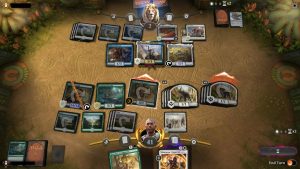
Wizards of the Coast built MTG Arena as the digital home of modern Magic. It runs on PC, Mac, iOS, and Android, with one account and one collection shared across all of them.
The client handles every rule for you. It tracks triggers, enforces timing, and stops illegal plays, which removes the single hardest part of learning Magic from paper. Games take five to fifteen minutes, and matchmaking is instant at almost any hour.
One important limitation: not every Magic card exists here. MTG Arena carries a curated pool rather than the full thirty-year card list, so a deck you read about online may simply be unplayable on the client.
Starting Out: The New Player Experience
Your first hours are guided, and you should let them be.
The colour challenges teach each of Magic’s five colours through short scripted duels. They are genuinely well designed, they take about an hour total, and they pay out decks and resources as you finish them. Do not skip them, even if you already know how to play.
Completing that sequence unlocks a library of starter decks — fifteen of them, covering every colour pair. These decks are weak by competitive standards, but they cost nothing, they are legal in Standard, and they carry you through the first several days of daily quests without spending a single wildcard.
How the Economy Works
Four currencies matter, and confusing them is the classic beginner mistake.
- Gold — earned by playing. Daily quests pay 500 or 750, and your first fifteen wins each day pay smaller amounts on top.
- Gems — bought with real money. Gems and gold both buy packs and event entries, at roughly 200 gems or 1,000 gold per pack.
- Packs — eight cards each, and the main way your collection grows.
- Wildcards — the only currency that reliably gets you the exact card you want.
Nothing here is tradeable. There is no marketplace, no selling duplicates, and no buying single cards. Therefore your collection only grows through opening packs, winning events, and crafting.
Wildcards Are the Currency That Matters
Every pack contains a wildcard slot on a timer, and packs also advance two hidden tracks that eventually hand out uncommon and rare wildcards. Spend a rare or mythic wildcard and you instantly own four copies of nothing — you own one copy of any card at that rarity, which you choose.
Here is the rule that saves new players the most pain: do not craft anything in your first two weeks. Rare and mythic wildcards accumulate slowly, a competitive Standard deck needs roughly 20 to 30 of them, and crafting a card for a deck you abandon three days later is the most expensive mistake available to a free player.
Instead, pick one deck you actually want, list the rares it needs, and save toward it. Craft the four-of playsets last, since a deck usually functions at 70% while you wait.
The Formats in MTG Arena
Format choice decides how much your collection costs, so choose deliberately:
- Standard — the flagship. It uses sets from the last three years, and it is the cheapest constructed format to enter because those are the packs the client pushes at you.
- Alchemy — Standard plus digital-only cards, some of them rebalanced versions of paper cards. It exists only here.
- Historic and Timeless — much larger card pools with no rotation. Powerful, but expensive to build into.
- Brawl — singleton hundred-card decks led by a legendary creature or planeswalker, in the spirit of Commander. Very popular casually, and cheap because you need one copy of everything.
- Limited — draft and sealed, where the client hands you the cards. More on this below.
Beginners should live in Standard and Brawl. Both stay affordable, and both let starter decks compete while your collection grows.
Draft Is the Best Value in MTG Arena
This is the single most useful thing in this guide. Quick Draft costs 5,000 gold, and it hands you three packs worth of cards to keep, regardless of how you finish. Win a few games and it pays back most of the entry, sometimes more.
Compare that to spending 5,000 gold on five packs. Drafting gives you a similar haul of cards plus several games of practice plus a shot at profit. Consequently, most experienced free-to-play players treat draft as their primary income, not as a treat.
The catch is real, though: draft demands you evaluate cards on the spot, which is a skill. Lose your first three drafts anyway. The cards you keep still land in your collection.
Ranked Play in MTG Arena
Ranked runs in monthly seasons through Bronze, Silver, Gold, Platinum, Diamond, and Mythic, and it resets partially each month. Bronze and Silver are forgiving, so climb early in the season while the ladder is soft.
There is also a split between best-of-one and best-of-three. Bo1 is faster and uses an opening-hand algorithm that quietly reduces mana screw, which makes it friendlier for new decks. Bo3 adds sideboards and rewards knowing the metagame. Start with Bo1.
Mistakes That Cost New Players Months
- Crafting before committing. Covered above, and worth repeating.
- Skipping daily quests. They are the largest steady gold income in the game, and they take fifteen minutes.
- Buying packs from old sets. Newer sets stay legal longer, so your packs work harder.
- Chasing every new deck. Wildcards do not refund. Pick one deck and finish it.
- Ignoring free codes. Wizards publishes promo codes regularly, and they cost nothing to redeem.
- Playing Historic or Timeless too early. Both look appealing and will empty your wildcard reserve immediately.
Where MTG Arena Stands in 2026
Standard currently spans three years of sets rather than two, which gives new players a deeper pool than the format had a few years ago. Foundations, the evergreen set built specifically as an on-ramp, stays legal until at least 2029, so cards from it are the safest crafting target on the client.
Rotation timing has also shifted. The next Standard rotation lands in January 2027 rather than in autumn, and from then on rotation aligns with the year’s first set release. In practice that means anything you collect this autumn keeps its Standard legality for well over a year — an unusually good window to start.
Universes Beyond sets now sit inside Standard as full releases rather than side products, so licensed crossovers appear in ranked play alongside traditional Magic cards. Reality Fracture, the next Standard set, arrives on 2 October 2026.
What to Do in Your First Week
Finish the colour challenges, then play the starter decks in Standard Bo1 until you find a colour pair you enjoy losing with. Complete every daily quest. Bank the gold rather than spending it, and let packs come from event rewards.
Around 5,000 gold, enter a Quick Draft. Then do it again. By the time you have drafted three or four times, you will have a real collection, a sense of which cards matter, and enough wildcards to make a deliberate crafting decision instead of a hopeful one.
For a wider view of how digital clients changed card gaming, our digital and online card games section covers the field, and the Slay the Spire guide shows what happened when designers took deckbuilding somewhere else entirely. The client itself, plus its current promo codes and format rules, lives on the official MTG Arena site.