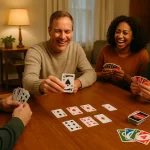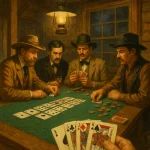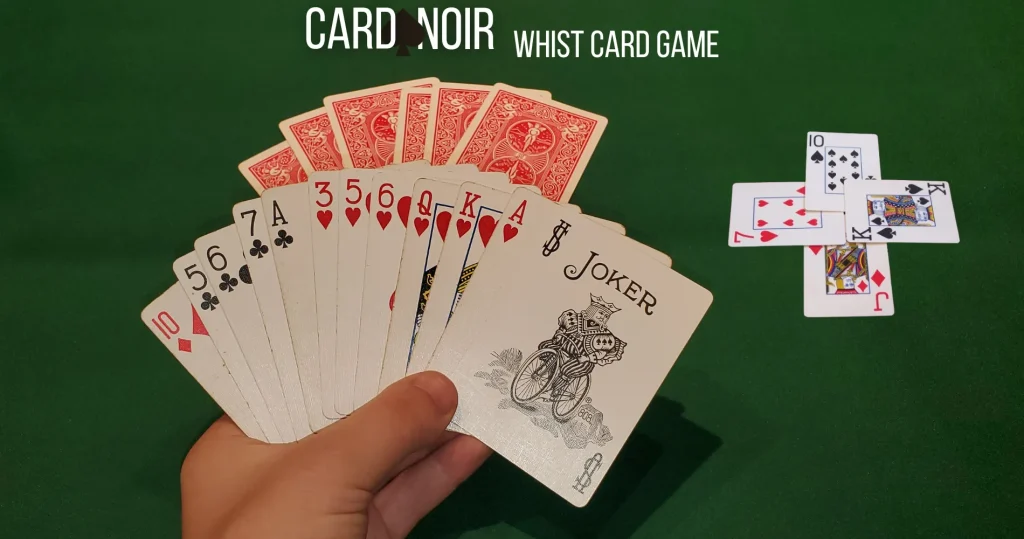
Whist is one of the quiet giants of card-game history—a simple four-player partnership game that once dominated English parlors, coffee houses, and clubs for more than two centuries. Played with a standard 52-card deck and guided by strict etiquette, Whist began as a humble refinement of earlier trick-taking games and eventually shaped modern classics like Bridge, Spades, and Bid Whist. Today, even though it has stepped away from the mainstream spotlight, Whist remains a fascinating piece of card-game culture, offering elegance, strategy, and a window into how people played—and thought—centuries ago.
What Is Whist?
At its core, Whist is a trick-taking partnership game for four players. Two teams of two sit opposite each other, and players attempt to win more than half of the 13 tricks dealt. The gameplay is straightforward:
- Follow suit if possible
- Highest card of the suit (or trump suit) wins
- Your team scores points for each trick above six
The simplicity is deliberate—Whist was designed to reward memory, discipline, and silent partnership coordination. The word whist itself comes from an old English term meaning quiet or attentive, a nod to the focused atmosphere the game demanded.
A Brief History of Whist
Whist didn’t appear out of nowhere—its roots trace back to earlier trick-taking games like Ruff and Honours and Triumph, played across England as early as the 1600s. But it wasn’t until the early 18th century that Whist became formalized.
The Rise of “Scientific Play”
Around 1728, influential players in London coffee houses—some believed to include the legendary Edmond Hoyle—began to standardize Whist strategy. Hoyle later published A Short Treatise on the Game of Whist (1742), the foundational text that established rules and best practices for the next hundred years.
Later in 1862, Henry Jones (“Cavendish”) expanded Whist theory even further, cementing Whist as a game of calculated skill rather than luck alone.
Whist’s Cultural Peak
Through the 18th and 19th centuries, Whist was everywhere:
- British gentlemen’s clubs
- Social gatherings and parlors
- Literary references from Dickens, Austen, Balzac, Poe, and more
- Competitive club events and whist drives (large rotating tournaments)
Whist wasn’t just a game—it was a social ritual, a test of etiquette, intelligence, and cooperation.
The Transition into Bridge
By the late 1800s, a new evolution of the game emerged: Bridge.
Bridge retained the core structure of Whist but added bidding, dummy hands, advanced scoring, and deeper strategic depth. The transition was so rapid that by the early 20th century, Bridge had overtaken Whist in clubs across Europe and America.
Still, Whist left a permanent mark on card-game design, influencing modern titles like:
- Bridge
- Spades
- Bid Whist
- Minnesota Whist
- Oh Hell / Contract Whist variants
How to Play Whist: The Essentials
Whist rules vary slightly depending on region, but the core gameplay is universal.
1. The Deck
- Standard 52-card French deck
- Ranks: A (high) → 2 (low)
2. Players & Partnerships
- Four players
- Partnerships are determined by drawing cards: lowest two play together
3. Dealing
- Dealer gives each player 13 cards one by one
- The last card is turned face-up to reveal the trump suit for the round
4. Playing the Tricks
- Eldest hand leads
- Players must follow suit if possible
- If unable, they may discard or play a trump
- Highest card of the suit (or highest trump) wins
5. Scoring
- A team scores 1 point for each trick above six
- Earlier Whist variants used more complex honor bonuses; modern short Whist simplifies scoring
Despite its simplicity, successful players rely on:
- Card counting
- Memory of played cards
- Understanding partner tendencies
- Tactical leads and signaling
Why Whist Still Matters
Even though it’s centuries old, Whist remains:
A foundation of modern trick-taking games
Without Whist, Bridge would never have existed—and without Bridge, an enormous family of card games might look entirely different.
A clean, elegant ruleset for teaching strategy
Whist is one of the best entry points for learning trick-taking fundamentals: timing, trump management, table awareness, and partner coordination.
A cultural artifact
Whist appears in literature, historical accounts, and family traditions worldwide. It captures the intellectual spirit of its era—calm, structured, and quietly competitive.
A game that still thrives in variants
Today you can find Whist’s descendants everywhere:
- Bid Whist (popular in African-American communities)
- Minnesota Whist
- German Whist (two-player)
- Oh Hell / Nomination Whist (prediction-based)
- Online Whist platforms
Whist may no longer be the king of the card table, but its legacy continues to evolve.
Modern Variants Worth Knowing
Whist’s family tree is massive, but a few stand out:
1. Bid Whist
Introduces bidding and deeper strategy; widely played in the U.S.
2. Solo Whist
Players can declare solo contracts—similar to Skat or Solo Bridge.
3. Minnesota Whist
Removes trumps entirely and lets players choose to “win” or “lose” tricks.
4. Dutch Whist & Scandinavian Whists
Regional versions using prediction scoring and multi-round structures.
5. German Whist
A two-player tactical variant.
These variations highlight how Whist adapted across cultures while preserving the heart of the game.
Whist may seem quiet compared to today’s flashy card games, but its influence is enormous. It shaped the evolution of trick-taking mechanics, inspired generations of strategic thought, and bridged the past and present of card-game design.
Whether you want to explore card-game history, become a stronger trick-taking player, or simply enjoy a timeless classic, Whist still offers a refined and rewarding experience—one built on silence, memory, and elegant strategy.