cardanoir.com – Most card games ask you to build a deck once and then play it. Slay the Spire asks you to build one while you’re already fighting, from cards you didn’t choose, in an order you can’t predict — and then it deletes the whole thing when you die. That inversion turned a small indie release into the blueprint for an entire genre.
Nearly a decade after it first appeared, the game’s fingerprints are on almost every single-player card game released since. This is what it actually does, why the design works, and what it changed.
What Slay the Spire Actually Is
Slay the Spire is a single-player roguelike deckbuilder from Mega Crit, a tiny two-person studio. You pick a character, start with a deck of about ten weak cards, and climb a tower through a series of turn-based card battles. Every fight you win offers a new card to add. Every floor you clear moves you closer to a boss you probably aren’t ready for.
Lose, and the run ends. You start over from the same ten cards, with a different map, different card offers, and different enemies. A run takes roughly an hour. Most players lose dozens of them before their first win, and almost nobody stops there.
Where the Idea Came From
Deckbuilding as a mechanic wasn’t new. Dominion introduced it to tabletop in 2008: start with a weak deck, buy better cards, cycle them back into play. Roguelikes weren’t new either — permanent death and randomized runs go back to the 1980s.
What Mega Crit did was fuse them. Cards become the run’s progression system, so every choice compounds and no two attempts play the same. The game hit Steam Early Access in November 2017 and left it for a full release in January 2019, later reaching consoles and mobile. It stayed in Early Access about 14 months, with the studio balancing around player data the whole time — a process that shows in how tight the final numbers are.
How a Run Is Structured
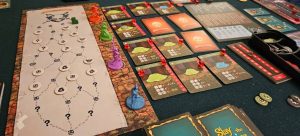
Before any card is played, the game hands you a map. Branching paths run up the screen, and each node is a different type of stop:
- Enemy — a standard fight, and a card reward
- Elite — much harder, but drops a relic
- Campfire — rest to heal, or upgrade one card
- Merchant — spend gold on cards, relics, potions, or card removal
- Treasure — a free relic
- Unknown — an event, a fight, a shop, or something worse
You choose your route before you climb, which means the map is the first real decision of every run. Three acts make up a standard climb, each ending in a boss, with a fourth act unlocked later for players chasing the true ending.
The Combat Loop
Every fight runs on the same short rhythm:
- Draw 5 cards at the start of your turn.
- Spend energy — you get 3 per turn by default, and most cards cost 1 or 2.
- Play attacks and skills in whatever order you like.
- End your turn. Your remaining hand is discarded, and any Block you built disappears.
- Enemies act — and crucially, they telegraph exactly what they’re about to do.
That last point is the design’s quiet masterstroke. You always know an enemy will hit for 16 next turn, so a fight is a math problem rather than a guess. Losing is your fault, which is precisely why losing doesn’t feel unfair.
Cards come in five types: Attacks deal damage, Skills do everything else, Powers apply permanent buffs for the rest of the fight, and Statuses and Curses are junk cards enemies and events shove into your deck to clog it.
Relics and Potions
Not everything in Slay the Spire is a card. Relics are permanent passive items that last the whole run — extra energy each turn, healing after every fight, damage when a Power is played. They stack, and a good relic can define an entire run’s strategy more than any single card.
Potions are one-shot consumables you hold in a small slot bank. New players hoard them for an emergency that never comes. Experienced players spend them on the fights that actually threaten the run, because a potion saved during a losing run is a potion wasted.
Why Smaller Decks Win
Here’s the rule that surprises everyone arriving from traditional card games: in Slay the Spire, adding cards usually makes your deck worse.
Your deck is a cycle. Once it runs out, it reshuffles and you draw the same cards again. A 12-card deck built around three strong combo pieces will produce those pieces every second turn. A 40-card deck full of decent cards will produce them almost never. Paying gold at the merchant to remove a starting Strike is one of the strongest purchases in the game.
Players coming from a collectible card game usually have to unlearn this. In a constructed format, the deck size is fixed and you’re optimizing quality within it. Here, deck size is a variable you control, and consistency beats raw power almost every time.
The Characters
Four characters ship with the original game, each with a separate card pool that plays nothing alike:
- The Ironclad — durable, aggressive, built around Strength and self-damage trade-offs
- The Silent — poison, evasion, and drawing enormous numbers of cheap cards
- The Defect — summons orbs that fire automatically at the end of each turn
- The Watcher — swaps between stances that multiply damage and punish mistakes
Each one effectively teaches a different lesson about the same engine, which is why the game keeps feeling fresh long past the first hundred hours.
Ascension and the Long Tail
Beating the game once unlocks Ascension, a 20-level difficulty ladder. Each level adds a permanent handicap: stronger elites, less healing, weaker starting relics, a curse on your deck. Ascension 20 is where the community’s real competitive discussion lives, alongside the Daily Climb — a shared seed with modified rules that every player attempts once, on the same terms.
That structure gave the game a lifespan that most single-player releases never get. There’s no multiplayer ladder, but there is a global leaderboard’s worth of shared difficulty.
What It Changed About Card Games
Slay the Spire proved a card game could be a complete single-player experience rather than a lobby waiting for opponents. The genre that followed is direct evidence: Monster Train, Griftlands, Across the Obelisk, Inscryption, and Balatro all borrow the run-based deck-as-progression structure, even when the surface theme has nothing in common.
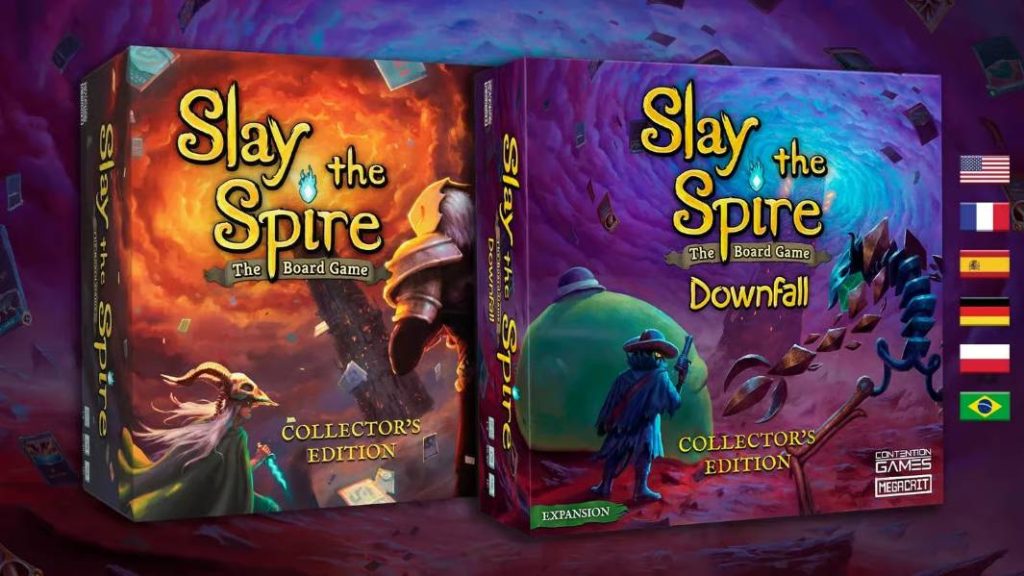
It also reshaped what players expect from digital card games generally. Telegraphed enemy intent, deck removal as a meaningful purchase, and permanent run modifiers have all become standard vocabulary. Even physical tabletop caught up — a licensed board game adaptation brought the climb to a real table, cards, relics, and all.
Slay the Spire 2
Mega Crit released the sequel into Steam Early Access on March 5, 2026, priced at $24.99, with a full 1.0 launch still unannounced and estimated to land somewhere in the following year or two.
The headline addition is four-player online co-op, alongside a roster of five characters: the returning Ironclad, Silent, and Defect, plus two newcomers — the Necrobinder, who fights with a skeletal hand companion, and the Regent, who spends a separate resource called stars. As with the original, content is being added and rebalanced throughout the Early Access period, and no prior experience with the first game is needed to start with the sequel.
Where to Start
The original is available on PC, Mac, Linux, PlayStation, Xbox, Switch, iOS, and Android, and it goes on sale regularly. Mobile is a genuinely good version rather than a compromised port, which matters for a game built around one-hour sessions.
Start with the Ironclad — it’s the most forgiving character and the clearest teacher of the core loop. Take the map seriously from your very first run, skip card rewards that don’t fit a plan, and treat card removal at the merchant as a purchase rather than a last resort. Our guide to card game strategies covers the wider habits that transfer here, and the rest of the digital and online card games section has more on how the genre developed around this one release.