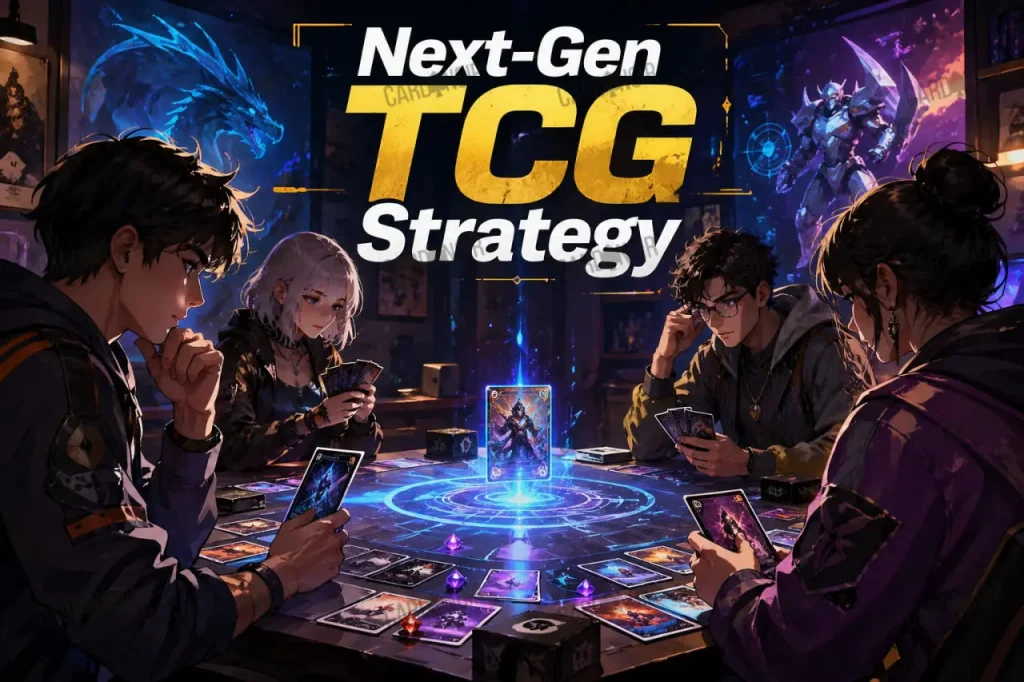
Something is shifting in the card game scene—and it’s not coming from the usual giants. While mainstream titles still dominate shelves and streams, a new wave of niche card games is gaining momentum in a more subtle, organic way. No massive marketing push. No overnight hype. Just sharp mechanics, dedicated communities, and a fresh take on what Trading Card Game Strategy can be.
For longtime hobbyists, this feels less like a trend and more like a reset. Players are no longer satisfied with recycled systems or predictable metas. They want friction, depth, and meaningful decisions. And right now, three emerging games are delivering exactly that.
Flesh and Blood: Where Every Decision Cuts Deep
At first glance, Flesh and Blood looks like another competitive dueling card game. But once you sit down and play, it quickly becomes clear—this is a different beast entirely.
Instead of relying on traditional resource systems like mana, the game forces players to use cards from their hand as both actions and fuel. That means every card comes with a trade-off. Do you attack, defend, or sacrifice it to generate resources? There’s no autopilot here—every turn is a calculated risk.
This design reshapes how players approach Trading Card Game Strategy. It rewards foresight, adaptability, and tight decision-making under pressure. Even a small mistake can snowball into a loss.
The community reflects that intensity. Competitive, detail-oriented, and deeply invested, players treat each match like a mental duel. Local tournaments are thriving, and discussions around optimal play often go far beyond surface-level tactics. It’s a game built for players who want to feel every move they make.
Sorcery: Contested Realm: Strategy Beyond the Card
If most TCGs are about what you play, Sorcery: Contested Realm is about where you play it.
Blending traditional card mechanics with a grid-based battlefield, the game introduces spatial strategy into the mix. Cards aren’t just played—they’re positioned. Movement, placement, and terrain all influence the outcome of each turn.
This adds an entirely new layer to Trading Card Game Strategy. Players must think like tacticians, not just deck-builders. It’s no longer enough to have strong cards—you need to understand positioning, anticipate movement, and control space.
The reception has been especially strong among players who enjoy complex, layered gameplay. Online communities are filled with deep dives into map control, positioning theory, and evolving strategies. It’s less about quick wins and more about mastering a system that constantly challenges you to think two steps ahead.
Grand Archive TCG: Style Meets Long-Term Strategy
With its vibrant anime-inspired visuals, Grand Archive TCG might look approachable—even casual. But under that polished surface lies a system that demands long-term planning and strategic patience.
The standout mechanic here is character progression. Instead of starting at full power, players build their characters over time, unlocking stronger abilities as the game progresses. This creates a shifting power curve where early restraint can lead to late-game dominance.
It’s a subtle but powerful twist on Trading Card Game Strategy. Players must balance immediate threats with future potential, deciding when to invest and when to strike. Timing becomes everything.
The game has quickly attracted a younger, creative audience, many of whom came for the art but stayed for the depth. Content creators, small tournaments, and grassroots events are fueling its growth, giving it a strong foundation moving forward.
Why These Games Are Gaining Ground
There’s a clear pattern behind the rise of these niche titles.
First, players are craving innovation. Familiar systems can only go so far before they start to feel predictable. These games break that cycle by introducing mechanics that force players to rethink their approach.
Second, community matters more than ever. Smaller games often foster tighter, more engaged player bases. Discussions feel meaningful. Discoveries feel shared. There’s a sense of building something together.
Third, these games respect the player’s intelligence. They don’t simplify—they challenge. And for many hobbyists, that’s exactly the appeal.
The Road Ahead: Staying Niche or Going Big?
The big question is whether these games will remain cult favorites or push into the mainstream.
There’s momentum, no doubt. Organized play is expanding. Online visibility is growing. And more players are looking beyond the usual titles in search of something deeper.
But growth comes with risk. The very things that make these games special—their complexity, their uniqueness—could be diluted if they chase broader appeal too aggressively.
For now, they sit in a sweet spot. Big enough to matter, small enough to evolve.
And for players paying attention, this is where the real action is. Because as these games continue to grow, they’re not just adding variety to the market—they’re redefining what Trading Card Game Strategy looks like in a modern era.