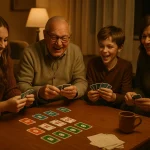
Picture this: it’s a rainy afternoon in Ohio, 1971. A barber named Merle Robbins gathers his family around the table to test a new twist on an old game called Crazy Eights. He scribbles rules on index cards, shuffles them up, and deals. Laughter fills the room. Nobody knows it yet, but a global card game phenomenon—UNO—has just been born.
Today, UNO isn’t just a card game. It’s a cultural staple. From kitchen tables to school playgrounds, from long-haul flights to family reunions, UNO is the little deck that sparks big emotions. But what makes this colorful game so irresistible? Let’s dive in.
A Barber’s Idea That Went Global
Unlike many card games with foggy origins lost to centuries past, UNO’s creation is crystal clear. Robbins, frustrated with explaining Crazy Eights to friends, thought: “Why not simplify and add a few unique cards?” He printed 5,000 decks and sold them from his barbershop.
By the late 1970s, the game caught the attention of International Games, Inc., and soon after, Mattel. From there, UNO spread like wildfire, becoming a household name across continents.
The Charm of the Rules

The beauty of the UNO card game lies in its balance: easy to learn, tricky to master.
Here’s the basic setup:
- Each player starts with 7 cards.
- Match a card from your hand to the discard pile by color or number.
- Special cards—Skip, Reverse, Draw Two, Wild, Wild Draw Four—shake things up.
- The goal? Be the first to shed all your cards.
Of course, the infamous moment is shouting “UNO!” when you’re down to one card. Forget to call it, and you’re slapped with a penalty draw. (And let’s be real, families have broken into mock courtroom debates over whether someone called it in time.)
Variations That Keep It Fresh

Part of UNO’s charm is how endlessly adaptable it is. Some of the most popular twists include:
- UNO Attack! – A battery-powered card launcher that sprays random cards. Chaos guaranteed.
- UNO Flip! – Double-sided cards with a “light” and “dark” side.
- Themed Decks – From Harry Potter to Minecraft, there’s a version for everyone.
- House Rules – Families often invent their own spins. Maybe you stack Draw Twos. Maybe you can “jump in” out of turn. These rules aren’t official, but they make the game feel personal.
If you think about it, this flexibility is why UNO stays fresh even after hundreds of plays.
Strategies to Outwit Your Opponents
UNO might look like pure luck, but seasoned players know better. Here are some strategies to keep in your back pocket:
- Save your Wilds – They’re your best escape route when stuck.
- Think in colors – Sometimes it’s smarter to keep a number match so you don’t reveal your weaknesses.
- Track opponents – Notice who has been collecting certain colors from the discard pile.
- Use Reverse wisely – In larger groups, timing a Reverse can change the flow dramatically.
Here’s the fun part: you don’t need to be cutthroat. In fact, UNO thrives when playful banter mixes with strategy.
UNO in Culture: More Than a Game
UNO isn’t just played—it’s experienced. Families bond over it, friendships get tested by it, and memes immortalize the chaos of being hit with a Draw Four.
- In the U.S., UNO became a classic “road trip essential.”
- In Asia, it’s common to find UNO decks tucked into classrooms and cafés.
- Online, debates rage about whether stacking Draw Fours is legal. (Officially, no. Unofficially? All’s fair in love and UNO.)
UNO even appears in pop culture—from sitcom episodes to viral TikToks where players slam down their last card dramatically.
Digital UNO: The Game on Screens
Like many classics, UNO leapt into the digital age. You can now play on consoles, mobile apps, and even in virtual reality. Digital UNO allows global matches, themed expansions, and sometimes wild animations when you drop that winning card.
Yet, digital play also highlights what makes physical UNO special—the laughter, the gestures, the accidental peeks at someone’s cards. Still, the hybrid of both worlds means UNO continues to reach new generations. Examples : https://www.letsplayuno.com/
Why UNO Endures
So why has the UNO card game lasted over 50 years? Because it’s universal.
- Simple to learn – A six-year-old can pick it up.
- Fast-paced – Games are short, so no one gets bored.
- Portable – Just a small deck and endless fun.
- Flexible – Rules adapt to families, cultures, and even moods.
UNO isn’t about who wins or loses. It’s about the shared joy, the inside jokes, and the playful rivalries.
A Deck of Joy in Every Home
When you unwrap a deck of UNO card game, you’re holding more than paper and ink. You’re holding decades of laughter, stories, and traditions. You’re joining a global community that knows the thrill of yelling “UNO!” at just the right time.
Next time you play, notice how quickly the game dissolves tension, sparks laughter, and brings people closer. That’s the real magic of UNO. And if this colorful deck has sparked your curiosity, you might enjoy exploring other classics in our guide to the many types of card games that have entertained families around the world.