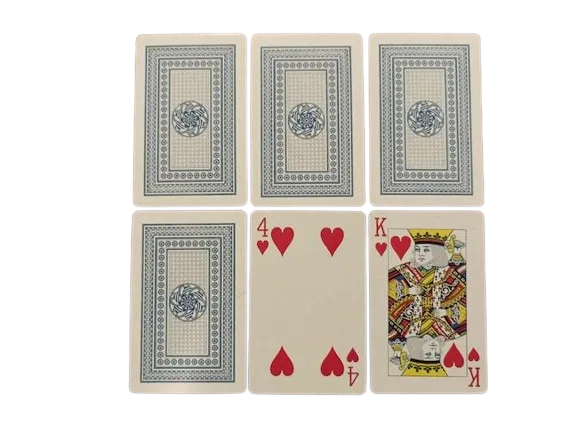
There’s something charming about 6-Card Golf. It’s simple at first glance—swap cards, chase the lowest score, pray the flip goes your way—but anyone who has played a few rounds knows it can turn surprisingly tactical. If you enjoy the vibe of family card games that mix light chaos with quick decision-making, this variant should sit right at home in your rotation.
Before diving into rules, here’s a small truth: most beginners don’t lose because they draw bad cards. They lose because they flip too early, or they forget how powerful information is in a small-grid game like this. Once you understand the flow, you’ll see why so many people consider 6-Card Golf the “gateway” version before 4-Card Open Golf or the notoriously messy 9-Card layout.
Let’s break it down naturally—starting from what the table looks like before a single card is touched.
What You Need to Start
- A standard 52-card deck
- 2–6 players (4 is the sweet spot)
- Quick reflexes and a good poker face
Each player sits with six cards placed face-down in a 2×3 grid. Only two of these cards can be peeked at in the beginning—your tiny window into the chaos you must manage for the next few minutes.
The moment someone flips their last card, the round ends. But that doesn’t mean the lowest score is guaranteed; timing matters more than people expect.
Card Values (The Part Everyone Checks Twice)
Here’s the value system used in most tables:
- Aces = 1 (best single card)
- Number cards = their face value
- 10s = 0
- Jacks = 0 in some variations, or -2 in others
- Queens = +10
- Kings = -1 (yes, that means Kings are good)
- Pairs in the same column = 0 for the whole column
That last one—column cancellation—is what separates casual play from strategic play. Matching a column makes bad cards vanish. Many beginners forget this mechanic even exists, handing free wins to savvy players.
How to Set Up the Round
- Shuffle the deck.
- Deal six cards face-down to each player.
- Form your 2×3 grid.
- Flip only two cards of your choice.
- Put the remaining deck in the center as the draw pile and flip one card to start the discard pile.
From here, it becomes a rhythm of draw, swap, guess, and pray.
How a Turn Works
A turn is always two steps:
- Draw a card
- Either from the top of the deck
- Or the visible discard card
- Decide what to do
- Replace one of your six cards
- Or discard it immediately
Once you replace a card, the replaced card goes to the discard pile face-up. If you drew a terrible card, the safe move is simply throwing it away.
But here’s the sneaky detail:
Experienced players often take from the discard pile on purpose—not because it’s good, but because knowing exactly what you pick is sometimes better than gambling with the unknown.
Flipping Your Last Card
A round ends the moment a player has revealed all six cards. Everyone else gets one last turn. Then, scores are counted.
You don’t have to be the first to finish. In fact, finishing early with bad columns is the classic rookie mistake. Sometimes stalling one more draw lets you force a pair or set up a zero-column.
Your goal is always the same:
End the round with the lowest total score.
Strategy: The Human Version (Not the Textbook Version)
After seeing people play this for years, a few lessons repeat themselves:
1. Don’t flip blindly
The moment you flip too early, you erase your safety net. Hidden cards can still be replaced quietly.
2. Build columns before improving singles
A weak column you fix later is better than a perfectly balanced row that gives you no zero opportunities.
3. Never forget what people discard
If someone throws a King away, they’re either:
- insane
- or their column already matches
Either way, that’s information you can weaponize.
4. Low-value chaos is better than high-value symmetry
Sometimes the grid looks messy, but your score is low. Don’t fix what’s already doing its job.
5. Aces and Kings are always worth taking
If you ignore a King because you’re “waiting for something better,” trust me—you’ll regret it.
Variations You’ll Encounter
Once you know the base game, these alternatives pop up everywhere:
Joker Variants
Some tables treat Jokers as -5. If that rule is active, Jokers become a treasure.
Jack Variants
Jacks switching between 0 and –2 depending on the table. Always ask before starting.
Why 6-Card Golf Became Popular Again
Short answer: it fits modern attention spans.
A full game rarely lasts more than 10–15 minutes, and every round feels like something you can win even if you started terribly. The information drip—two known cards, four mysteries—keeps players engaged the whole time.
Plus, the game works equally well for:
- casual family gatherings
- bar nights
- warm-up sessions for heavier card games
- teaching new players game flow
It’s lightweight but not brain-dead, and that balance is rare.
A Quick Example Round (Real Player Mistakes Included)
Imagine your starting grid:
- You flip a 5 and a Queen (+10).
- You peek at one of your down cards the next turn and find a 10 (zero).
- You draw a King. Replacing the Queen is obviously correct.
But here’s the common trap:
Many beginners immediately flip their King column to show off the low score.
Don’t do it.
Instead, stall, swap other columns, and see if you can force a zero-column somewhere else. Ending early removes options. Ending timely wins rounds.
When to Call the End
Call early only when your grid is guaranteed low.
Call late if you still have a long-shot combo (like matching a pair for zero).
The “call timing instinct” is what separates decent players from people who dominate the table.
6-Card Golf may look casual at first glance, but the more you play, the more hidden layers you start to notice. In the card game Golf, cards that seem worthless suddenly become key puzzle pieces, and columns you once thought doomed can transform into zero with a single fortunate draw.
If you enjoy card games that reward:
- memory
- timing
- risk evaluation
- and a tiny bit of audacity
…this game is absolutely worth mastering.