

Card games are among the most enduring and versatile forms of entertainment in human history. From ancient traditions to digital platforms, they have shaped social gatherings, strategic thinking, and even cultural identity. But the question remains: what are card games, really?
At their core, card games involve using a structured set of game cards—whether traditional decks like the standard 52-card pack, or specialized sets like UNO and Magic: The Gathering—to engage players in competition, chance, and skill. Cardanoir, a hub for everything related to card games, explores not just how these games are played but also why they continue to captivate people worldwide.
To fully understand what are card games, it helps to explore the history of card games, the variety of their features, and the reasons they remain relevant today.
Definition of Card Games
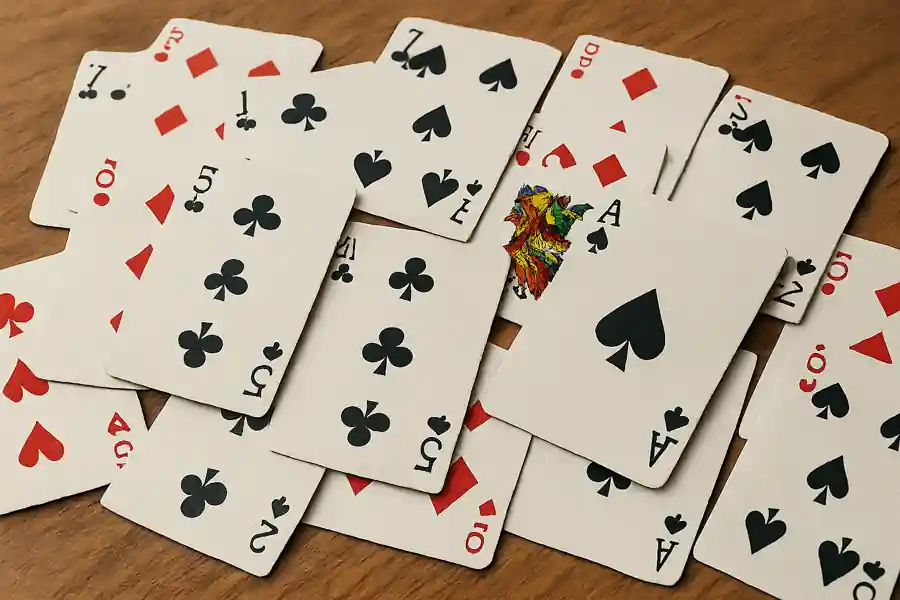
So, what are card games? A card game is any game played with a deck of cards, where cards serve as the primary tool for gameplay. These cards can represent numbers, suits, characters, spells, or even abstract concepts, depending on the game.
Traditional card games like Poker or Solitaire use a standard deck of 52 game cards, while modern ones like UNO or Magic: The Gathering rely on custom-designed decks with unique mechanics.
Key aspects of the definition include:
- Structured play: Cards are central to the rules, creating order and fairness.
- Versatility: A single deck can support hundreds of different games.
- Player interaction: Most card games encourage competition, cooperation, or strategy.
- Cultural adaptation: Different regions have unique variations of the same game card sets.
When people ask what are card games, the answer spans beyond the rules—it reflects a combination of tradition, strategy, and innovation.
Features of Card Games
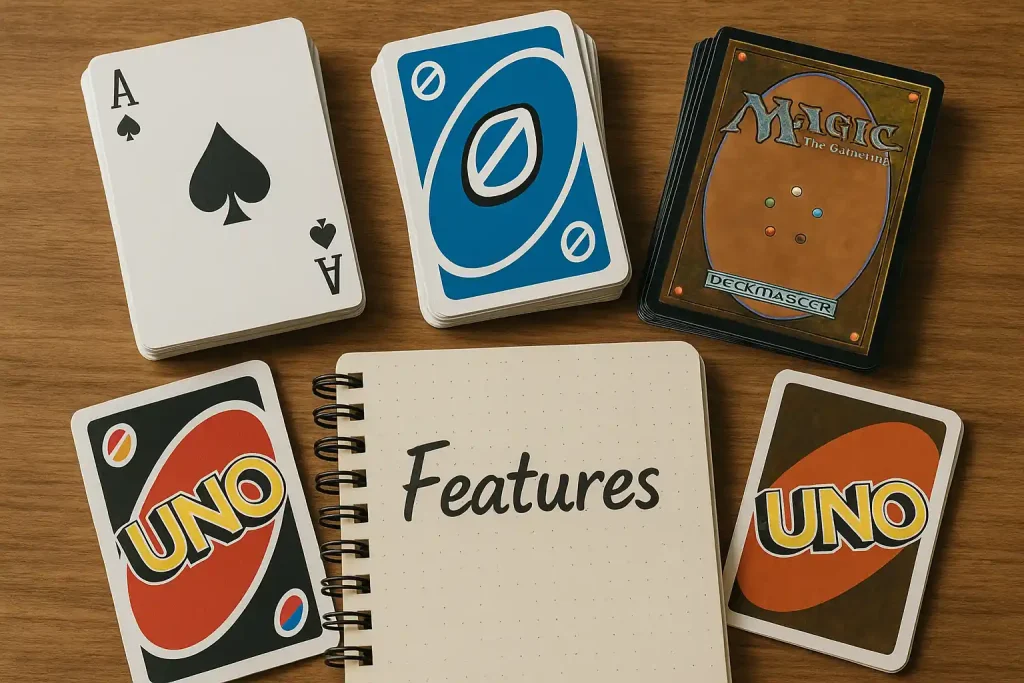
Card games share certain characteristics that make them distinct from board games or sports.
1. Compact and Portable
Unlike large gaming setups, card games require little more than a deck of cards. This portability has made them a universal companion for travel, leisure, and social events.
2. Rules and Flexibility
Every card game has its own rules. Some are simple and intuitive, like UNO, while others, like Bridge, demand a lifetime of study. The flexibility of game card rules allows people to adapt them across cultures.
3. Balance of Chance and Skill
Card games often blend luck (the draw of the cards) with strategy (how to use them). This balance is what makes games like Poker timeless—anyone can win, but skill increases the odds.
4. Variety of Objectives
From matching pairs to building sequences or defeating an opponent with strategic plays, objectives vary widely. This variety keeps the world of card games endlessly fresh.
5. Social and Psychological Engagement
Card games foster interaction. Whether bluffing in Poker, collaborating in cooperative card games, or enjoying family-friendly matches of UNO, the psychological dynamics make them compelling.
Examples of Card Games
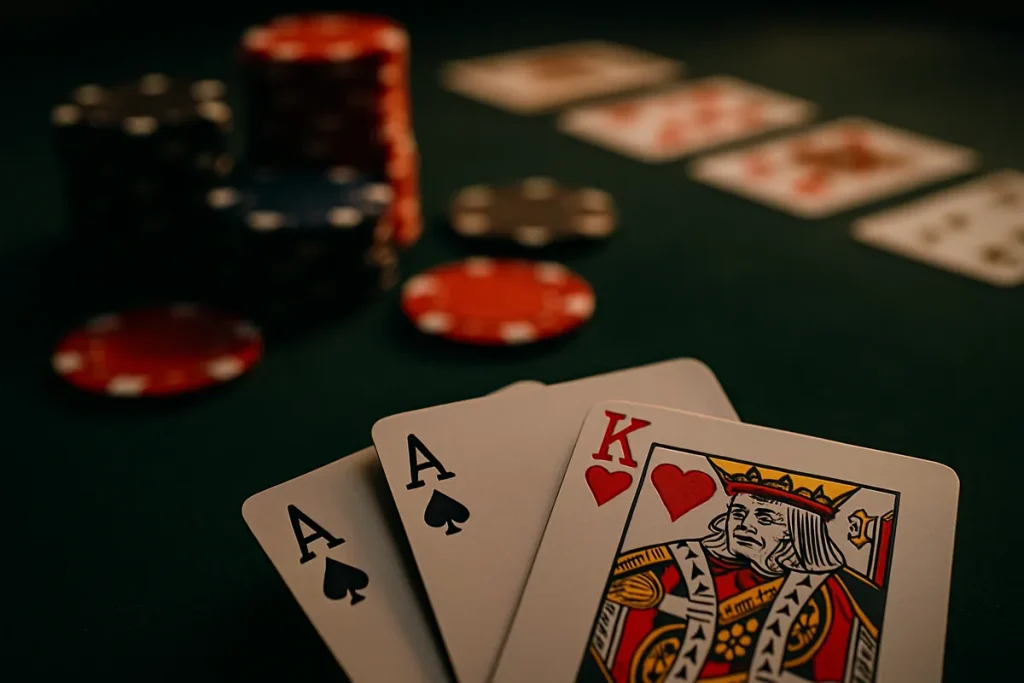
Different types of card games offer unique rules and experiences. To understand what are card games in practice, it helps to look at famous examples across the spectrum:
Poker
One of the most iconic card games, Poker has countless variations such as Texas Hold’em and Omaha. It combines probability, psychology, and money management. Players must master bluffing, betting strategies, and reading opponents. Poker is not just a game card pastime—it is a global phenomenon with professional tournaments like the World Series of Poker.

UNO
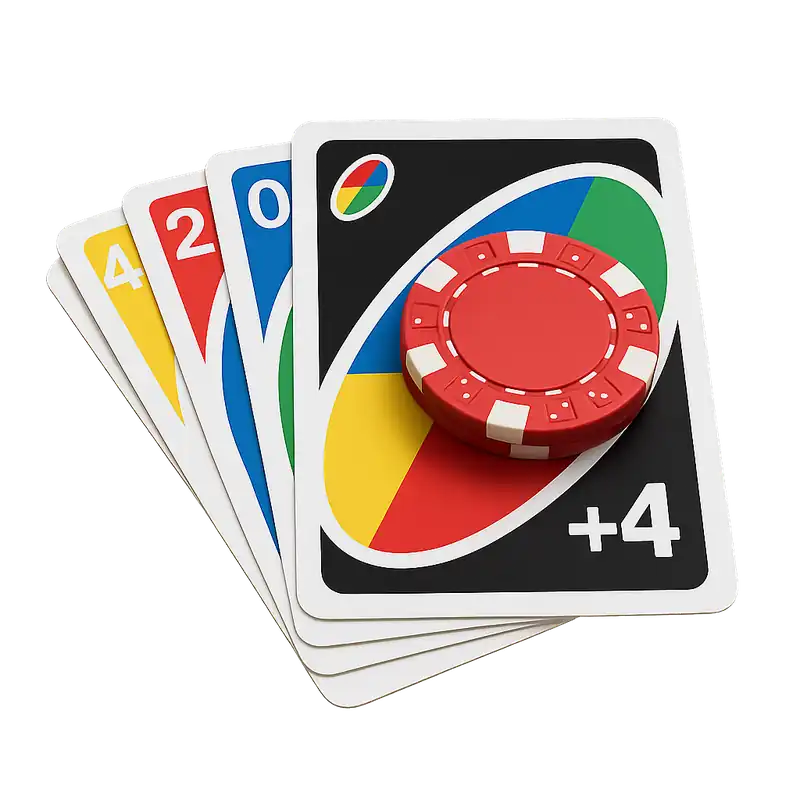
UNO represents the modern family-friendly side of card games. Its colorful, specialized game cards and simple mechanics make it accessible for all ages. The game thrives on quick decisions, playful sabotage, and a race to declare “UNO” before your last card.
Magic: The Gathering
Magic is a collectible card game (CCG) that revolutionized the genre. Unlike traditional decks, players construct their own card collections, which represent spells, creatures, and magical abilities. The depth of strategy in Magic makes it a competitive game played in global tournaments, proving that card games can evolve into entire subcultures.

Solitaire
Solitaire is perhaps the most personal of all card games. Played alone, it relies on patience, focus, and problem-solving. Its digital adaptation on early computers brought Solitaire to millions, solidifying its role as a gateway into the world of card games.
Why People Play Card Games

Beyond the mechanics, the reason people engage with card games reveals their deeper value.
1. Social Connection
Card games bring people together—whether around a kitchen table, in a casino, or on online platforms. They create shared experiences that strengthen bonds.
2. Mental Stimulation
Games like Bridge and Magic challenge memory, logic, and long-term strategy. Even simpler games provide cognitive exercise, improving focus and decision-making.
3. Cultural Tradition
Many traditional card games trace their origins back to the history of card games centuries ago. From Chinese Mahjong to French Tarot, they preserve heritage and storytelling.
4. Entertainment and Relaxation
Sometimes, card games are simply about fun. UNO’s laughter-inducing reversals or Solitaire’s quiet satisfaction prove their enduring entertainment value.
5. Accessibility
Card games are low-cost, easy to learn, and widely available. A single deck of cards can provide endless entertainment for people of all backgrounds.
Modern Relevance of Card Games
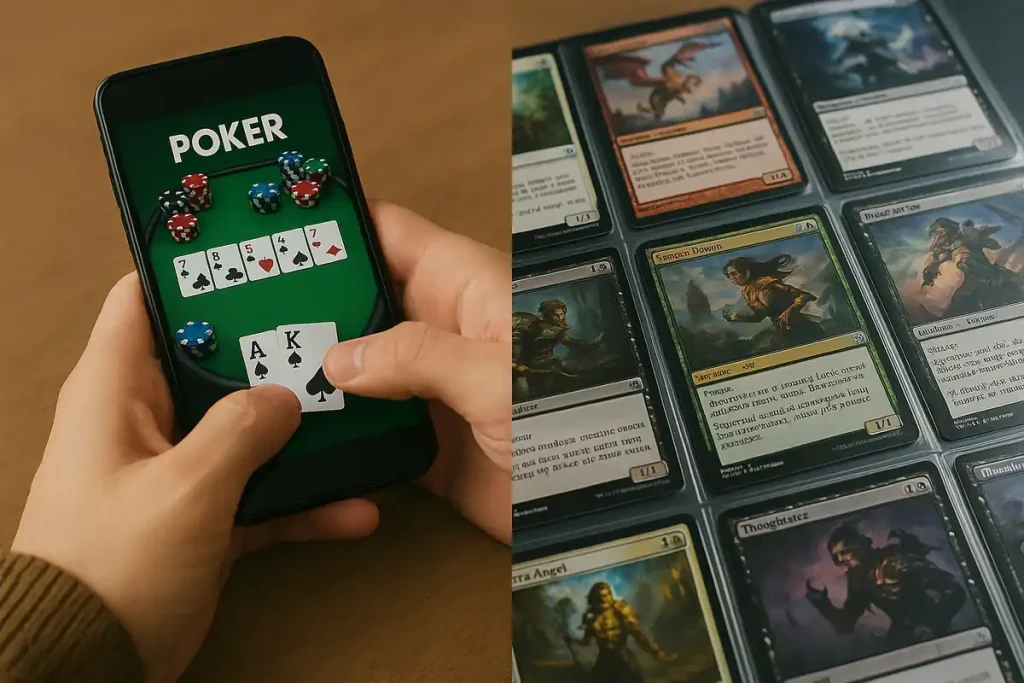
Card games are far from outdated; in fact, they have adapted remarkably to modern life.
Digital Platforms
Online platforms and mobile apps have expanded access to traditional and collectible card games. Games like Hearthstone or digital Poker rooms attract millions worldwide.
Competitive Esports
Magic: The Gathering and other CCGs now host international tournaments, drawing sponsorships, professional players, and live-stream audiences.
Educational Uses
Card games are also used in classrooms to teach math, probability, and problem-solving. They serve as both entertainment and learning tools.
Collectibles and Economy
With collectible card games, game cards themselves hold real-world value. Rare cards can be traded or sold, making them part of a thriving global economy.
Cultural Symbolism
Cardanoir showcases how card games reflect broader themes—chance, fate, and human creativity. They remain a universal language of play.
So What Are Card Games?
So, what are card games? They are more than just shuffled decks and chance encounters. They are a blend of tradition, creativity, competition, and fun. From Poker’s high-stakes drama to UNO’s playful reversals, from Magic’s fantasy battles to Solitaire’s quiet moments, card games represent the diversity of human play.
To explore further, readers can continue with Types of Card Games to understand the categories that define the genre, or delve into the History of Card Games to trace their fascinating origins.
Cardanoir Card games will continue to be your trusted guide, answering not only what are card games but also why they matter in a world that never stops playing.